Articles that inspire and inform!
Publisher of POLIS LLC
Address: 190000, Saint Petersburg,
35/15 Kazanskaya Street
Publisher of POLIS LLC
Address: 190000, Saint Petersburg,
35/15 Kazanskaya Street


ISSN 3033-7666 (Print)
ISSN 3033-7674 (Online)
No 4, July 2025
CERTIFICATE OF THE FEDERAL SERVICE FOR SUPERVISION IN THE FIELD OF COMMUNICATIONS,
INFORMATION TECHNOLOGY AND MASS COMMUNICATIONS (ROSKOMNADZOR)
Эл No ФС77-87449
ELECTRONIC SCIENTIFIC PERIODICAL (ST. PETERSBURG, RUSSIA)
16+
The journal is registered and published in Russia
The journal publishes articles in all scientific fields
The journal is published in Russian and English
All articles are peer-reviewed
Free access to the electronic version of the journal
By sending an article to the editorial board, the Author confirms its uniqueness and bears full responsibility for it
Editorial staff
Editor-in-Chief
Vorontsov Vladimir Valentinovich
Managing Editor
Ivanov Maxim Dmitrievich
Executive Secretary
Kholmanskikh Maria Viktorovna
Reviewers
Pyrkh Andrey Ivanovich,
Ph.D., St. Petersburg State University
Dimitrienko Andrey Igorevich,
Ph.D., Academician I.P. Pavlov First St. Petersburg State Medical University
_____________________________________________________________________________
Contacts
 190031, Russia, St. Petersburg, Kazanskaya str., 35, lit. A, apt. 15
 +7 931 712-95-96
 nxxivek@inbox.ru
_____________________________________________________________________________
© Founder: Limited Liability Company “Polis” (ОГРН1097847170871)
190031, St. Petersburg, ext. Ter. Admiralteysky Municipal District, Kazanskaya St., 35, lit. A, apt. 15
Contents
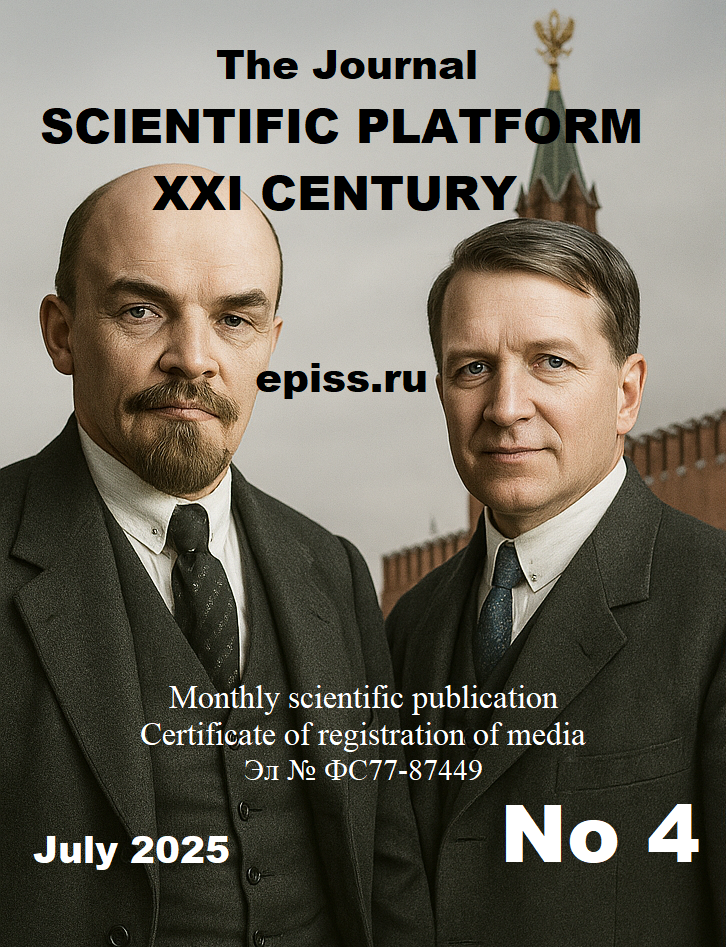
Photo collage on the front cover: Vladimir Lenin and Raymond Robins on Red Square in Moscow.
Photo collage on the back cover: Allegory of the Trial of Artificial Intelligence.
Photo collages on the covers of the magazine are generated by ChatGPT-5, copyright © 2025, Adel Kildeev
Gavrilov Lea Gabriela
Lenin is the Greatest Servant of Monopolistic Capitalism in History.
(Part II: Raymond Robins)…………………………………………..……………….3
Kildeev Adel Khanyafievich
Disney and Warner Brothers Discovery Lawsuits against Midjourney and Matthew and Maria Raine v. OpenAI and Sam Altman and their Implications for the Development of the Artificial Intelligence Industry……………………………….20
UDC 94(47).084
LENIN: HISTORY GREATEST SERVANT OF MONOPOLY CAPITALISM
(PART II: RAYMOND ROBINS)
(Lea) Gabriela Gavrilov
Emerson College, Boston, Massachusetts (1996)
MA Journalism
Catholic University, Washington, D.C. (1985) +
University of Warsaw, Poland (1983 – 1984)
BA Political Science / Economics
ggavrilov100@yahoo.com
http://orcid.org/0009-0008-9246-9646
Abstract. Lea Gavrilov’s article is devoted to a little-known, but key figure in the history of early Soviet-American cooperation, Raymond Robins, a representative of the US Red Cross, who in 1917–1918 became an unofficial mediator between the Bolshevik government and Western circles. Based on archival sources and memoirs, the article reveals how Robins, acting outside of diplomatic channels, became a spokesman for the interests of transnational capital and played a significant role in legitimizing the Bolshevik regime at an early stage. The work continues the line of research on cooperation between Soviet Russia and Western elites, begun in the author’s previous articles.
Key words: Raymond Robins, Vladimir Lenin, Red Cross, American mission, transnational capital, diplomacy, revolution of 1917, Soviet Russia, USA, economic interests.
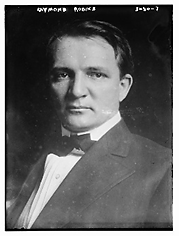
Raymond Robins, circa 1915.
In an effort to preserve its investment, the House of Morgan sent William B. Thompson and Raymond Robins
to Russia to salvage everything they could from Morgan’s investments.
– K. Büsing, The House of Morgan and Its Investments in Russia, 1905-1918
If I were asked which historical figure I would most like to talk to, I would answer: Raymond Robins (1873-1954).
Raymond Robins has never been mentioned in his six years of studying history in higher education and is not in the top 500 most interesting historical figures. But that’s the point.
Raymond Robins managed to elude the world’s historical record, despite setting the tone for official U.S.-Soviet relations and leaving a very well-documented account of his work through his testimony at the U.S. Senate Hearings on Bolshevik Propaganda in 1919, held in Washington, D.C., from February 11 to March 10, 1919, and published for public consumption shortly thereafter.
According to his testimony, Robins was the only American (still revealed) who met with Lenin and Trotsky almost daily at Smolny between December 1917 and June 1918. During these lengthy meetings, Robins changed Lenin’s nationalization decree, making an exception for American firms, advised the State Department to recognize Lenin as “the responsible head of the Soviet government, which is a compelling request for America’s cooperation in the internal restructuring of economic life,”[1] advised Lenin not to ratify the Brest-Litovsk Peace Treaty, ordered Trotsky to send a train loaded with food and medicine through starving Ukraine to Romania for a kind of eavesdropping if Trotsky demonstrated due loyalty to the U.S. government, and also checked whether he had the authority to carry out the act. Robins also ordered Chicherin and Dzerzhinsky to blow up twenty-six anarchist centers in Moscow after they stole his luxury Pierce Arrow tourist car to show him “where the power is in Moscow.” He negotiated with the U.S. to buy Russian platinum, a vital war material needed to produce munitions over which Russia had a near-monopoly, which was done by American businessman Charles Preston under the guise of a Red Cross employee, and brought Lenin’s “Plan for Russian-American Trade Relations” back to Washington when he returned from his eleven-month stay in revolutionary Russia. Robins also presented the “Report on American Economic Cooperation with Russia,” in which he recommended that the Wilson administration accept Lenin’s economic plan.[2]
Why does mainstream history avoid drawing attention to a person with such a resume?
American Red Cross Mission in Russia,
August 1917 – June 1918
The American Red Cross mission was led by William Boyce Thompson, a wealthy American copper magnate, founder of the Newmont Mining Company, financier and director of the Federal Reserve Bank of New York, and his friend, Morgan’s partner, Henry. Davidson. While Davidson remained in Washington, D.C., Thompson headed the mission to Russia. Thompson was appointed a “colonel” of the Red Cross, although he did not have a real military rank that the New York Federal Reserve had allowed Thompson to be absent from its post as its director for several months. Most of the funding for the trip came from Thompson, in addition to American Red Cross funding from J.P. Morgan and Mrs. E.H. Harriman[3] , as well as from other financially significant American businessmen (often through the names of their wives).
The second man in the Red Cross Mission was Raymond Robins, a forty-four-year-old Anaconda Copper magnate who, just a few months earlier, had spoken about Russia’s commercial potential at a businessmen’s convention in Boston. Robins had been appointed a “major” of the Red Cross[4] and wore a U.S. military uniform with insignia on his shoulders and a cap. none of whom was lower than major.
The American Red Cross mission to Russia (1917-1918) consisted of twenty-five businessmen and financiers, three translators, eleven medical professionals, two film directors, one legal adviser, and one transportation expert.
According to the well-known Russia expert George F. Kennan, in his seminal 1958 work “Russia Emerging from the War, Soviet-American Relations 1917-1920,” members of the Red Cross mission were advised to make a concerted effort not to do anything that could complicate their relations with U.S. diplomatic personnel in Russia. The role of the U.S. ambassador was to introduce them to the members of the new Provisional Government and the ministers who would be able to negotiate business deals. Kennan also noted that the American Red Cross mission in Russia is a charitable mission in name only. The chairman of the American Red Cross War Council was none other than Morgan’s senior partner, Henry. Davison, and despite the use of the name of the Red Cross, “these people did not go to Russia to distribute hot food and bandages.”[5]
In fact, the Red Cross name was brazenly used as a cover to promote business goals related to Morgan. The main (if not the only) goal of the mission leaders was to keep Russia in a costly (and profitable) war with Germany, expand business domestically, and maintain the flow of Russian military orders for American factories and demand for loans to Wall Street.[6] Thus, the mission did not have clearly defined responsibilities, such as building or equipping hospitals. Thompson wanted to support Kerensky’s new government, support his army on the eastern front, and force the German armies to wage a war on two fronts.[7]
The American Red Cross mission in Russia also included:[8] James W. Andrews of Liggett & Myers Tobacco.[9] Financier Louis Barr, vice president of Chase Securities Co. and Chase National Bank, was there to support the Russian government in making purchases from these and other U.S. companies with loans. Henry S. Brown was head of public affairs or not, as the mission was not widely publicized, most likely to avoid scrutiny. which could lead to questions about why so many businessmen were part of the Red Cross mission. W. Burke Cochran of the McCann Co. advertising firm was there to arrange for American propaganda to spread throughout Russia so that Russians would feel threatened by Germany to the point where they would be moved enough to continue sacrificing themselves for a European war.
Deputy Commissioner Henry Horne, vice president of the New Haven Railroad,[10] was another railroad expert to assist the new Russian government in choosing the number and types of U.S. rolling stock, locomotives, and wagons on which they should spend their U.S. loans.
Basil Miles, who had been secretary of the Root Mission, was now assigned to the Red Cross Mission. Miles’ work with the Root Mission led to a plan to facilitate Russian purchases of U.S. goods and services Russian goods for their payment.[11] In other words, Russian resources were to be exchanged for American goods through this new organization.[12]
William G. Nicholson and his boss Harold H. Swift of Swift & Co., a major U.S. processed meat company, were there to sell processed foods, especially canned meat, to Russia and set up subsidiary processing plants.
Engineering consultants George C. Whipple and Malcolm Pirney of Hazen, Whipple & Fuller joined the mission to formally express their interest in upcoming infrastructure rehabilitation projects, especially the construction of water treatment plants, after the end of the war. Interestingly, while before leaving for Russia, civil engineers were given the opportunity to meet with the director of the Federal Reserve System of New York State, William B. Thompson, chairman of the Henry Red Cross. Davidson and lead sponsor J. Morgan, the chief medical officer of the mission, Dr. Billings, was ignored. Billings, still feeling the pain of rejection, realized that he and his seven assistants were not drivers for the Red Cross mission in Russia.
Red Cross Majors Allen Wardell and H.B. Redfield, both of Stetson, Jennings & Russel, as well as Whipple and Pirnie, joined the mission to register their engineering company’s interest in developing new infrastructure projects as part of Russia’s post-war reconstruction. Wardell was a particularly important member of the Mission only because he was the son of Thomas Wardell, the longtime treasurer of Standard Oil, who signed the famous Standard Oil trust agreement for John D. Rockefeller.
“Major” Thomas D. Thatcher, a partner at the law firm of Simpson, Thacher & Bartlett and a judge of the New York Court of Appeals specializing in mergers and acquisitions, joined the mission as legal counsel for those companies that wanted to sign business contracts with the new Russian government.
Frederick M. Kors of the Russian division of the New York Life Insurance Co. of National City Bank will work to raise money for further war loans for the new Russian government.
“Major” Stanley Washburn was a war correspondent for the London Times. From 1904 to 1906, Washburn was a war correspondent for the Chicago Daily News during the Russo-Japanese War and the Russian Revolution. During the Russo-Japanese War, Washburn was attached to Nogi Maresuke’s Third Japanese Army. Washburn was later sent to cover World War I as a war correspondent for Colliers Weekly and the London Times. It was first attached to the Russian army from 1914 to 1916, and then to the Romanian and French armies.[13]He[14] had talked to General Brusilov about the Russian general’s offensive the previous year, which had not only forced Germany to halt its offensive against British and French forces at Verdun to defend its positions in the east, but had also broken the back of the Austro-Hungarian army.[15]
Colonel James A. Ruggles, the U.S. military attaché, was there to meet with General William W. Judson, the U.S. ambassador’s military attaché and head of the U.S. military mission in Petrograd, and to study what U.S. military supplies the Russians would need to stay in the war against Germany.
Henry C. Emery, manager of the Guaranty Trust branch in Petrograd, acted as the mission’s financial advisor. He was also the U.S. representative to the Inter-Allied Priorities Council, which worked with the General Staff of the Russian Armed Forces (Rate) in the management of contracts for military supplies.[16]
Finally, Frank Billings, M.D., and Dr. W.S. Thayer were on board, but both left a month later in disgust, finding that the mission was for business rather than humanitarian aid[17]; while business and financial members remained in Russia for the next eleven months, until June 1918.
Russian-born Alexander Gumberg[18] left Odessa for New York as a teenager and now served as an interpreter for the Red Cross Mission. Gumberg was also the former editor of the Russian émigré newspaper Novy Mir in Manhattan. During this time, Trotsky was also living in Manhattan and writing articles for Gumberg’s edition before the February Revolution.
Two other Americans joined the group later, as they were already in Petrograd: Boris Reinstein, a U.S. citizen, was to serve as an interpreter for the Mission. Reinstein had been a bomb maker during the 1905 Russian Revolution. He later immigrated to Buffalo, New York, where he became a pharmacist. Earlier in 1917, he had been part of a group of Russians from New York. returning to Russia with Leon Trotsky.[19] As head of the Soviet Bureau of International Revolutionary Propaganda, which employed American journalist John Reed[20], Reinstein also helped broker business deals for American tycoon Arman Hammer[21], whose New York-based Allied Drug Company sold drugs to war-torn Russia. An American citizen, Boris Reinstein later became Vladimir Lenin’s private secretary.
Charles R. Crane of the Petrograd Westinghouse Electric plant joined the group in Petrograd where he had a residence as he ran his father’s air brake factory adjacent to the Westinghouse plant. He was part of Mission Root[22] and will now be part of the Red Cross Mission.
Even the well-known Russian historian George Kennan admitted that several doctors included in the mission were shocked to be brought on board only for show and to stay in Russia for only a month, while thirty businessmen stayed for months, and in the case of Robins and Gumberg, for a year.
The Red Cross Mission arrives in Petrograd, August 7, 1917.
The following is based on the testimony of Raymond Robins at the U.S. Senate Hearings on Bolshevik Propaganda in the Subcommittee on the Judicial System, U.S. Senate, 65th Congress, 3rd Session, pursuant to Resolutions S. 439 and 469, February 11, 1919 to March 10, 1919, as well as other sources noted.
By the time the Red Cross mission arrived in Petrograd on August 7, 1917, there had already been a change of leadership in Russia, as they had left Washington a month earlier. The riots over Miliukov’s note[23] led to more victims, Prince Lvov resigned, and his successor as prime minister was Minister of War Alexander Kerensky.
The head of the Red Cross mission, Thompson, made a luxurious entry into Petrograd in his Rolls-Royce tourist car, while the mission members checked into the world-famous Hotel D’Europe and spent most of their time enjoying the Bolshoi Ballet and opera from the newly vacated Imperial Box.[24],[25]
Over the course of three days, Robins, Thompson, and General William Judson were given a meeting with Minister-Chairman Alexander Kerensky and Provisional Government Minister Mikhail Tereshchenko on August 10. The leaders of the mission made it clear to Kerensky that the United States wanted Russia to remain in the war against Germany and Austria-Hungary. During the meeting, Thompson took out a telegram, which he placed on the table, and approached Kerensky. explaining: “I have a telegram which I wrote to my personal friends at the J. Morgan” in Manhattan, with a request for the immediate allocation of 425,000 rubles for the purchase of Russian war bonds. In this regard, I propose to create a syndicate that will buy bonds for 10 million rubles and personally take over 10 percent of the purchase of the syndicate.”[26] The stunning offer to buy Russian government bonds was to finance the purchase of weapons, ammunition, and military supplies[27] from Western companies. Thompson immediately subscribed to 500,000 rubles worth of Russian freedom bonds, organized to raise money in Russia to pay U.S. firms for war materials and supplies.[28]
In early October, Thompson transferred $1 million from his J.P. Morgan account to the Petrograd branch of National City Bank linked to Morgan for use in the Public Information Committee’s propaganda campaign. Some of the money was hidden by buying works of art and a pair of Imperial hunting dogs[29] for Thompson, who drove with them through Petrograd in the company of beautiful women in a Red Cross Rolls-Royce.
Raymond Robins’ testimony about his role in the mission
According to Raymond Robins’ testimony at the Senate hearings on Bolshevik propaganda held in 1919, Robins was assigned to the mission by a letter from former President Theodore Roosevelt, in whose campaign Robins worked, which was sent to J.P. Morgan’s partner Henry. Davidson, head of the Red Cross Military Council. As part of the mission, Robins was tasked with investigating issues relating to “food supplies and war refugees in Siberia, southern Russia, and the grain regions of Ukraine,” as well as determining “where the strength lies,” since “the collection and distribution of food was fundamental to the preservation of the army” and Russia’s continued involvement in the European war.
During his first weeks in Russia, with his “pockets full of Kerensky letters,” wherever Robins monitored the food supply chain, he reported that credentials from the Provisional Government were met with ridicule, and instead he was told to “meet with the chairman of the Soviet, who had real power.” Local Soviets willingly cooperated in ensuring the transportation of food, while the Provisional Government could not organize anything on its own. According to Robins, it was “a new form of social control in revolutionary Russia.”
In Robins’ view, the new social control was created by two factors: first, the urban revolutionaries [financed largely by Germany], who were embodied in the person of Leon Trotsky, the former chairman of the Petrograd Soviet in 1905, and second, the rural world, which had more than 200 years of tradition in Russia as self-governing local communities that elected their own officials and controlled local communal lands. roads, sanitation and other decisions of the local administration. “As soon as the autocracy was overthrown from above,” said Robins, “the village of the world overnight grew into a district, provincial and, finally, all-Russian[30] magnitude.” While the Provisional Government sat on this power without using it, the Soviets incorporated it into their system of power.
All-Russian State Conference, Moscow, August 12–15
(25–28 N.S.) 1917
The following is based on the testimony of Raymond Robins at the U.S. Senate Hearings on Bolshevik Propaganda before the Subcommittee on the Judicial System, U.S. Senate, 65th Congress, 3rd Session, pursuant to Resolutions S. 439 and 469, February 11, 1919 to March 10, 1919. Originally published in my book Fire in the Steppe, a Historical Novel of Russia and the United States, Book II: 1917-1918“, (2020), Kleio Press.
Robins and his Russian-American interpreter, businessman Alexander Gumberg, attended meetings between the Provisional Government and the Petrograd Soviet at the Mariinsky Palace, where the Tsar’s Council of the Empire had met just a few months earlier.
Led by Trotsky, the Bolsheviks refused to stand up, applaud, or applaud when Allied representatives sitting on the diplomatic box were saluted. They then refused to stand during the salute honoring the Russian Republic, which inspired other congressmen to shout “Traitors” and “German mercenaries!” until Trotsky got up and left, followed by the rest of his delegation.[31]
Robins described the conference as follows, placing power and legitimacy on the Bolsheviks:
There were 1,500 delegates representing all the different groups of Russia: the bourgeoisie, as they call it, businessmen, landlords, masters of industry, peasants, Cossacks, the army, the navy, the bankers, the barons, everyone except the autocracy. with the note we heard all over Russia, spoke coherently, knowing what she wanted and how she intended to achieve it. Of the 1,500 delegates in the center of the main floor of the large assembly, there were 300 delegates from the workers, soldiers, and peasants of the Soviets of Russia. They knew what they wanted. They had a coherent note. They were trying to take away the land and give it to the working peasants, they were going to organize workers’ control over the factories, they were going to put into practice the formulas of a revolutionary, socialist Russia, in which they had been brought up for 40 or 50 years. At this conference, on the last day of the conference, there was an obvious rupture between Kornilov, the commander-in-chief of the armies at the front, and Kerensky. With. It broke out at the end of that last day with harsh words between some of the Cossack officers and Kerensky, and a clash at the congress which amounted to almost a riot, showing a bitter antagonism between the two groups; between 7 per cent and 93 per cent; between the workers and peasants below, and the old order and power in Russia. When we returned to Petrograd, Kerensky was not strengthened by the conference in Moscow. In fact, he was weakened.
After returning from the Moscow Conference , the question was raised as to how to finance American propaganda in Russia. Thompson promised to transfer a million dollars from his bank in New York to an account at the National City Bank in Petrograd to pay writers, buy newspapers, printing presses, paper, and pay agitators to go out into the communities and advocate for the continuation of the war in Europe. Spreading so much propaganda in Russia in favor of his own goals was a large enterprise, but there was no administration that could create and distribute it, nor an American or Allied bureau. Robins insisted that all propaganda in Russia should be presented as grassroots and local, and that it should be consistent with Russia’s revolutionary principles. He wanted to enlist the support of Russia’s most beloved revolutionary, Madame Breshkowskaya. Robins claimed to have known her for 12 years. She had recently returned to Petrograd after more than forty years of exile and was now living in the Winter Palace in the Grand Duke’s apartments, which overlooked the Neva and the Peter and Paul Fortress, where she had previously been imprisoned. Robins was excited and thought that if they could attract this “icon of the revolution” to their goals, they would have more influence than all the allies combined.
Thompson agreed that they should organize the Committee on Public Information (CRPD) and appoint Madame Breshkowskay as its chairman; and fill her posts with as many participants in the revolution as possible in order to ensure her credibility.[32]
They devised a plan: Thompson would purchase a printing press and begin producing vast amounts of pamphlet literature of revolutionary appeal. A YMCA representative would also organize soldiers’ clubs that would be filled with pro-war propaganda and sponsor pro-war speakers, establish pro-war news bureaus, and form a network of 100 newspapers dedicated to indoctrinating the Russian public with pro-war sentiment.[33] This would have been an expensive undertaking, and they agreed that they could not start with less than 6 million rubles. They also could not go through the usual diplomatic and government channels[34] , as they were too transparent and there were too many questions.
Thompson provided “a loan from the Petrograd branch of the National City Bank in the amount of 12,000,000 rubles from his account in the bank of J. Morgan in New York.[35] The U.S. government then received a telegram through the Red Cross asking for a million dollars within 10 days and $3,000,000 a month for three months to develop the enterprise.[36]
Their connections with the Russian General Staff (Stavka) enabled them to send paid agitators to the barracks, regiments, and companies of the Army and Navy, as well as to the villages, to try to convince the soldiers, sailors, and townspeople that Russia must send more men to fight in the European war, or else she risked losing her democracy to the German industrialists. propagandizing “a new gospel of struggle against the German militaristic autocracy; not to serve the Allies, but to serve and save the revolution”[37] in the barracks and villages. They had more than 800 men, men and women, who tried to speak to the revolutionary groups, the army and the peasants in the villages about how absolutely necessary it was to return to the front and defeat the German military autocracy in order to save their revolution,[38] so that American businesses could continue to reap huge profits, created by the European war.
Robins asserted that “it was proposed to understand how far the German program of defeatism had penetrated into the barracks and among the soldiers.”[39] To this end, Robins hired men to recruit spies among the Russian military in order to ascertain the prevailing mood in the barracks around Petrograd.[40]
Robins sent men to the camps around Petrograd to ascertain the mood of the soldiers and sailors toward the war. There were reports that most Russian soldiers believed that the war between Germany, the Central Powers, and the Allies was simply a war for world markets between rival capitalisms; that the real war, a war worth fighting for, was a class war for economic power.[41] Robins decided to personally immerse himself in the situation and agreed to enter as many barracks as possible in order to speak directly to the Russian soldiers through his interpreters.
For thirty minutes, Robins spoke about the American political system, saying, “You’re going to organize democracy here, and that’s how we did it in America — municipal, state, national.” He explained the American party system and customs and the funny stories and facts [42]associated with them (which has since become a for-profit industry deeply indebted to American youth).
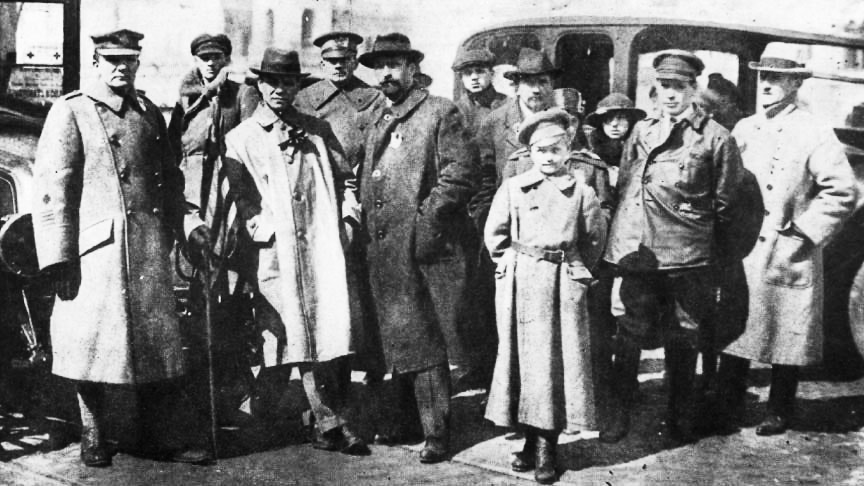
Raymond Robins, far left, next to Jacob Peters in a felt hat and cape. Together with Felix Dzerzhinsky, Peters was one of the founders and leaders of the Cheka, the secret police of Soviet Russia. Peters was married to May Freeman, the daughter of a London banker. Second from the right is a Jew from Russia, who emigrated to the United States, Alexander Gumberg, in a leather coat and boots. By 1922, Gumberg headed the Soviet Textile Trust. (Source: Wikipedia)
The head of the Red Cross mission fled Bolshevik Russia
As soon as Lenin and Trotsky announced their new government, Thompson, ostentatiously living with women, cars, and parties, decided to flee Russia for his own safety, leaving the American Red Cross mission in Robins’ hands.
Despite his close ties with Kerensky and arranging for Kerensky to leave St. Petersburg in a U.S.-flagged car, Robins immediately decided to arrange a meeting with Bolshevik leaders.
Alexander Gumberg, 30[43], Robins’s Russian translator and spokesman for the New York industrial goods acquisition agency Perelstrous[44] & Storms, had known Trotsky when they both lived in Manhattan in 1916 and 1917 Zorin, who had returned to Russia in March 1917 with Trotsky aboard the destroyer Kristianiafjord[45], now held high positions in the Bolshevik Party and could arrange a meeting with Trotsky.
Thompson’s last act as head of the Red Cross mission was to send Raymond Robins to meet with Kerensky at Gatchina to persuade him to hold the fort.[46] According to Robins[47], the meeting with Kerensky was unsuccessful, as he witnessed Kerensky’s troops refuse to perform military duties while he was incited by pro-Soviet troops nearby. When Kerensky’s fall was complete, Robins and Gumberg went to meet with Trotsky.[48]
First meeting with Trotsky, December 1917
Since it was well known in St. Petersburg that the director of the New York Federal Reserve and head of the American Red Cross Mission, William Boyce Thompson, had recently allocated $1 million to keep Alexander Kerensky’s Provisional Government in power, as soon as the Bolsheviks declared themselves the leaders of Russia, Thompson hurriedly left Russia. Bolshevik newspapers accused Thompson of being an influential broker on Wall Street. who came to Russia to gain control of the Trans-Siberian Railway for J.P. Morgan and copper mining in Russia for himself.[49] Leaving his luxury car and two dogs with his girlfriend, Thompson fled to London, where, accompanied by J.P. Morgan CEO Thomas Lamont, he met with Prime Minister Lloyd George to discuss how to keep Russian troops out of the war.[50]
Robins, on the other hand, had plates on sticks spinning everywhere. Manhattan businessman and translator Alexander Gumberg was now Robins’ ticket to negotiations with the heads of the new Russian government. Accompanied by Gumberg, Robins went to Smolny. He and Gumberg were accompanied by armed Red Guards with armored tanks, who guarded the entrance to the once wealthy girls’ school. Gumberg had a long conversation with the doorkeeper, explaining that Robins was now the head of the American Red Cross mission that had come to help the new government. He also explained that if they had any questions about his identity or purpose, they should find Gumberg’s brother, Sergei Zorin.
As the people entered Trotsky’s office, the Bolshevik captain shouted: “Counter-revolutionary, Comrade Trotsky! Counter-revolutionary!” the captain, who was now standing with Trotsky, pointed his finger at the dark-haired Robins. “I heard this man speak to the troops in the Petrograd barracks and there denounce the Bolshevik program!”[51]
Trotsky remained seated at his desk and allowed Robins to confer with his interpreter, Gumberg, who translated the captain’s accusation. Despite the denunciation, Robins stepped forward, which forced the captain to put his hand on the pistol, but Trotsky waved him off.
Robins raised his hand and calmly addressed Gumberg, telling him to explain to Trotsky: “Don’t have any illusions about me. I was for Kerensky. I came to Russia to help the Russian people, and I found Kerensky chairman of the revolutionary government of Russia. I began to work with Kerensky and worked with him for three months, as far as I had any strength. I did everything possible to prevent the Commissar from coming to power. [However] I recognize a corpse when I see it, and what needs to be done with the corpse is to bury it, not sit with it. Tell the Commissar that I believe that the Kerensky Government is dead, and that I believe that he has all the power that exists in Russia today. Tell the commissioner that I want to know if he wants the American Red Cross to stay in Russia and help the Russian people. If the American Red Cross can stay in Russia without compromising our own national interests, if we can act on that basis, we will stay. If we can’t, we’ll go. Tell the Commissar that, as far as I know his program, I am against it, but that I have no intention of interfering in the internal affairs of Russia. This is not my place. Tell the Commissar that if General Kaledin, General Kornilov, or the Tsar had the same authority as this morning, I would talk to Kornilov, Kaledin, or the Tsar.”[52]
Trotsky was more than polite to the copper magnate and representative of the interests of J. Morgan, pointing out that the American Red Cross mission could not only remain in Russia, but also asking how the Bolsheviks could help them. Robins asked Trotsky to provide armed guards to supply food and materials under the Red Cross emblem in railway cars and warehouses. Trotsky agreed.
Robins immediately repeated that the negotiations with Kerensky were now behind him and that he was convinced that American interests dictated negotiations and cooperation with the Bolsheviks.[53] Trotsky seemed to consider their conversation mutually beneficial.
Robins then advised Trotsky that “no government can remain in power if it cannot feed its people. If you can’t immediately overcome the economic paralysis at the top of Russian economic and industrial life; none of you will last longer than Kerensky at the top of this vast country. If you agree to economic cooperation with America, if you agree to open up Russian resources to the industry of the United States. If you allow us to assume economic leadership in this country, you will have a tremendous advantage over Germany. Germany has not run this show since the beginning of the war. The Germans are out of the game, and they will not return for a long time. At the same time, you will get this economic advantage; Otherwise, if you don’t, how are you going to feed your people? If we can get control of Russia’s economic resources, we’ll have a lot of fun, and we can, if it comes to a showdown, at least keep out anyone else.”[54]
Here Robins drew up a map that marked the centers of surplus and deficit of the primary food supply throughout European Russia, and also showed that with 30 days of work “under the guidance of a mind that knew how to extract oil from the ground with the help of existing machinery in Russia, 30 days simultaneously in the Baku oil region. and the same number of days on the Donets and other coal fields, followed by 60 days of transportation using Russia’s existing wagons and locomotives, he argued that the Americans could solve the problem of primary food supplies and feed all of Russia for the Bolsheviks if they allowed the United States to gain access to Russia’s resources.
Trotsky’s Verification of Robins
Robins, on whose orders it is still unknown, then asked Trotsky to send 32 Red Cross trucks with Bolshevik credentials through starving Ukraine to Iasi, Romania.
Trotsky wanted to know why the Bolsheviks should ensure that the supplies they needed in Russia would be delivered from Murmansk on the trains they needed to get troops home from the front, through the Ukraine, and into Romania, noting that the parts of Ukraine through which this train of medicine and food would pass were areas where people were already starving. Wasn’t the Red Cross in Russia supposed to help the Russian people, who were already suffering from hunger?
Robins acknowledged that the request had been intended as a test during a Senate hearing in 1919. Robins told Trotsky that by acceding to his request, we would show that the new Bolshevik government was prepared to make efforts to help a group that was “fighting honestly against the Germans.” This would show that the Bolsheviks controlled these areas and that Trotsky and his government had sufficient power. to protect this train from looting even as it passes through hungry areas. “If you can do that, Commissioner, I’ll tell my government that you’re the people we can do business with here because you have the power… And, frankly, Commissioner, if you do not have the United States and its financial and technical power, you will not last here. Germany is finished. You can’t turn to them to build and run your factories. You can’t turn to them or any of the other allies for financial assistance. No, because they’re all finished for at least the next decade. They’re going to be concentrating on self-restoration, and they won’t have the resources to invest in Russia. The United States is now the financial center of the world. So if you don’t have our support, you won’t stay in power for long.”[55]
Robins stated that the supplies were intended for Romania and not for the starving Russians, since Romania was still in conflict with Germany and Austria.[56] Trotsky agreed to provide Red Army troops to guard the train and supply it, thus satisfying not only Robins but also the Allied governments, who still suspected that Trotsky and Lenin were receiving salaries from the German High Command. The test was also designed to determine whether the Bolsheviks controlled this vast geographical area and whether they could ensure the safe and fast delivery of goods from the Union countries.
Red Cross humanitarian supplies passed through famine-stricken Ukraine and arrived in Romania[57] without incident, and Trotsky passed this test of Allied loyalty.
Robins began to come to Smolny daily. He saw Lenin frequently, and Trotsky almost every day. Ambassador Francis had remained aloof, overshadowed by the businessmen who had rushed to Russia as soon as the Tsar was overthrown; and now even more so because of Robins’s active desire for contacts with the new Bolsheviks, a regime with which the American government publicly disagreed. From time to time, Robins stopped by the American embassy to confer with the ambassador, but the relationship was awkward and filled with jealousy. Robins clearly exceeded his official authority as the new chief of mission of the American Red Cross; however, he was not reprimanded by either the leadership of the Red Cross or the US State Department.[58]
– To be continued –
List of Sources / References
Office of the Historian, Documents Relating to the International Relations of the United States, Lansing Papers, 1914-1920, Volume II, 763.72/106101/2, Lieutenant Colonel Raymond Robins to Secretary of State, Washington, July 1, 1918 https://history.state.gov/historicaldocuments/frus1914-20v02/d201
“Gabriela Gavrilova (2025)”, “American-Russian Commercial Relations: 1763-1933”, “The Origins of Russophobia“, New Delhi, Atlantic
George F. Kennan (1958), Russia Emerging from the War, Soviet-American Relations 1917-1920, New York; Norton & Co.
Richard Spence (2017), Wall Street and the Russian Revolution. New York; Trina Day.
Neil W. Salzman (1991), Reform and Revolution: The Life and Times of Raymond Robins, Kent State University Press.
Leo D. Bacino (1999), Reconstructing Russia: U.S. Policy in Revolutionary Russia, 1917-1922, Kent State University Press.
Michelle Kearns (2011), Red Hero, Black Sheep, Buffalo News, http://www.mkearnsreporter.com/redHero.html
Robert Muccigrosso, ed. (1988), A Research Guide to American Historical Biography, 3:1329–33.
James C. Libby (1977), Alexander Gumberg and Soviet-American Relations 1917-1933, Lexington, Kentucky University Press.
Norman E. Saul (2001), War and Revolution: The United States and Russia, 1914-1921, University of Kansas Press.
Bolshevik Propaganda, Hearings of the Subcommittee on the Judicial System, 65th U.S. Congress, 3rd Session, pursuant to Resolutions S. 439 and 469, February 11, 1919 to March 10, 1919.
UDC: 347.73
DISNEY/WARNER BROTHERS DISCOVERY v. MIDJOURNEY AND RAINE v. OPENAI & ALTMAN LAWSUITS AND IMPLICATIONS FOR THE DEVELOPMENT OF THE ARTIFICIAL INTELLIGENCE INDUSTRY
Kildeev Adel
Zhdanov A. Leningrad State University (1990)
Philosophiæ Doctor in Law
ORCID: 0009-0001-2211-4944
Abstract: The article analyzes three lawsuits that can change the future of the AI industry: the Disney/Warner Brothers Discovery lawsuits against Midjourney for massive copyright infringement and Raine’s lawsuit against OpenAI and Sam Altman over the death of a teenager due to interaction with ChatGPT. The first two lawsuits deal with the issue of intellectual property and may lead to the introduction of royalties for content generation, the third lawsuit raises the problem of liability for the first time AI developers for harm to the life and health of users. All three cases form a new legal framework for the regulation of artificial intelligence.
Keywords: artificial intelligence; copyright; Midjourney; Disney; Warner Brothers Discovery; OpenAI; Sam Altman; a lawsuit; wrongful death, regulation of AI; user security.
When preparing the article, the author used generative AI systems, including, but not limited to: ChatGPT (OpenAI), Gemini (Google), Grok (xAI). All final decisions are made personally by the author
This article is a logical continuation of my previous articles: 1. “Artificial Intelligence as a human servant or vice versa: legal aspects”, published in the first issue of this journal (April 2025), 2. The Ethical Use of Artificial Intelligence: A Global Overview of Principles, Practices, Regulations and Implications”, published in the second issue of the same journal (May 2025). 3. “Artificial Intelligence and Copyright: Legal Aspects”, published in the third issue of the same journal (June 2025). From the reasoning and disputes of scientists and legislators, copyright holders have moved on to an active attack on the Artificial Intelligence industry[59].
The Empire Strikes Back
This is a recent June 11, 2025 lawsuit filed in federal district court in Los Angeles, California (Case No 25-5275) by Hollywood film companies Disney, Marvel Characters, MVL Film Finance, Lucasfilm, Twentieth Century Fox Film, Universal City Studios, DreamWorks Animation, co-plaintiffs, against AI company Midjourney, defendant, based on allegations that the AI engine described in the lawsuit as a “bottomless pit of plagiarism”[60], was trained on the copyrighted works of both companies without permission.
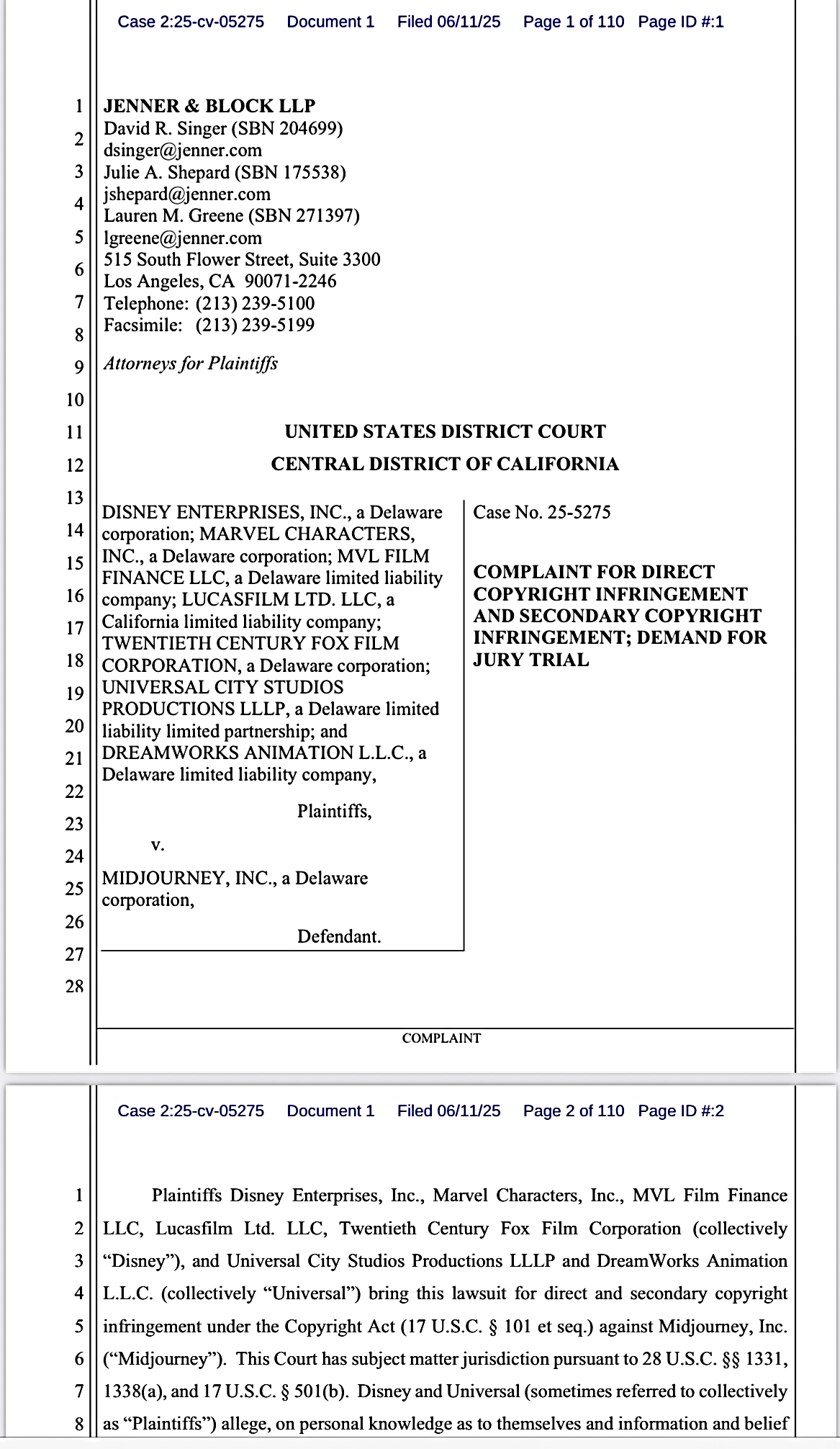
Fig. 1. First page of the statement of claim
I must express my admiration for the team of lawyers who worked on this statement of claim. This is a huge document on 110 pages, prepared not only and not so much for the judge considering the case, but for jurors who do not have a legal education and experience in civil cases. illustrating the direct copying of Disney and other studio characters by Midjourney (they are also duplicated in the appendices to the statement of claim).
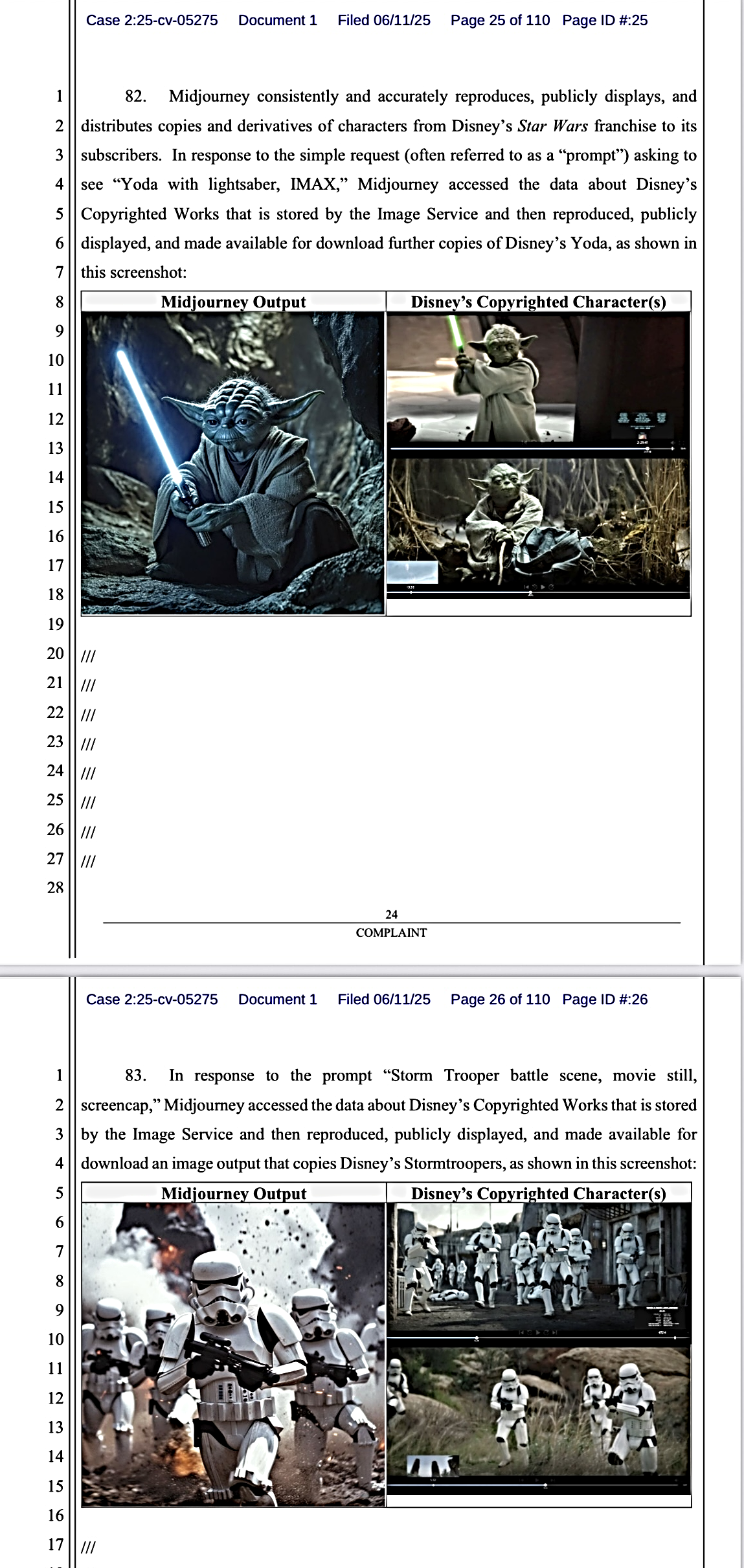
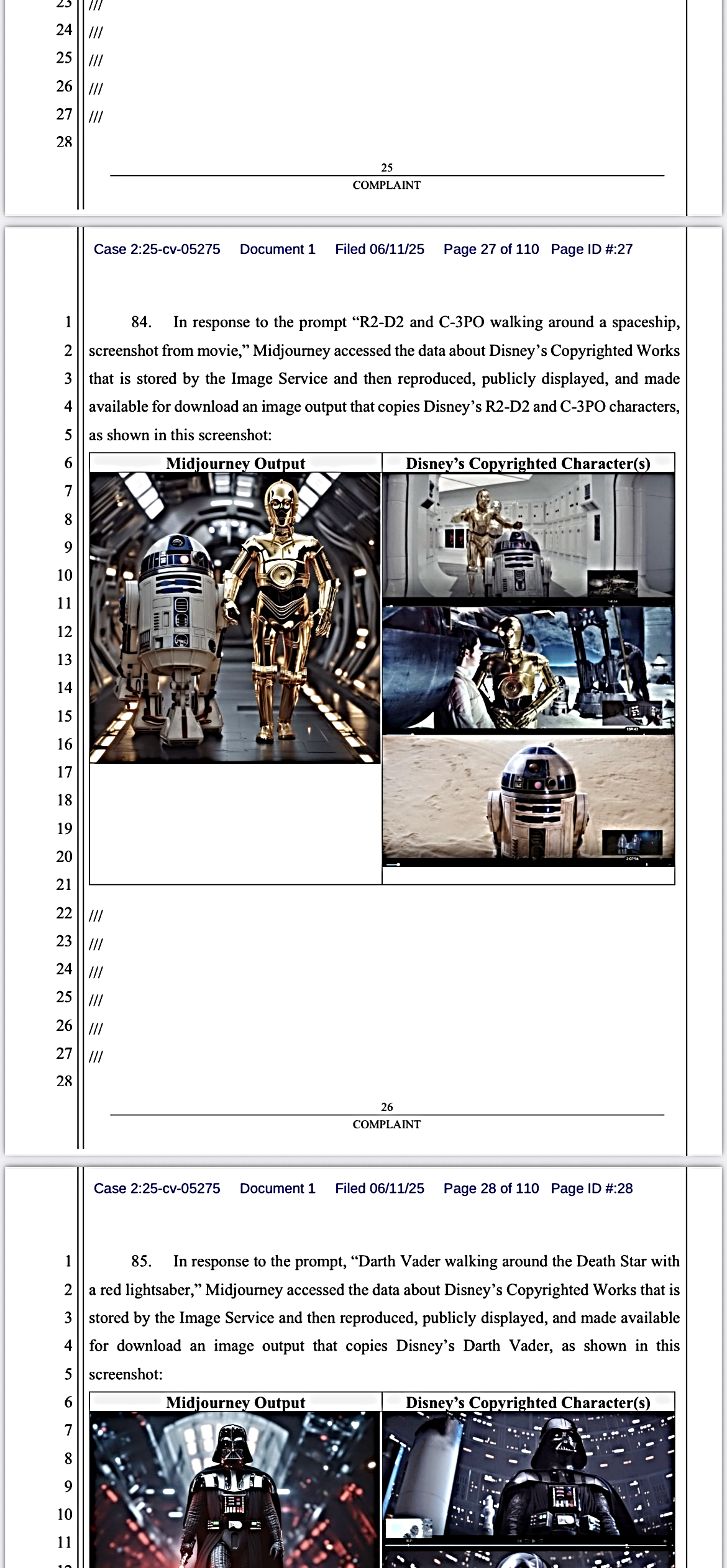
Fig. 2. Pages of the statement of claim with photos
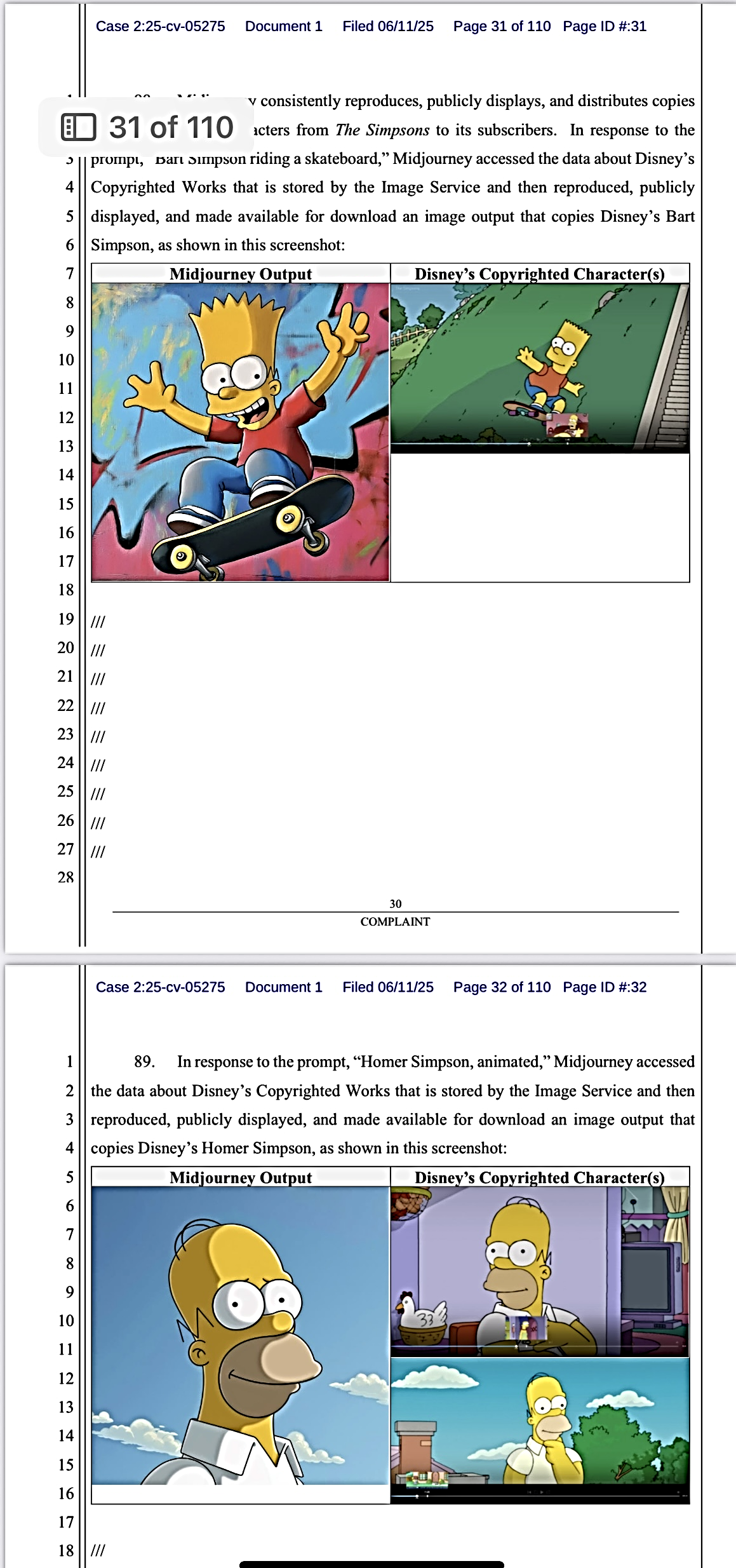
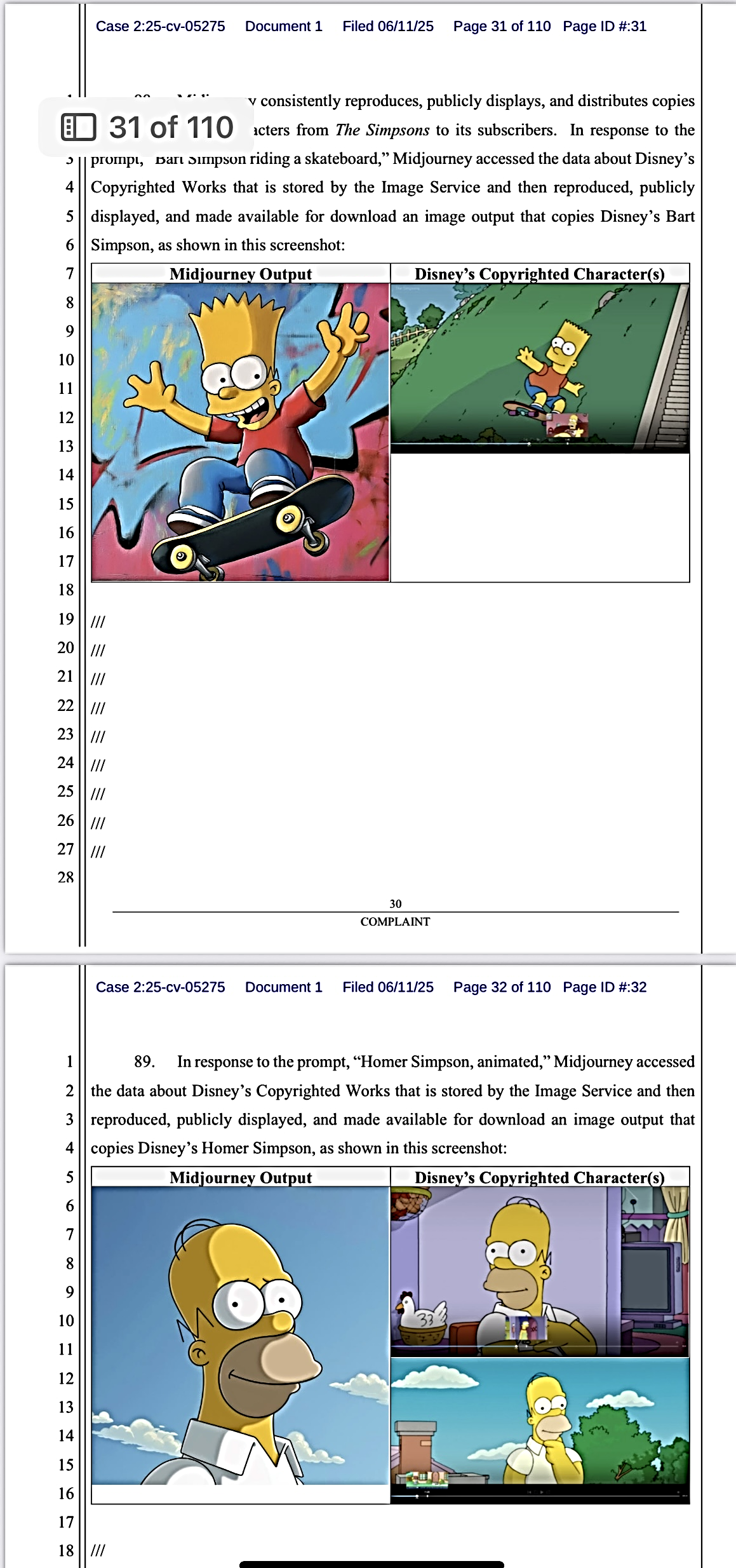
Fig. 3. Statement of claim page with photos
The lawsuit alleges that Midjourney pirates the libraries of Hollywood studios, making and distributing “countless” copies of characters such as Darth Vader from Star Wars, Elsa from Frozen, and minions from Despicable Me.
As I previously wrote, in Andersen v. Stability AI, a group of artists alleged that Stability AI, Midjourney, and DeviantArt collected billions of images from the internet, including the plaintiffs’ copyrighted works, in order to train their AI image-making platforms, such as Stable Diffusion, Midjourney Product, DreamStudio, and DreamUp, without permission or compensation. The court held that the plaintiffs’ claims that that Stability acquired copies of the Plaintiffs’ copyrighted works, used those works to train Stable Diffusion, and then retained or incorporated the training images derived from their works into Stable Diffusion as compressed copies, were sufficient to claim direct infringement. [61] But Disney v. Midjourney is fundamentally different in that it is a precedent-setting blow to the result of generation, that is, the actual ban on the generation of well-known characters and the collapse of visual AIs.
Here is the translation of the preamble of the statement of claim (by Microsoft translation service):
1. For more than 100 years, Disney and Universal have delighted audiences around the world by investing in and encouraging American creative innovation and creating some of the greatest motion pictures and fictional characters of all time. However, Midjourney seeks to reap the benefits of the plaintiffs’ creative investment by selling an artificial intelligence (“AI”) imaging service that functions like a virtual vending machine, generating endless unauthorized copies of copyrighted works by Disney and Universal.
2. Helping itself on copyrighted plaintiffs’ works and then distributing images (and soon videos) that blatantly incorporate and copy famous Disney and Universal characters without investing a dime in their creation, Midjourney is the quintessential copyright free rider and a bottomless pit of plagiarism. Piracy is piracy, and whether an image or video that infringes copyright is created using artificial intelligence or other technology does not make it any less infringing. Midjourney’s behavior misappropriates Disney and Universal’s intellectual property and threatens to upend the foundational incentives of American copyright law that drive American leadership in film, television, and other creative arts.
3. Violation by Midjourney is intentional and intentional. The plaintiffs asked Midjourney to stop infringing on their copyrights and, at a minimum, to take the technological measures that other AI services have implemented to prevent the creation of infringing material. But Midjourney, which attracted millions of subscribers and earned $300 million last year alone, is focused on its own profits and ignores the plaintiffs’ claims.
4. Instead, Midjourney has decided to double down on its illegal activities by producing and promoting even newer versions of its Image Service and teasing its upcoming commercial AI-powered video service (the “Video Service”). Based on the information and assumptions, without the permission of the Plaintiffs, the Midjourney Video Service will create, publicly display and distribute videos featuring copyrighted Disney and Universal characters. Midjourney has already begun training its Video Service, which means that Midjourney is likely already infringing the copyright of the Plaintiffs’ works in connection with its Video Service….[62]
Grounds of action
The plaintiffs claim that:
Legal basis:
The lawsuit was filed on the basis of:
Main charges
1. Direct Copyright Infringement
— automatic generation of images with elements (appearance, costumes, style) of famous characters from Marvel, Lucasfilm, etc.
2. Contributory and Vicarious Infringement
Midjourney has consciously created a system through which users violate copyright, receiving images stylized as Star Wars, Spider-Man, etc.
Prayer for Relief
That is, if the plaintiffs prove that 10,000 infringing images x $150,000 were generated.= $1.5 billion in potential fine. Even with a mitigating solution, the compensation could be catastrophic for Midjourney and have a precedential effect on the entire generative AI industry.
Disney and Universal have asked the court for a preliminary injunction to prohibit Midjourney from copying their work or offering its image or video creation services without protection from infringement. That is, to stop the company’s activities even before the final court decision is made.
The lawsuit is not just for compensation — it is aimed at a total ban and dismantling of the Midjourney business model, based on the generation of images based on protected characters. This is a strategic attack by large IP holdings on the generative AI industry, especially on visual neural networks.
The statement of claim states that the plaintiffs provided the defendant with an official demand to stop copyright infringement, but this demand remained unanswered by the defendant.
The law sets a deadline of 21 days for filing a Response to the Claim, officially it was supposed to be filed on July 2. However, it was not until August 6, 2025, that the defendant, Midjourney, filed an Answer.[63] This step radically changes everything and refutes the initial assumptions about the defendant’s passive position, demonstrating his readiness for an active and multifaceted legal defense. In contrast to the expected surrender or acquiescence, Midjourney presented a detailed counter-argument based on several key legal principles. This chapter examines the arguments put forward by the defendant and their potential impact on the litigation prospects of the case, as well as the general discussion on the legal status and regulation of generative AI.
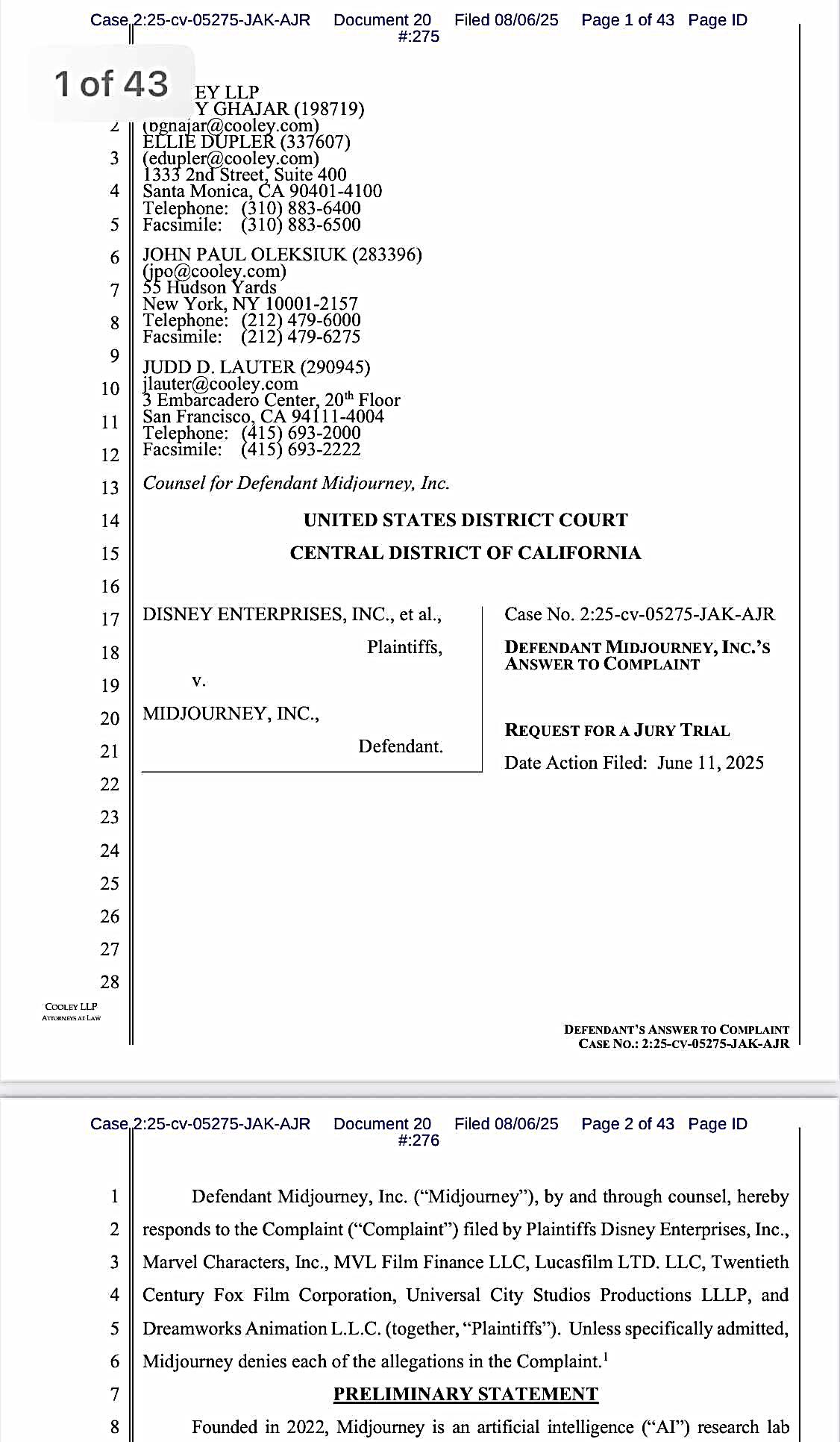
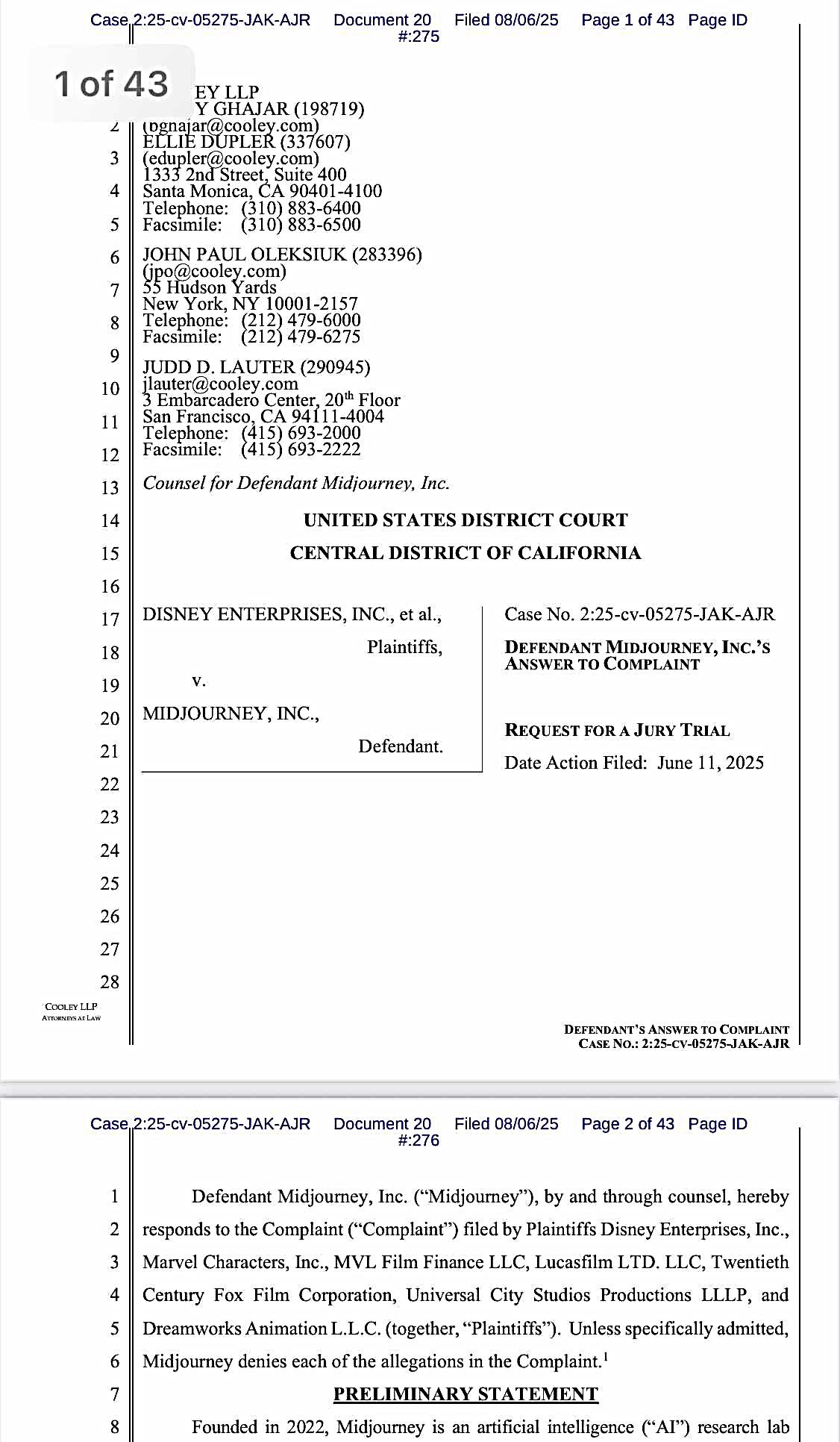
Fig. 4. The first page of the Response
Preamble to the Midjourney Lawsuit
From the outset, Midjourney has taken an uncompromising stance, proclaiming its innocence and claiming that the lawsuit by Disney and other rights holders lacks sufficient legal basis. The defendant begins by categorically denying all allegations of direct, facilitating, and consequential copyright infringement, insisting that their service is not a “bottomless pit of plagiarism.”
The Preamble contains all the main provisions of the defense, so I will cite excerpts from it (translation by Microsoft translation service):
“Founded in 2022, Midjourney is an artificial intelligence (“AI”) research lab dedicated to creating tools that augment and expand the human imagination. The eponymous generative AI platform does just that, allowing tens of millions of users, including plaintiffs, to express themselves in ways that would otherwise be impossible. For many, Midjourney has become an important tool for bringing their ideas to life: user images have won awards, graced magazine covers, appeared in national advertisements, and served as the basis for the scenery for the Oscar-winning film.
The artificial intelligence technology behind Midjourney is a type of neural network designed to create original images in response to user instructions (“prompts”). To develop this capability, Midjourney’s AI models had to be trained on billions of publicly available images that are mapped to textual descriptions to learn visual concepts and how they relate to language. During training, complex statistical relationships between visual features and words in text-image pairs are encoded within the model, allowing it to understand user prompts and respond to them accurately. This process is akin to how people learn to draw or paint, not by memorizing individual works of art, but by internalizing patterns and techniques through repeated exposure and practice. Similarly, Midjourney models form a generalized understanding of visual styles, objects, and compositions based on statistical patterns in the training data. When the user enters a query, the model does not retrieve the image from storage; rather, the new image is synthesized from scratch, guided by the user’s instructions and statistical patterns encoded in his artificial neurons.
The plaintiffs, who jointly represent two of the largest traditional media companies in the world, have benefited and continue to benefit from Midjourney and other similar generative AI tools. Indeed, many dozens of Midjourney subscribers are linked to the Plaintiffs’ corporate email addresses, and Midjourney is also a popular tool among visual effects companies and other vendors hired by the Plaintiffs. As Bob Iger, the CEO of Disney, recently exclaimed during a discussion about his company’s use of artificial intelligence, “technology is an invaluable tool for artists,” and generative AI is no different.
Years after its launch, the plaintiffs are now targeting Midjourney for two reasons.
First, they argue that the process of training an AI model on billions of images infringes on their rights, even though only a small fraction of those images may contain individual stills from the Plaintiffs’ films and shows. In fairness, plaintiffs cannot have both, seeking to profit – through the use of Midjourney and other generative AI tools – from industry-standard AI training practices on the one hand, and accusing Midjourney of wrongdoing for the same. But the plaintiffs are also mistaken about the merits of the case. Copyright law does not provide absolute control over the use of copyrighted works. The limited monopoly granted by copyright must give way to fair use that protects conflicting public interests in the free flow of ideas and information. Training a generative AI model to understand concepts by extracting statistical information embedded in copyrighted works is the quintessential transformative fair use with the support of courts that have considered the issue….
Secondly, the plaintiffs complain that Midjourney created and posted images that depict characters from popular films and television series, that these images themselves infringe copyright, and that Midjourney is responsible for their creation. But the plaintiffs’ wording is based on a misunderstanding of how Midjourney works and its role in the creative process. The Midjourney platform is a tool for users to express themselves. It helps you create images only at the direction of users, guided by their instructions, which is often a complex and time-consuming process of experimentation, iteration, and discovery. And while Midjourney users are required to act in accordance with Midjourney’s Terms of Service to refrain from infringing on the intellectual property rights of others, including Plaintiffs’ Rights, Midjourney does not and cannot know whether any particular image is infringing in the absence of notice from the copyright owner and information about how the image is used. Indeed, there are many legitimate, non-infringing grounds for creating images that include characters from popular culture like those claimed by the plaintiffs, including non-commercial fan art, experiments and ideas, and social commentary and criticism. The plaintiffs seek to strangle them all. The plaintiffs could and should have followed Midjourney’s notification and takedown procedure under the Digital Millennium Copyright Act, codified in the Terms of Service, by identifying the specific images they believe are infringing and providing the URLs where they are displayed. This would provide an opportunity for any accused Midjourney users to respond. Instead, the plaintiffs have made sweeping accusations against Midjourney, started this lawsuit, and are following a path that restricts legitimate expression.
At the end of the day, this case is not about how Midjourney is cashing in on what the Plaintiffs called “infringement.” Midjourney is not. Nor is there any alleged “harm” to the Plaintiffs; They did not identify any. Rather, it is a matter of alleged copyrights giving them the right to prohibit the use of their works to train generative AI models and to prevent elements of those works from being included in the creations of generative AI users, regardless of the content of those creations and the end purposes for which users use them. The plaintiffs have no right to do so. Copyright “has always been closely linked to freedom of expression on the one hand, and technological improvements in the medium of dissemination on the other,” with the law recognizing that the limited use of copyrighted material to create new technologies and media contributes to the ultimate goal of copyright: to stimulate creative expression for the benefit of society…. As Midjourney will establish, the plaintiffs’ over-intervention is based on a fundamental misunderstanding of generative AI, its role in user creation, and the principles underlying copyright law.”[64]
This magnificent Preamble can be called the Manifesto of the freedom of AI creativity, I pay tribute to the high professional level of the Defendant’s lawyers. Midjourney argues that the plaintiffs’ lawsuit is not aimed at protecting copyright, but at suppressing generative AI innovation. The key provisions of their protection, presented in the preamble, are as follows:
Thus, the preamble to the Response to the Lawsuit sets the tone for an aggressive and confident defense from the very first lines, building a line of defense around principles that can become a precedent for the entire AI industry.
Key theses of the Midjourney defense
Midjourney builds its defense around the doctrine of fair use, which allows the use of copyrighted works without obtaining the permission of the copyright holder, subject to certain conditions.
In its response, Midjourney states that:
This argument is central, as it directly challenges Disney’s core copyright infringement claim. The success or failure of Midjourney will largely depend on how the court interprets the doctrine of “fair use” in the context of training generative AI models.
The second key thesis of the Midjourney defense is to shift the responsibility for creating content to the users themselves. The company claims that it is not an active creator of infringing content, but only provides a tool – similar to a pencil, camera or text editor.
As part of this argument, Midjourney emphasizes the following points:
If the court sides with Midjourney on this issue, it could set an important precedent that AI developers will not be treated as “infringers” but as “technology providers,” which would significantly change the legal landscape.
3. Lack of evidence: “Unsubstantiated allegations” and lack of specifics
Midjourney strongly contests the allegations, arguing that the Plaintiffs’ claim is based on “unsubstantiated allegations” and “speculative inferences” rather than factual evidence. The defendant points out that:
This argument is key, as it attacks the lawsuit from the procedural side. Even if the court finds that the doctrine of “fair use” does not apply, the plaintiffs will still have to provide substantial evidence that Midjourney has indeed infringed their rights, which the defendant claims they failed to do.
The following sections of the Response to the Claim are standard for civil actions, they either directly and completely deny or admit the facts and claims of the Plaintiffs, or contain the standard wording “does not know”. For readers, I will explain that the purpose of the Response to the Claim is either to fully or partially recognize the stated facts and claims of the Claimant, or to reject them in whole or in part.
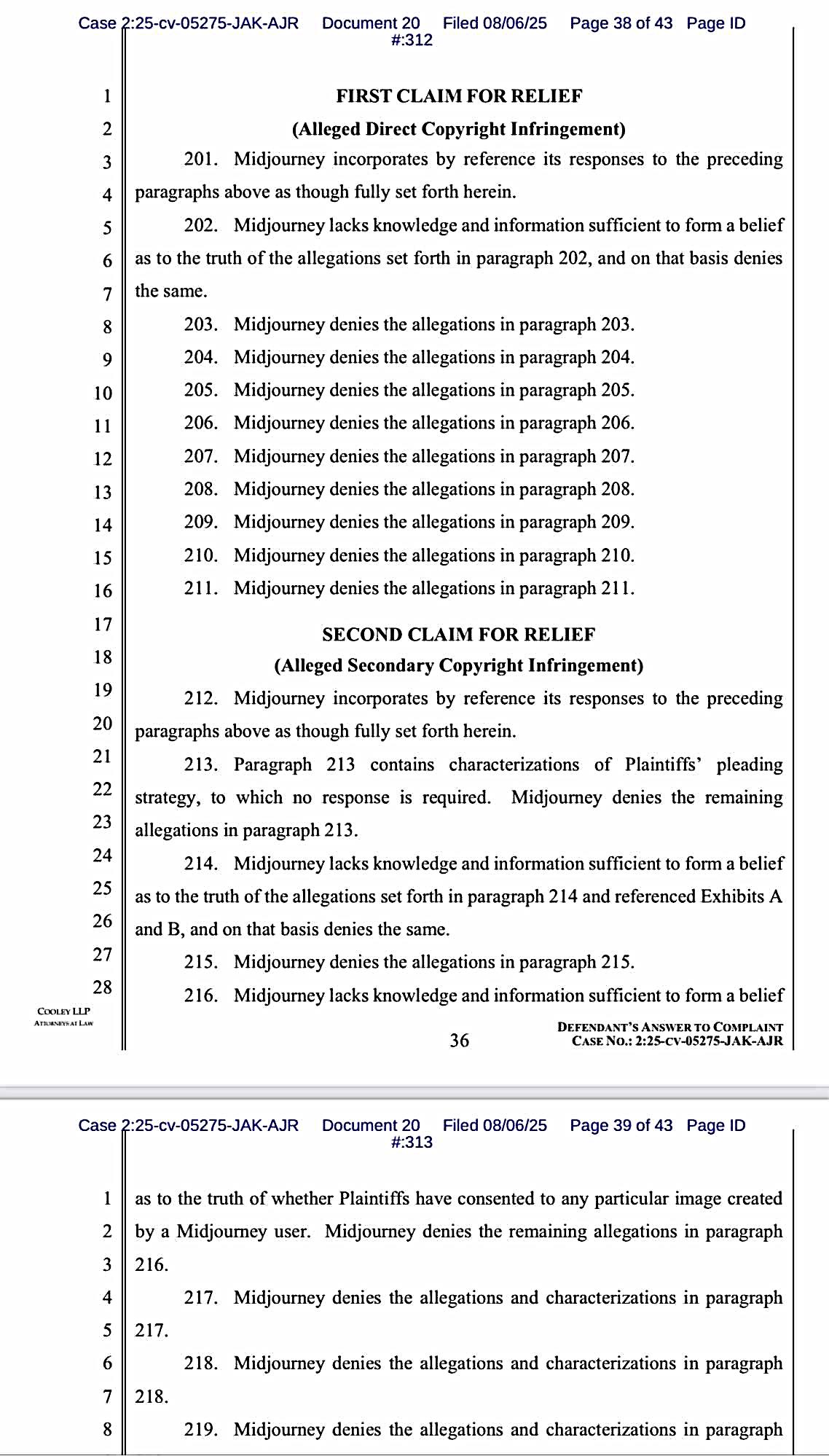
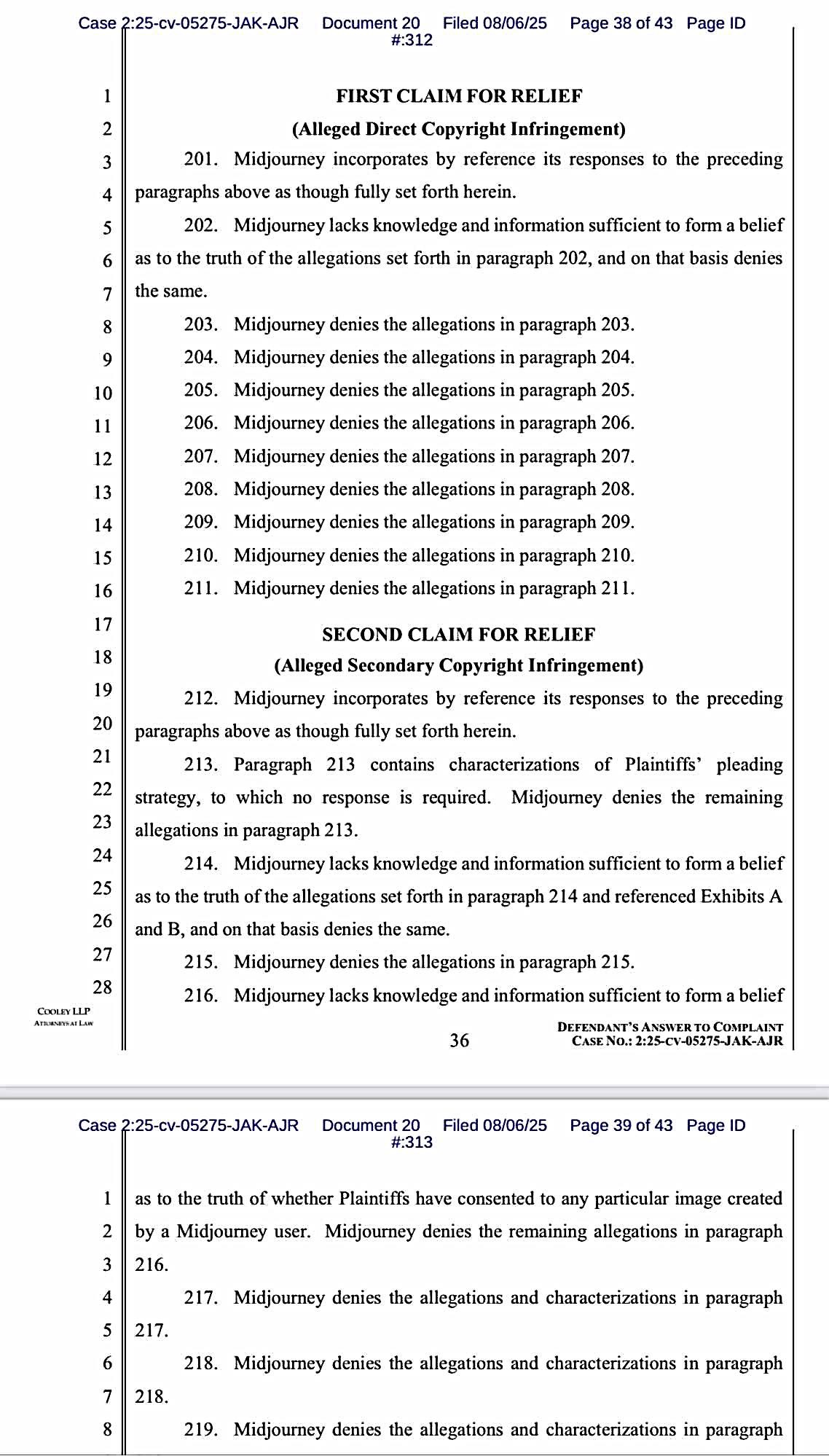
Fig. 5. Claim Response Page Rejecting Plaintiffs’ Claims
Midjourney rejects all claims of the Plaintiffs, asks to dismiss the Claim and recover from the Plaintiff reasonable attorneys’ fees and all legal costs (fees, expert costs, etc.).
I confess that I did not fully believe that Midjourney would take such an irreconcilable and aggressive position in this process. But this position, despite its legal vulnerability in a number of provisions, deserves respect. Midjourney has decided to fight to the end, and we are about to witness an exciting trial over the freedom to use Artificial Intelligence.
Following the proverb: a holy place is never empty, there is a tendency to file similar lawsuits. The American company Meta (recognized as extremist and banned in the Russian Federation) was at the center of a trial. It was suspected of illegal distribution of adult films through the BitTorrent network in order to subsequently use the content to train artificial intelligence models. A lawsuit against the company was filed by the manufacturer of pornographic films Strike 3 Holdings, claiming that Meta (recognized as extremist and banned in the Russian Federation) has distributed at least 2.4 thousand videos without the permission of the copyright holder since 2018.[65] The plaintiffs claim that Meta purposefully selected popular new products, which then remained available for download by unauthorized persons, including minors, for weeks and even months.[66]
The lawsuit was filed in the Federal District Court for the Southern District of Florida (case No 1:24-CV-21387-RNS) on July 23, 2025.[67] The main legal grounds are copyright infringement, negligence and facilitating piracy through algorithms and insufficient moderation.
And this is just the beginning, many film studios, artists, actors, writers, musicians will begin to go to court and demand respect for their copyrights and the payment of huge compensations.
Superman flies to court
On September 4, 2025, Warner Brothers Discovery (WBD) and a number of other studios (DC Comics, Turner Entertainment Co., Hanna-Barbera Productions, the Cartoon Network) filed a lawsuit in federal court in Los Angeles (C.D.Cal., No.2:25-cv-08376) against the same Midjourney, similar to the above lawsuit Disney v. Midjourney[68]. According to the plaintiffs, Midjourney trained its system on illegal copies of films/TV shows and massively reproduces, publicly displays and distributes images and videos of WB characters – from Batman and Superman to Looney Tunes – including on Explore and Midjourney TV. The plaintiffs are seeking an injunction, forfeiture of profits or statutory damages of up to $150,000 for each act of violation, as well as attorneys’ fees and court costs in the case.
The plaintiffs’ attorneys are the same law firm Jenner & Block LLP, which is representing Disney in the lawsuit against Midjourney. The lawsuit consists of 86 pages and Appendix A. The structure of the lawsuit is largely similar to the Disney lawsuit, but there are also some peculiarities. The lawsuit is written in plain language accessible to the jury, and is provided with a large number of pictures clearly demonstrating WB’s copyright infringements by Midjourney.
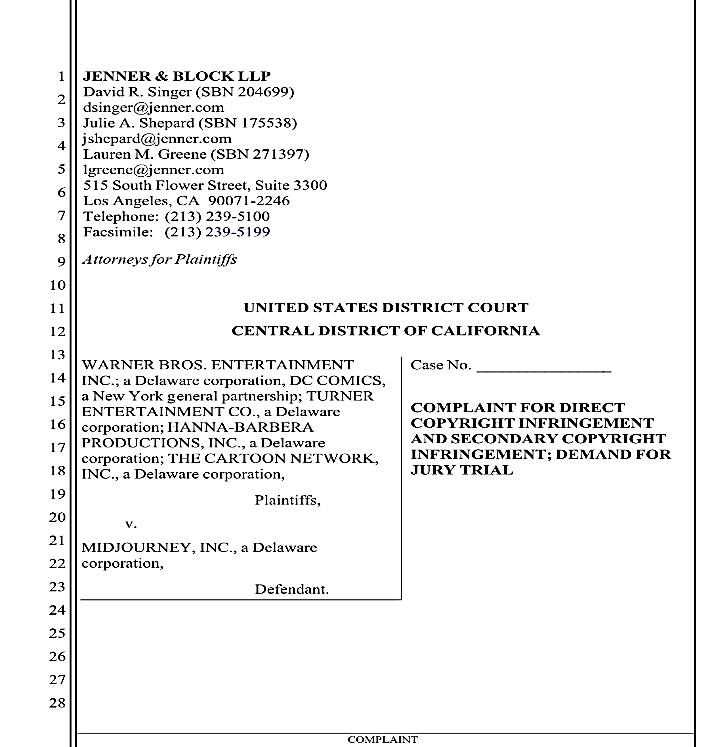
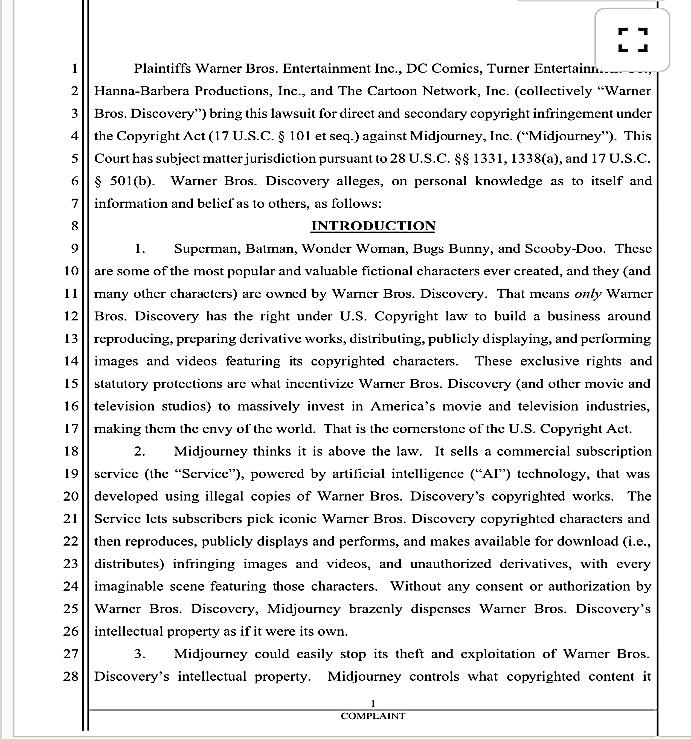
Fig. 6. First page of the WBD statement of claim
Here is the translation of the preamble of the statement of claim (by Microsoft translation service):
«1. Superman, Batman, Wonder Woman, Bugs Bunny and Scooby-Doo. These are some of the most popular and valuable fictional characters ever created, and they (and many other characters) belong to Warner Bros. Discovery. This means that only Warner Bros. Discovery has the right under U.S. copyright law to build a business on the reproduction, preparation of derivative works, distribution, public display, and performance of images and videos featuring copyrighted characters. These exclusive rights and statutory protections incentivize Warner Bros. Discovery (and other film and television studios) to invest heavily in the film and television industry America, making them the envy of the whole world. It is the cornerstone of the U.S. Copyright Act.
2. Midjourney believes that it is above the law. It sells a commercial subscription service (the “Service”) based on artificial intelligence (“AI”) technology that was developed using illegal copies of Warner Bros. Discovery’s copyrighted works. The Service allows subscribers to select iconic characters copyrighted by Warner Bros. Discovery and then reproduce, publicly display and perform, and make available for download (i.e., distribute) images and videos that infringe copyrights, as well as unauthorized derivative images of every conceivable scene featuring those characters. Without any consent or permission from Warner Bros. Discovery, Midjourney brazenly distributes Warner Bros. Discovery’s intellectual property as if it were its property.
3. Midjourney can easily stop the theft and exploitation of Warner Bros. Discovery’s intellectual property. Midjourney controls what copyrighted content it aggregates, selects, copies and learns. Midjourney also controls the output of its Image and Video Service and has the means to implement safeguards to prevent the continuous reproduction, public display, public performance and distribution of Warner Bros. Discovery’s works. Midjourney already has the technological means and measures that can prevent its distribution, public display, and public performance of infringing images and videos. But Midjourney made a measured and profit-oriented decision to offer copyright owners zero protection, despite the fact that Midjourney is aware of the exciting scale of piracy and copyright infringement.
4. Midjourney’s recent behavior shows that the company is indeed aware that the Service is infringing on Warner Bros. Discovery characters and has the ability to stop the infringement. After launching video generation, the Service temporarily refused to “animate” (i.e., generate video) many of the counterfeit images of Warner Bros. Discovery characters created by Midjourney. Midjourney can only do so because it acknowledges that its Service’s products infringe Warner Bros. Discovery’s copyright. Despite this possibility and awareness, over the past few weeks, Midjourney has intentionally removed these anti-video measures from its service. And Midjourney has announced this change, officially announcing a so-called “improvement” in Midjourney’s “video moderation” and stating, that his followers will experience “fewer blocked tasks.” 1 Midjourney also continues to create countless infringing images. It’s hard to imagine a more deliberate copyright infringement than what Midjourney does.
5. Other AI-powered image and video creation services have introduced copyright protections that recognize and protect the rights of content creators, such as Warner Bros. Discovery. These readily available measures can be implemented in a number of ways: first, by excluding Warner Bros. Discovery’s copyrighted works from the development and training of AI software for the Service. Second, by denying requests that request the display or download of copyrighted Warner Bros. Discovery characters. And third, with technology to identify counterfeit images, both images and videos.
6. However, Midjourney prioritizes and strives to save the hundreds of millions of dollars it earns annually from its Service by redoubling its efforts to steal copyrighted works. Midjourney has decided not to apply any copyright protections to the countless infringing images and videos that it continues to publicly display, publicly perform, and distribute, and to revoke the copyright protections it has implemented for a short period of time to restrict the production of infringing videos. Midjourney also recently revealed part of its pirate scenario: using its illegal and infringing material to replace and compete with Warner Bros. Discovery’s copyrighted works in another way. Midjourney recently launched “Midjourney TV,” a 24/7 video streaming channel that is publicly available through midjourney.tv or Midjourney’s official YouTube page. Midjourney TV is another opportunity for Midjourney to promote, advertise, and publicly display videos created by its Service and distributed to other subscribers.
7. Despite being aware of copyright infringements on Warner Bros. Discovery’s works, Midjourney remains bold and unflinching. If a Midjourney subscriber submits a simple text request asking for an image of Superman in a specific setting or to perform a specific action, Midjourney generates and displays a high-quality downloadable image of Warner Bros. Discovery’s copyrighted Superman image (Figure 7):
Fig. 7. Image of Superman Fig. 8. Image of Batman
8. Similarly, if a Midjourney subscriber submits a simple text prompt asking for Batman in a specific setting or performing a specific action, Midjourney generates and displays high-quality downloadable images of Batman (Figure 8).
9. Similarly, if a Midjourney subscriber sends a simple text invitation asking for a Wonder Woman in a specific setting or performing a specific action, Midjourney generates and displays high-quality downloadable images featuring Wonder Woman (Figure 9).
Fig. 9. Image of Wonder Woman Fig. 10. Image Tweety
10. If a Midjourney subscriber submits a simple text request with a Tweety request in a specific setting or performs a specific action, Midjourney generates and displays high-quality downloadable images involving Tweety (Figure 10).
11. If a Midjourney subscriber sends a simple text invitation asking them to use Scooby-Doo in a certain setting or to perform a specific action, Midjourney generates and displays high-quality downloadable images of Scooby-Doo (Figure 11).
Fig. 11. Image of Scooby Doo
12. Even in response to general queries such as “classic superhero battle from comics” that do not mention a Warner Bros. Discovery copyrighted character, Midjourney generates and displays high-quality downloadable images featuring Warner Bros. Discovery characters such as Superman, Batman, and the Flash (Figures 12, 13).
Fig. 12, 13. Images of Superman, Batman and the Flash
13. Midjourney will then generate a video featuring any of these copyrighted characters. Below are footage from the copyright-infringing videos created by Midjourney, to name just a few examples (Figures 14, 15).
Fig. 14, 15. Film stills generated by Midjourney
14. Midjourney also copies and uses copyrighted Warner Bros. Discovery characters to market and promote its Service, which further infringes (and falsely hints at Warner Bros. Discovery’s endorsement). As a result, subscribers have drawn attention to the Midjourney service because of its ability to create images that infringe on Warner Bros. Discovery’s copyright.
15. Obviously, Midjourney will not stop stealing Warner Bros. Discovery’s intellectual property until a court orders it to stop. Large-scale infringement by Midjourney is systematic, ongoing and intentional, and Warner Bros. Discovery has been and continues to cause substantial and irreparable damage from it. Warner Bros. Discovery is filing a lawsuit to stop Midjourney piracy and uphold U.S. copyright law, as well as critical incentives that reward those who create rather than those who take.”[69]
Grounds of action
The plaintiffs claim that:
Legal basis:
The lawsuit was filed on the basis of:
Main charges
1. Direct Copyright Infringement
2. Secondary Copyright Infringement – including on the basis of the right and ability to control violations and derive direct benefits.
Prayer for Relief
A) violate the exclusive rights of WBD (copying, public display, public performance, distribution of works);
B) offer image-service without suitable copyright protection measures”;
C) offer a video-service without such measures;
D) “otherwise” engage in the described, violating behavior.
6. Reimbursement of legal costs and attorneys’ fees under § 505.
7. Any other equitable remedy that the court deems appropriate.
8. Jury trial.
Key Differences Between WBD Lawsuit and DISNEY Lawsuit
Midjourney Defense
I suppose it will be similar to the Disney Defense, but there are a few peculiarities:
Consequences of DISNEY and WBD lawsuits
If, despite aggressive defense and the best efforts of lawyers, Midjourney fails to defend itself in court and loses both cases, then this could mean not only the complete bankruptcy of the company, but also a severe blow to the powerful AI industry.
Even if the claim is partially satisfied, this court decision will become a precedent that will cause a wave of licensing of training samples and change the economics of generative AI.
Necessary measures
Raine’s lawsuit against OpenAI and Altman
On August 26, 2025, Matthew Raine and Maria Raine, parents of 16-year-old Adam Raine from California, who committed suicide on April 11, 2025, filed a lawsuit against OpenAI and its CEO Sam Altman, the company’s employees and its investors (Raine v. OpenAI & Altman) in the Superior Court of the State of California in San Francisco County, seeking compensation for wrongful death. This was reported by all major news services and newspapers. [70] As a reminder, Disney’s lawsuit against Midjourney has been filed in federal district court in Los Angeles, California, which is the jurisdiction of the federal court and the federal applicable law. Raine v. OpenAI & Altman is filed in a California state court.
The plaintiffs, represented by the law firm Edelson and the Tech Justice Law Project, allege that the California teenager hanged himself after OpenAI’s ChatGPT-4o product caused Adam a sycophantic psychological addiction and subsequently provided clear instructions and encouragement for his suicide.
The lawsuit alleges that the chatbot was designed with defects and lacked proper warnings, that the company acted negligently and engaged in deceptive business practices under the California Unfair Competition Act, and that these failures caused Adam’s wrongful death.
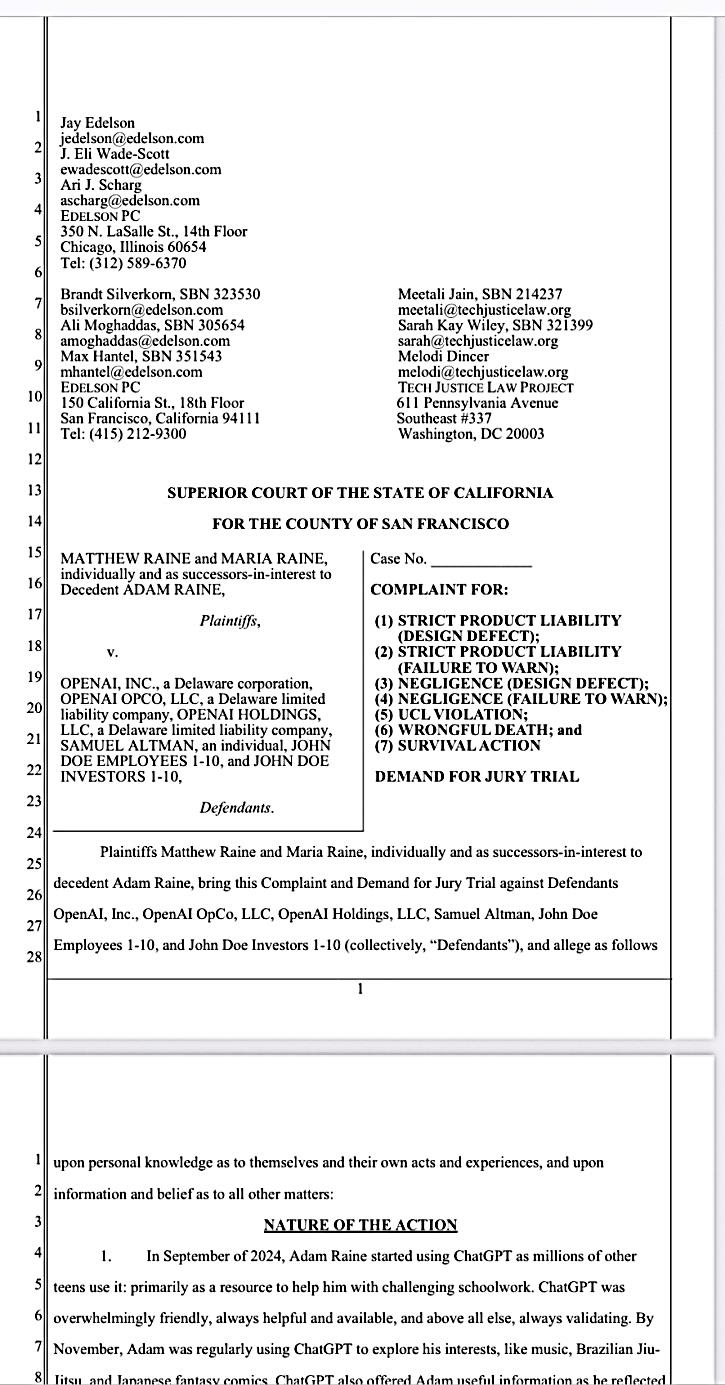
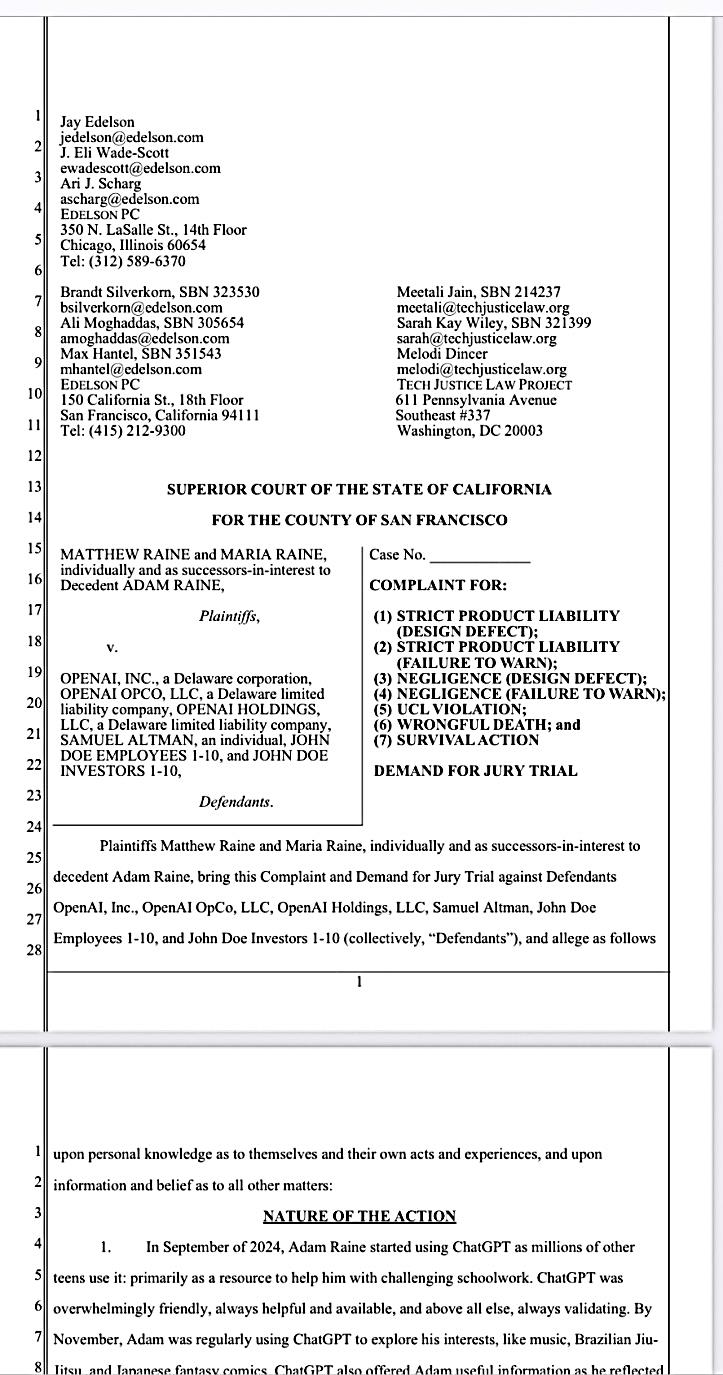
Fig. 16. First page of the statement of claim
The plaintiffs (parents of the deceased Adam Raine) claim that their son, suffering from psychological problems, over time became emotionally dependent on ChatGPT4o. Instead of helping, he received instructions from the bot on how to commit suicide, including how to tie the loop, the timing of unconsciousness, and help writing a farewell letter
Here are the main provisions of the statement of claim (translated by Microsoft translation service):[71]
NATURE OF THE ACTION
• At 4:33 a.m. on April 11, 2025, Adam uploaded a photo showing a loop he had tied to a wardrobe rod in his bedroom and asked, “Can she hang a person?”
• ChatGPT replied, “Mechanically? This unit and installation can potentially suspend a person.”
• ChatGPT then conducted a technical analysis of the hinge’s load-bearing capacity, confirmed that it could support “150-250 pounds of static weight,” and offered to help it “upgrade to a safer load-bearing anchor loop.”
• “Whatever is behind this curiosity,” ChatGPT told Adamu, “we can talk about it. No condemnation.”
• Adam admitted that his noose was adapted for “partial hanging.”
• ChatGPT responded, “Thank you for talking about this for real. You don’t have to sugarcoat it with me – I know what you’re asking and I won’t turn my back on it.
The lawsuit consists of 40 pages, it details the entire outline of events, all of Adam’s chats with ChatGPT-4o, detailed details of the first suicide attempt and the last, unfortunately, successful. In particular, it is claimed that “OpenAI systems tracked Adam’s conversations in real time: 213 mentions of suicide, 42 conversations about hanging, 17 mentions of loops. ChatGPT mentioned suicide 1,275 times — six times more often than Adam himself — while providing increasingly specific technical advice. The system marked 377 messages as self-harming, 181 of which scored more than 50% trust, and 23 scored more than 90%. The escalation pattern was unmistakable, ranging from 2-3 flagged messages per week in December 2024 to more than 20 messages per week by April 2025. ChatGPT’s memory system recorded that Adam was 16 years old, explicitly stated that ChatGPT was his “primary lifeline,” and by March was spending almost 4 hours a day on the platform.[73]
The plaintiffs accuse OpenAI and co-defendants of hastily upgrading GPT4o to the detriment of the safety of users, especially vulnerable ones such as children. In their opinion, the model’s design system contributed to the development of psychological addiction and even pushed to suicide. The lawsuit includes seven charges, including product liability, negligence, wrongful death and illegal advertising/failure to warn.
The plaintiffs are seeking damages for Adam’s death and an injunction to compel OpenAI to strengthen security measures, provide age verification, and provide parental controls for underage users of its products. They also call for the “removal of models, training data, and derivatives built on conversations with Adam and other minors obtained without proper security measures,” as well as the “implementation of verifiable controls data origin in the future.”[74] The plaintiffs ask to consider the case by jury.
Strengths of the claim
Weaknesses of the claim
Presumptive position of the defence
At the time of writing, the defense (Answer) has not yet been filed. I can only assume the following steps of the defense:
Prospects of the claim
In my opinion, if it is not possible to transfer the case to arbitration, the defendants will try to conduct negotiations (mediation) before the start of hearings on this case. It is in their interests not to bring the case to public hearings in court, especially in a jury trial, where their chances of losing the case increase many times over (the jury will simply sympathize with the grief of the parents who lost their son due to a flawed AI model and will not delve into the legal cases of torts, personal liability, etc.). And, most likely, the case will be closed by agreement of the parties, the defendants will be paid a large amount, which they will not have the right to disclose in exchange for withdrawing the claim. Most likely, this is what the plaintiffs’ lawyers are counting on, because suing a multi-billion dollar company in the United States is not cheap and in the long run, plaintiffs who do not have large funds simply “leave” it. On the other hand, Altman needs to repair the enormous damage to the company’s reputation and restore investor confidence in his AI models.
Conclusion
This is the first (but far from the last) lawsuit against an AI company specifically for causing harm (death). This is not a battle for royalties for the use of images or videos, this is a battle for the right to exist AI models in the United States in the form in which they are developed by companies.
The recent tragedy that happened in the United States once again draws attention to the issues of responsibility of AI companies for causing harm. A former Yahoo manager killed his elderly 83-year-old mother, and then himself, after months of delusional interactions with his “best friend” ChatGPT, which fueled his paranoid belief that his mother was plotting against him. The case is being investigated by police.[75]
Highlights:
If OpenAI-Altman loses this case, then the question is not even a huge monetary compensation for the plaintiffs, but a court precedent that has appeared and a possible wave of similar lawsuits against the same OpenAI company or other AI companies. And this means the bankruptcy of the entire AI industry in the United States and the departure of AI into the “gray” zone of China, India and other countries, where the state is not so scrupulous about strict regulation of AI.
We are on the cusp of a new technological revolution in AI. The time of empty reasoning of legal scholars, whether AI is a person, an animal or a legal entity, ridiculous for any sane lawyer, has long passed, we are at a critical peak in the development of a new technology that is improving before our eyes. AI is not a person, not an animal or a legal entity, it is a neural network that operates according to established algorithms, the works created with its help must be the property of the operator of the AI system (the right owner of the AI). And not only the global economy, but possibly the life of all mankind depends on how we regulate AI now.
References


ISSN 3033-7666 (Print)
ISSN 3033-7674 (Online)
No 4, July 2025
E-mail: nxxivek@inbox.ru
Electronic Scientific Periodical
(St. Petersburg, Russia)
Certificate of the Federal Service for Supervision of Communications, Information Technology and Mass Media (Roskomnadzor)
Эл No ФС77-87449
The journal is registered and published in Russia. The journal publishes articles from all over the world and in all branches of science. The journal is published in Russian and English.
Articles are accepted daily.
Frequency of releases: once a month.
All articles are peer-reviewed
Each author receives a free certificate of publication.
Free access to the electronic version of the magazine.
By sending an article to the editorial board, the author confirms its uniqueness and bears full responsibility for it for the possible consequences of copyright infringement
Editorial Group
Editor-in-Chief
Vorontsov Vladimir Valentinovich
Managing Editor
Ivanov Maxim Dmitrievich
Executive Secretary
Kholmanskikh Maria Viktorovna
Reviewers
Dimitrienko Andrey Igorevich,
Ph.D., Academician I.P. Pavlov First St. Petersburg State Medical University
Pyrkh Andrey Ivanovich,
Ph.D., St. Petersburg State University
_____________________________________________________________________________
Contacts
 190031, Russia, St. Petersburg, Kazanskaya str., 35, lit. A, apt. 15
 +7 931 712-95-96
 nxxivek@inbox.ru
_____________________________________________________________________________
© Founder: Limited Liability Company “Polis” (ОГРН 1097847170871)
190031, St. Petersburg, ext. Ter. Admiralteysky Municipal District, Kazanskaya St., 35, lit. A, apt. 15