Articles that inspire and inform!
Publisher of POLIS LLC
Address: 190000, Saint Petersburg,
35/15 Kazanskaya Street
Publisher of POLIS LLC
Address: 190000, Saint Petersburg,
35/15 Kazanskaya Street

AUXILIARY HISTORICAL DISCIPLINES
NUMISMATICS
UDC 737.11 UDC 94(519) UDC 93/94
THE “RUSSIAN” EAGLE SERIES OF THE KOREAN EMPIRE COINS
Vorontsov, Vladimir Valentinovich
Saint Petersburg State University (1992)
The Russian Presidential North-Western
Academy of Public Administration (1999)
voronbon@mail.ru
ORCHID 0000-0003-0120-6134
Abstract. In this article, the author examines the issue of rare coins of the Korean Empire of the late 19th – early 20th centuries, which depict a heraldic eagle. Western researchers consider this eagle to be the coat of arms of the Russian Empire, placed on Korean coins, since in the specified era, Russia allegedly “dominated” Korea and even “occupied” it. Critically approaching such statements, the author asks two questions: 1) if Russia “dominated” Korea and even issued its money, then why are they not included in domestic coin catalogs and 2) was Korea actually under Russian rule at that time. Answering these questions, the author gives a historical essay on Korea in the specified era with a description of its monetary systems, and dwells in detail on the origin of coins depicting the heraldic eagle with an analysis of each of the symbols located on them. Based on primary sources – data from East Asian banks, mints and auctions, the author, for the first time in numismatics, presents a complete catalogue of these coins with photographs of all types, including specimens unknown to Western cataloguers.
Keywords: Monetary Systems of Joseon, Gwangmu, Rare Korean “Eagle” Сoins, Eagle Series, Russian Occupation, Russian Domination, Russo-Korean Bank, Fun, Chon, Jeon, Whan, Warn, Ree, Yang, Niang, Korean Empire Won, Gojong of Korea, Korean Empire Currency, Kir Alexeievich Alexeiev, Yi Yong-ik, Daehan, Sang Pyong Tong Bo Coins.
__________________________________________________________________
For citation: Vorontsov V. V. Eagle on the Coins of the Korean Empire. // Scientific Platform “XXI Century”. No 1, April 2025 Pp. 89-159. http://episs.ru
__________________________________________________________________
PREFACE
In 1945, a member of the American occupation forces in Japan named Norman Jacobs was sent by his superiors to the Japanese mint in Osaka to confiscate the stocks of coins and medals made of precious metals stored there and, melting them down into ingots, send them to the United States. Jacobs was not interested in medals. But he understood something about coins. An interest in numismatics was instilled in him in his youth by an employee of a Chinese laundry in the neighborhood. The Chinese explained to the boy that the average person can put such a seemingly inconspicuous coin into the washing machine, by selling it at auction, the Chinese will be able to buy several laundries for himself. The thirst for collecting took possession of young Norman. In search of change, he went around one seller after another. And then fate smiled on him. It ended up at the central mint in the occupied country.
While serving in Tokyo as part of the occupation forces, Jacobs spent hours sorting through coins and paper bills that flowed like a river into his hands, and he was assisted in determining their value and rarity by a certain Isao Gunji, the curator of the coin department of the Bank of Japan. Norman’s collection grew by leaps and bounds.
Jacobs managed to smuggle home with unseen military cargo a fair amount of rare coins and samples stored at the mint. Otherwise, they would have been melted down by the American military authorities anyway. Some of them, thanks to Jacobs, have survived in a single copy.
Norman Jacobs’ collection of Japanese and Korean coins, consisting of 366 lots, was sold on September 8, 2011 through the Heritage Auction Galleries for $6.8 million. According to Cristiano Birrenbach, executive vice president of international numismatics at Heritage, high-quality coins, especially in MS-65 condition and above, have brought “unprecedented premiums in the market, akin to those usually associated with high-quality U.S. coins.” “Just when we thought that the situation in the global coin market could not change for the better, this auction came along and fortunately proved us wrong,” he said[1].
Among these rarest coins, three were sold on a topic of interest to us:
1) Korea, 6th year of Kwang Mu (1902), copper coin with a face value of 1 chon, “Russian domination”, sold for 149,500 dollars (Fig. 1).
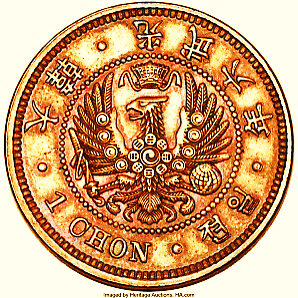
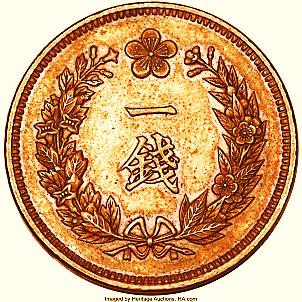
Fig. 1. The Korean Empire. 1 chon. Copper. Kwang Mu, 6 years old (1902). Episode “Eagle”.
© 2011 Heritage Auctions (фото)
2) Korea, 7th year of Kwan Mu (1903), copper 10 won, “Russian domination”, not listed in Krause’s catalogue, sold for 103,500 dollars (Fig. 2).
3) Korea, 6th year of Kwang Mu (1902), copper 20 won, “Russian domination”, sold for 115,000 dollars.
INTRODUCTION
What is the subject of Russian numismatics? It is quite difficult to answer this seemingly simple question. At first glance, the answer is obvious: these are the issues of coins that performed the functions of money, which were issued by coin lords – first by Russian monarchs, and after them by the RSFSR, the Soviet Union and the Russian Federation. But many exceptions immediately arise from this rule. Suffice it to recall that in 1997 – 2015, modern Russian metal money, although they were legal tender, issued by the Bank of Russia on its own behalf, and not on behalf of the state, they did not have the words “Russian Federation” on them and did not have the state emblem. At the same time, it should be noted that the Bank of Russia has been officially the central bank of the Russian Federation only since 2002 and, according to the law, “the state is not responsible for the obligations of the Bank of Russia, and the Bank of Russia is not responsible for the obligations of the state”.[2] Therefore, it is quite difficult to call these round metal objects “coins” in the literal sense of the word.
Russian numismatics include, for example, iron tokens of 1916, issued by the German military command in the western territories of Russia occupied during World War I; copper bonds of 1918, minted from the coils of the distillery during the Civil War by the Armavir branch of the State Bank; round silver ingots of the St. Petersburg Mint of the late XIX – early XX centuries with the image of the state eagle; etc.
Coins minted by our monarchs in foreign languages for Prussia, Finland, Poland, etc., when they were part of the Russian Empire, have an absolutely fair attitude to Russian numismatics. A. A. Ilyin was convinced that the coins of Red Russia, after its capture by the Polish king Casimir III in the XIV century, with legends in Latin MONETA RVSSIAE “cannot remain aloof from Russian numismatics, since they bear the name of Russia.” [3]Even the coins of the Georgian Tsar Erekle II of 1781 with Arabic inscriptions and the image of the Russian double-headed eagle, which he minted on coins without the permission of Empress Catherine II, in order to create the impression of the Persian Shah and the Turkish Sultan that Georgia was under the protection and patronage of Russia, belong to Russian numismatics.
The catalog of V. V. Bitkin[4] includes in Russian numismatics coins of Iranian cities of the XVIII century with the countermark of the Russian eagle, coins of the Bukhara Emirate dependent on Russia and the Khanate of Khiva without any countermarks, “siege” coins of the city of Zamość of 1813, minted by the Poles besieged by the Russian army – allies of Napoleon, coins of the Free City of Krakow, which was never part of Russia at all, but in 1835 minted a series of coins on the model of those which Russia issued for the part of Poland that belonged to it, and so on and so forth.
With such a variety of numismatic items, sometimes having an indirect or even dubious relationship to Russia, it seems rather strange that domestic catalogs pass over in complete silence the issue of coins of the Korean Empire (then still a unified state) of 1899 – 1903 with the image of the crowned heraldic Eagle on them “Russian Domination” in Korea and even the “Russian Occupation” of Korea. Usually in catalogs it is called “A series of coins with the image of an eagle” (cor. 독수리 문양 주화 시리즈), “Eagle Series” or “Eagle Coins”.
Does this issue belong to Russian numismatics? Let’s open the world’s largest catalog of Krause coins in the section “Korea. Russian Domination” and read the description:
“Korea in the days of Tsarist Russia experimented with its own coins; In this era, on March 1, 1898, the Russian Financial Consultant in Korea Alexeev founded the First Asian Branch of the Russian-Korean Bank and authorized the issue of a set of new Korean coins with a crowned quasi-eagle in the Russian style (!! In the text: Russian-style quasi eagle – author). In 1904, the British-Japanese confrontation with Russia and the Russo-Japanese War put an end to the experiment with the minting of Russian coins.”[5] We will not touch on the reliability of this information yet, but if we take this description literally, the coins of the “Eagle” series may well be attributed to Russian numismatics.
The American auction house Heritage Auctions explains the emergence of a series of Korean coins with the “Russian Eagle” as follows: “The strengthening of Russian influence in Korea in 1896-1904 led to the fact that a fairly large number of coins of regular mintage of three types were issued. Few of them were put into circulation, and very few survived. This Russian threat was eliminated by the Russo-Japanese War of 1904-05, and Japan established a protectorate over Korea until the end of World War II. During the Russian rule, gold coins were not minted, and this specimen (10 won copper coin of 1903, Fig. 2 – author) is a test model of coins that were going to be minted from gold.”[6]
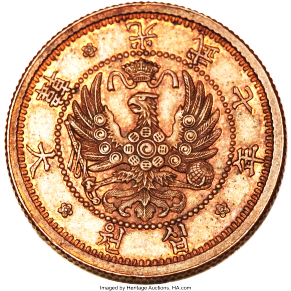
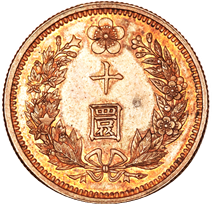
Fig. 2. The Korean Empire. Kwan Mu. Episode “Eagle”. Trial 10 won 1903 Copper
© 2011 Heritage Auctions (фото)
Unfortunately, for Western researchers, any economic and political relations of Russia with other countries are considered only as “domination” and “occupation”, and the real occupation of Korea by Japan in 1904 is called “the elimination of the Russian threat”. In accordance with this trend, the international numismatic portal Numista calls the period of minting of the series of Korean coins “Eagle” the era of “Russian Occupation”, and the heraldic eagle depicted on them – “Crowned Russian imperial eagle”, [7]although we see that the Eagle on the coin is single-headed, not double-headed (Fig. 3).
Fig. 3. The Korean Empire. Kwan Mu. Episode “Eagle”. 1/2 won 1901 Silver
© 2010 Krause Publications (photo)
Some domestic numismatists go even further in their fantasies on this topic. I will quote a couple of them:
“Russia did not have the right to issue coins with its coat of arms for circulation on the territory of another independent state, but nevertheless considered it necessary to indicate its presence. Probably, this is why a “European” eagle with a local “Korean” flavor appeared on the obverse.[8] “It is not known where these coins were minted, but the surviving samples, with their characteristic minting technology, may indirectly point to the St. Petersburg Mint.”[9]
Let’s not ask ourselves how a “European” eagle with a “Korean flavor” can “indicate the presence” of the Russian Empire, and what kind of “characteristic minting technology” can “indirectly indicate” the St. Petersburg Mint, but let’s study the topic.
HISTORICAL ESSAY
The last quarter of the 19th century and the first decade of the 20th century in Korean history were a turbulent era. A small kingdom on the periphery of East Asia, which had lived from time immemorial according to medieval laws, was a vassal of the Chinese Empire, adhered to a policy of strict isolation from the outside world and did not know wars with external enemies for more than two hundred years. And suddenly it was plunged into a whirlpool of reforms, uprisings and wars, from a vassal of China, a small country turned into an independent empire for several years, and just as suddenly completely lost its independence, becoming a colony of Japan.
The system of Korea’s vassalage to China was called Sade, which is conventionally translated as “Service to the Great”.[10] Although vassal is not quite an accurate name. This relationship was rather reminiscent of the relationship between a patron and a client. The Chinese emperor confirmed the king proclaimed by the Koreans themselves on the throne, and the king had to regularly send envoys with symbolic tribute to the imperial court. The emperor responded by gifting ambassadors and allowing them to trade in China. China did not interfere in the internal affairs of Korea, but was forced to provide it with military assistance as its outpost in the northeast in the event of an attack by external enemies. This allowed the short-sighted Korean authorities to naively rely on their suzerain and not spend money on maintaining the army. Therefore, in the early 1890s, the army of 15 million Korea consisted of only 5000 soldiers[11].
In 1392, the Yi Dynasty came to power in Korea. It decided to change the name of the country from Goryeo (hanja 高麗), from which the word “Korea” derives, to “Joseon” (hanja 朝鮮) – “Morning freshness”, known from ancient Chinese chronicles. The Chinese emperor approved a new name, which existed until 1897.
From time immemorial, China has been considered by Koreans to be the sacred center of civilization. Korea adopted from it the doctrine of the “Confucian world order” and the “Eastern Tao” (traditional Confucian ethics and political system). Every person claiming to be educated had to speak Chinese fluently, and exams for government positions were taken exclusively in the Chinese literary language. Until the end of the XIX century, only Chinese characters – “hanja” were used in document circulation and in legends on coins. They also served to convey Korean words proper.
In the 19th century, the economic and military expansion of the colonial powers put an end to the power of Korea’s suzerain, the Chinese Empire. China was defeated by Great Britain and France in the First (1839-1842) and Second Opium Wars (1853-1860), as a result of which it was forced to sign unequal treaties with the colonial powers[12], according to which it opened its ports to foreigners for trade, granted them the right of extraterritoriality. which provides for foreign residents to be subject to the laws of their own consular courts, rather than the Chinese legal system, and most-favored-nation status. Since the Chinese showed little interest in Western goods, and accepted only silver as payment for their tea and silk, Great Britain flooded China with thousands of tons of Bengal opium produced in the Indian colonies in order to achieve a positive trade balance with China. The government institutions of China were filled with foreign, mainly British “advisers” who managed concessions, customs duties and other state revenues and plundered the country as they wished.
In 1863, the 11-year-old King Gojong ascended the Korean throne[13] , whose name is associated with more than half a century of subsequent Korean history. The throne fell on him like snow on his head. He came from a side branch of the ruling Yi dynasty, and was not the eldest, but only the third son in the family. But he could not take the throne, because according to Korean law, the new king must be younger than the deceased, and he was older than him. The question of why the throne was taken not by his first son, but by the third, could only be answered by the Dowager Queen Huyu, who chose the heir. For a country riddled with nepotism and corruption, this was quite commonplace. Gojong was a weak-willed person who easily fell under the influence of others. In his early years as regent for the minor Gojong, the kingdom was ruled by his father, Lee Ha-eun[14], better known by his title “Taewongun” (lit. “Head of the Great Court” – this term referred to any person who was not a king himself, but whose son took the throne). The catastrophic events that took place in China, including the First and Second Opium Wars, strengthened its determination to isolate Korea from the rest of the world. Taewongun’s foreign policy was quite simple, as Cumings describes it: “no treaties, no trade, no Catholics, no West, and no Japan.”[15]
In 1866, the Taewongun married Gojong to a girl from a noble but poor family, later known as the “Queen of Min”, thinking that the quiet village modest woman would not get involved in politics. But he miscalculated. After becoming Gojong’s wife, Queen Min turned into an energetic and domineering woman. In 1873, having united with the political enemies of Taewongun, she removed him from power and began to rule the country herself, becoming a “gray cardinal” under a weak-willed husband. Unlike the Taewongun, Queen Min did not refuse to cooperate with foreigners, but on the contrary, she concluded treaties with them, invited them to government positions, while pitting groups representing different countries against each other, thinking in this way to preserve the threatened independence of the country. She called this policy “to fight barbarians with the forces of other barbarians” (“barbarians” were considered everyone except Koreans and Chinese). The Queen’s political intrigues ended in tears. In her royal palace, she was brutally murdered by the Japanese.
In order to achieve their goals, the imperialists decided to use a new aggressor state located here in the Asia-Pacific region. Japan 1871 г1868 г[16]itself in the 1850s signed unequal treaties with the imperialist powers, which hurt the pride of the Japanese elite and forced it to change power in the country. The new government sought to catch up with the advanced countries of the West in terms of industrial and especially military development in order to annul these enslaving treaties and become a colonial power itself. generously distributing loans and arming it against Russia, China and other countries that had their own interests in the Far East. Having accumulated a huge military-industrial potential, in three quarters of a century, the militaristic Japanese Empire would strike a blow to its “patrons” by destroying the American fleet at Pearl Harbor and conquering the colonies of the “allies” in East Asia, to which they would respond with the barbaric nuclear bombing of Hiroshima and Nagasaki.
Japan has long hatched plans to turn Joseon into its colony on the continent. The debate on the conquest of Korea was held in the Japanese government from 1868 to 1873, and the arguments against the invasion were presented in October 1873 by one of the “three most prominent heroes of the restoration”, Okubo Toshimichi, who argued that action against Korea was premature, since Japan was in the stage of modernization and an invasion would cost it too much. The Japanese limited themselves to a military provocation (“the incident near the island of Ganghwa”). Without inventing anything new, they did everything according to the scheme of their predecessors, the French and Americans. They entered Korean territorial waters, knowing that Joseon’s artillery had been ordered to fire on any foreign warship. Obsolete Korean guns could not cause any harm to the Japanese. But the very fact of the shelling was interpreted as aggressive actions by Korea and gave a reason to start hostilities. After capturing several forts and the island of Ganghwa, the Japanese demanded that the Korean government, in addition to apologizing for the shelling of their ship, conclude a trade treaty between the two countries. On February 26, 1876, the Korean government decided to meet this demand in the hope of importing more modern weapons to protect the country from any future invasions. Obviously, there was no understanding of the inequalities inherent in the terms of the agreement. It was the first of many unequal treaties naively signed by Korea. According to it, Joseon was declared an “independent state”, opened three ports to Japan for trade – Busan, Incheon and Wonsan, and granted the right of extraterritoriality to those Japanese merchants and officials who came to live in the newly opened ports. It was the same system whereby foreign merchants suspected of committing a crime were to be tried in the open ports by their own countrymen according to the laws of their own country, effectively leaving them completely unpunished. The most famous economic disparity of the treaty was its tariff system, under which there was a complete moratorium on the imposition of duties on Japanese goods imported into Korea, while Korean goods exported to Japan were subject to a 5 percent duty. Joseon was forced to sign similar treaties in the 1880s with other foreign powers.
On July 23, 1882, the deposed Taewongun raised a military mutiny in Seoul, which had an anti-Japanese character and was directed against Queen Min (the “Imo Incident”). The rioters killed many government officials, destroyed the homes of dignitaries, and occupied one of the five royal palaces of Changdeokgung. They also attacked members of the Japanese diplomatic mission. The Japanese ambassador, Hanabusa Yoshimoto, barely managed to escape aboard a British warship. During the day, several Japanese were killed, including military adviser Horimoto Reizo. The next day, July 24, the rebels broke into the main royal palace of Gyeongbokgung, where they found and lynched the Minister of War, Min Gyeo-ho, as well as several other high-ranking officials, including Yi Choi-heung, the elder brother of the Taewongun, and attempted to assassinate Queen Min by reaching the royal chambers. However, the queen managed to escape, dressed as an ordinary court lady. She was carried on her back by a faithful servant who claimed to be her sister. Taewongun again came to power for 33 days, and the queen turned to China for military assistance.
About 4,500 Chinese soldiers under the command of General Wu Changqing arrived in Korea on warships and landed in Incheon. Chinese troops quickly crushed the uprising and were then stationed at various points throughout Seoul. After that, Taewongun was invited to the headquarters of the Chinese troops, where he was treacherously captured and secretly sent to China. He was taken to a city about 100 kilometers southwest of Beijing, where he was kept in a single room under strict supervision for three years. After this incident, China restored its suzerainty over Korea. King Gojong could no longer appoint diplomats and conclude international agreements without China’s approval. In October 1882, the two countries signed a treaty under which Korea was dependent on China and granted Chinese merchants the right to freely conduct land and sea trade within Korean borders, as well as granting China unilateral privileges of extraterritoriality in civil and criminal matters. Although the agreement allowed Koreans to trade on a reciprocal basis in Beijing, it was not an international treaty, but was actually issued as an instruction to a vassal.
In addition to the deployment of Chinese troops, in December 1882, two special advisers on foreign affairs representing Chinese interests were sent to Korea, one of whom was the German Paul Georg von Möllendorf, a man close to the “yellow Bismarck” – the head of the government of the Chinese Empire, Li Hongzhang[17]. Möllendorf was the first foreigner in the service of King Joseon, bore the Korean-Chinese name Mok Indyeok (hanja 穆麟德, Chinese: “Mu Linde” – “imperturbable German”) and liked Gojong so much that he entrusted him with a lot of the most responsible duties. Möllendorff organized and headed the Korean Maritime Customs Service, which accounted for approximately 15% of the total revenue of Joseon’s budget. As Deputy Minister of Foreign Affairs of Joseon, he was directly involved in the preparation and conclusion of international agreements, including the Seoul Treaty of Amity and Trade between Joseon and Russia on July 7, [18]1884, or in other words, the Gyeongsong Mint (Hangul 전원국),[19] which was supposed to reform the Korean monetary system and begin issuing modern coins made of precious metals.
The state of the Joseon monetary system at that time was deplorable. For centuries, there was no minted coin in Korea. Coins have been produced by casting since ancient times. The metal was melted and poured into molds. In an intermediate stage of manufacture, the blanks were attached to long casting rods. After being removed from these “trees”, they were finished by trimming the edges with a file and, in some cases, passing through a bath of water and sand for polishing. Therefore, the popular Korean name for them was “yeopjeon”, which means “leaf coins”. The official name of the monetary unit was “mun”. It was denoted by the Chinese character 文 and corresponded to the Chinese small coin “jiang” (in English Cash). The name of the mun in English “cash coins” is translated not as “cash coins”, but as “coins jiang”. In 1633, King Injo introduced copper muns with the inscription on the obverse 常平通寶 (hanja “Sanpyeong Dongbo”) – Fig. 4. “Tong bo” 通寶 means “money” in Korean, and “Sangpyeong” 常平 – “always the same” – is the name of the state institution that was engaged in the storage of grain. Grain was stored in good harvest years to be distributed in lean years – thus creating “always the same” condition. The moon has always had approximately the same weight of 2.8 – 3.2 g and a diameter of 22 – 24 mm and was made of copper or an alloy including copper: bronze or brass.
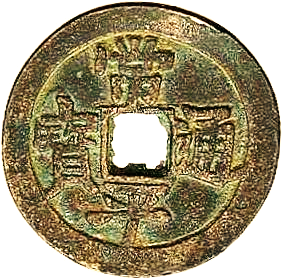
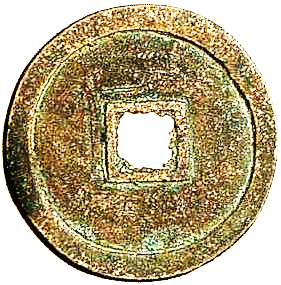
Fig. 4. Joseon. 1 mun 1633 Sangpyeong Dongbo. King Injo. Copper.
© Numista (photo)
From 1678, Sangpyeong Dongbo coins were issued regularly until 1892. On the first issues, the reverse was clean (Fig. 4), on all subsequent issues in different variations there was the designation of the mint, the number of the workshop, the counter for batches of products, the denomination and other symbols. Coins were issued of copper and bronze in denominations of 1, 3, 5 and extremely rarely 10 and 100 mun. scattered throughout Korea. In addition to a large number of governmental, provincial, township, and military mints, many Sangpyeong Dongbo coins were privately cast. There are estimated to be more than 5,000 varieties of Sangpyeong Dongbo coins, many of which have yet to be published. Alan Craig reports that there were 3,137 different types of coins on display at the Bank of [20]Korea. Most privately cast coins have a rough appearance with fuzzy symbols and a blackish hue.
Obviously, such money, if suitable for domestic petty trade, was completely unsuitable for foreign trade operations. Foreign trading partners demanded that the Korean government pay for goods with full-fledged silver and gold coins.
An attempt to cast a new type of coins was made by the Joseon government in 1882-1883.Unlike copper yeopjeongs, these coins were made of silver and no longer had a square hole in the center (Figs. 5, 6). There were no silver mines in Korea, and silver had to be imported for the production of coins.
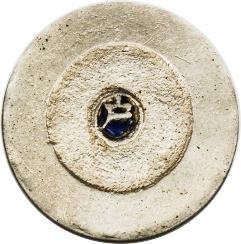
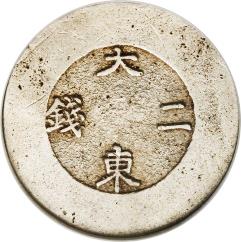
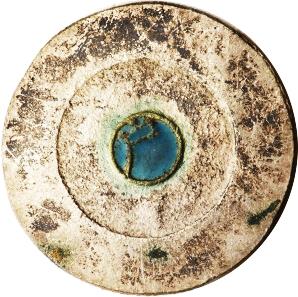
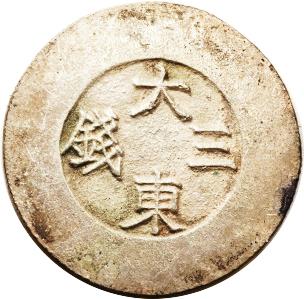
Fig. 5. Joseon. 2 chon 1882-1883 Fig. 6. Joseon. 3 chon 1882-1883
Серебро, 7,1 г., ⌀ 28 мм Серебро, 10,6 г., ⌀ 33 мм
© Numista (фото) © Numista (фото)
Coins were issued in denominations of 1 chon, 2 and 3 chon weighing 3.4, 7.1 and 10.6 g, respectively (Fig. 5, 6). The hieroglyph “chon” (戔 – “small”) was placed on the reverse to the left of the center of the coin, on the right horizontally the number “one” (一), “two” (二) or “three” (三) depending on the value of the coin), and at the bottom is “East” (東). It was read “Tae Dong” – “Great East” or “Great Eastern” – another of the many self-names of Korea. The coins themselves received the colloquial name Taedongcheon – “chons of the Grand East”. On the obverse was placed the hieroglyph 戶 “Ho” – the sign of the Ministry of Finance. It was placed in a circle in the middle of the obverse and surrounded by colored enamel (blue, green or black).
Due to the rise in the price of silver, their real value quickly exceeded the nominal value. The coins simply disappeared from circulation, as the population preferred not to spend them, but to store them in order to sell them in the future, taking advantage of the rise in the price of the metal[21]. Therefore, in June 1883, the issue of these coins was stopped.
In the same year, the above-mentioned Central Mint (Gyeongseong Mint) was established in Seoul under the leadership of Möllendorf. This institution was removed from the control of the Ministry of Finance. It was under the jurisdiction of the royal court, and the income from the issue of money went not to the Ministry of Finance, but directly to the palace treasury. He controlled the issuance of yeopjeongs, which continued to be cast throughout the country, which until 1892 officially remained the main currency of the country. The main obstacle to maintaining a gold or silver standard system was Korea’s severe shortage of precious metals. The minting and circulation of coins of the modern type began as a result of Möllendorf’s acquisition of coin-making machines in Germany in 1883[22]. However, the first Korean minted coins should not be considered coins of the modern type, but the 5-mun Sanpyeong Dongbo issued on these machines in 1884.
The Korean government was under severe fiscal pressure due to chronic financial difficulties and new fiscal expenditures, such as the cost of sending overseas missions, the cost of opening the port cities of Busan, Wonsan, and Incheon, and the construction of new military installations. In order to patch up the holes in the budget, in 1884 it began minting an inferior brass Sangpyeong Dongbo coin with a face value of 5 mun. These 5 muns had not a square, but a round hole in the center (Fig. 7). Despite the declared value being five times more expensive than an ordinary mun, this coin was only 2 times heavier than it (Figs. 7 and 8 show the comparative size of a new minted 5-mun coin and a full-fledged 5-mun cast yeopjeon). The population refused to accept it at a nominal price, and the low purchasing power of the new coin gave rise to a new round of inflation[23].
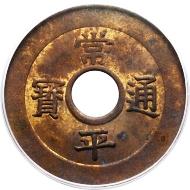
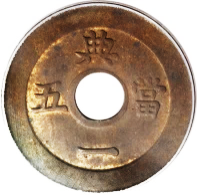
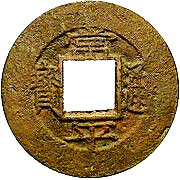
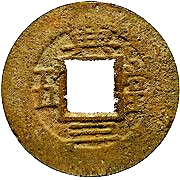
Fid. 7. Joseon. 5 muns 1884 minted by machine. Fig. 8. Joseon. 5 mun 1883 Yeopjeon.
Brass Bronze, 10.8 g, ⌀ 32 mm, thickness 2 mm
© 2011 Heritage Auctions (photo) © Numista (photo)
In 1881-1884, a group of young Korean officials, including the future leader of the “Kapsin Rebellion” Kim Ok-kyun, were officially sent to Japan under the guise of familiarizing themselves with the results of the Industrial Revolution, which this country achieved during the Meiji Restoration. In fact, they had to find out whether Japan was preparing an attack on Korea. There they saw that Japan, which the Korean government considered a barbarian nation, had made a huge leap forward in progress and had become a much stronger country than Joseon. After arriving in Tokyo, they met with various influential Japanese politicians. They convinced them that Japanese help would have to be used to modernize the Korean economy, and that the only way out of stagnation was to forcibly destroy the current Conservative Party at court. The Japanese statesman Inoue Kaoru promised Kim Ok-kyun 3,000,000 Japanese yen if Kim got the Korean Emperor Gojong to “carry out reforms.” In short, Kim and his comrades were simply recruited by the Japanese and, returning to their homeland, decided to make a revolution.
The outbreak of the Sino-French War in Annam in 1884 seemed to be a favorable moment for them, when China was forced to transfer troops from Korea to Annam, leaving only a garrison of 1500 soldiers under the command of General Yuan Shikai in Seoul. Enlisting the support of the Japanese mission, on December 4, 1884, the conspirators led by Kim Ok-kyun and the director of the General Postal Administration, Hong Yong Sik, at a banquet held to mark the opening of the new national post office, King Gojong was captured and imprisoned by Japanese diplomatic guards in the small palace of Gyeonggu. They then killed and wounded several high-ranking officials. After the coup, they formed a new government and adopted a 14-point program of radical reforms (Kapsin Rebellion[24]). The Ming Queen, faced with a threat to her power, secretly requested military intervention from the Chinese. Even before the reforms were made public, within three days the coup was crushed by Yuan Shikai’s Chinese troops, who attacked and routed the Japanese soldiers and restored power to the pro-Chinese party. In the ensuing battle, Hong Yong-sik was killed, the Japanese diplomatic building was burned down, and forty Japanese soldiers were killed. The surviving Korean coup leaders, including Kim Ok-kyun, fled to Japan.
After the suppression of the rebellion, King Gojong annulled the reforms proclaimed by the coup leaders. In January 1885, the Japanese sent two battalions and seven warships to Korea. Under pressure from the armed force, the Korean government signed a treaty with Japan on January 9, 1885 (the Hanson Treaty), which restored diplomatic relations between the two countries. China, weakened by the war with the French, also signed a peace treaty with the Japanese on May 31, 1885 (the Tientsin Convention), under which both sides undertook to withdraw expeditionary forces from Korea and not to bring them there without prior notice to the other side. The exceptions were the garrison of the Chinese resident general in Korea, Yuan Shikai, stationed in Seoul, and the Japanese soldiers guarding the diplomatic mission. King Gojong was advised to hire military instructors from a third country to create and train the Joseon army. Both sides had Great Britain in mind, but Gojong, fearing to fall under even greater oppression by the now arrogant British imperialists, turned his gaze to a non-aggressive Russia.
Diplomatic relations, extraterritoriality and consular jurisdiction for Russian subjects were established by the Seoul Treaty of 1884 between the Russian Empire and Joseon (the Russian mission in Seoul was opened in 1885). Since 1860, the countries had a common border along the Tumen River, but did not enter into direct relations, although Russia was eyeing Korea in order to organize an ice-free port for its navy on its territory. Möllendorff wanted to stabilize Korea, a traditional hotbed of disagreement between China and Japan, through closer ties with Russia as a “third power.” As early as 1884, with the consent and support of Gojon, he conducted secret negotiations with Russian representatives in Japan to conclude a secret agreement with Russia. This was Korea’s first attempt to conclude a secret Korean-Russian treaty. (In fact, Gojong had been nurturing this idea even before Möllendorf). Under this agreement, Joseon granted Russia the allotment of a coastal concession for the organization of an anchor, never completely ice-free anchorage for a large fleet in Yongheung Bay (Wonsan, Lazarev Port), and Russia undertook to create a professional army in Korea and sent instructor officers and non-commissioned officers to Joseon. The British government was alarmed by rumors of a secret agreement between Russia and Korea. On April 15, 1885, the British fleet unexpectedly attacked and occupied the Korean island of Komundo. The island was seized in order to establish a British transshipment port in the Far East outside of China in the event of a war with Russia and to reduce the detrimental impact of China’s eventual neutrality. Russia has threatened to occupy part of Korea in response to the UK’s actions. After receiving assurances from the Russians that they would not occupy any part of Korea, the British evacuated.
Li Hongzhang was furious to learn of his protégé Möllendorf’s role in the story, and demanded his return to China. In order to conceal his participation in the failed enterprise and to prevent the intervention of the imperialist powers, Gojong dismissed Möllendorf from all his posts.
After the resignation of Möllendorf, the mints of Korea began to be gradually filled with Japanese employees. In November 1886, the Gyeongseong Mint was moved to a new building near the South Grand Gate of Seoul (Namidaemun). Möllendorf was no longer there, but three German technicians were still on the staff. Under far-fetched pretexts, these three were fired, and three Japanese from the mint in Osaka were hired to replace them. By the end of 1887, there were more than 20 Japanese in the state. As early as 1883, the Jeongwangkuk Mint was founded in Incheon, a port open to foreigners. In foreign trade operations, the expansion of the Japanese currency intensified. If at first, the Mexican dollar was accepted as a trade coin for paying customs duties in open ports, as everywhere in East Asia, then the Japanese yen gradually began to replace it.
Japan’s influence in the financial sphere was enormous. It is not surprising that the first trial and all subsequent Korean coins of Gojong simply copied the design and parameters of Japanese coins (an example in Figs. 9 and 10).
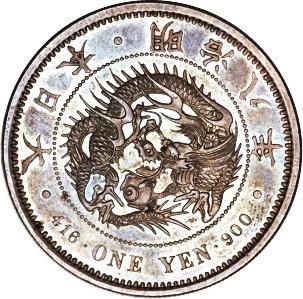
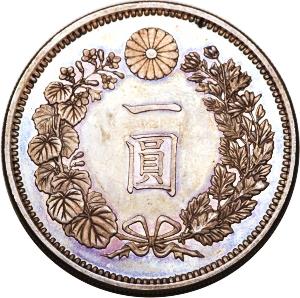
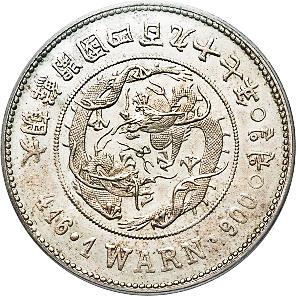
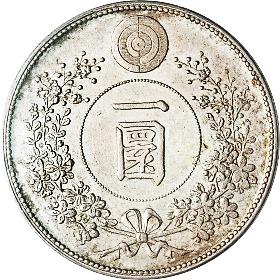
Fig. 9. Japan. 1 yen 1876 Silver. 26.96 g Fig. 10. Joseon. 1 varn 1888 Silver. 26.95 g
⌀ 38.6 mm, thickness 2.5 mm ⌀ 38 mm, thickness 2.5 mm
Medalists N. Kano, T. Masuda and H. Ishii © Heritage Auctions (photo)
© Heritage Auctions (photo)
On the obverse of Japanese coins (Fig. 8), in the center, in a circle of beads, a dragon was depicted as the emblem of the Emperor of Japan, with a circumferential inscription 年八治明 · 本日大 (The Eighth Year of Meiji (1876) “Great Japan”), bottom in English · 416 · ONE YEN · 900 · (weight 416 grains · ONE YEN · 900 fineness of silver). On the reverse, in the center vertically, the denomination: 一 (“one”) 圓 (“circle”), framed by a wreath of paulownia branches (heart-shaped leaves) and chrysanthemums (right), in the center at the top a chrysanthemum flower (imperial seal).
Until 1897, Korean coins were dated according to the “Keguk era” – the chronology starting from the year of the founding of Joseon (1392). The words 開國 “Ke Guk” are translated as “Foundation of the country”. On the obverse of the coins (Fig. 9), in the center, in a circle of beads, there are two “playing dragons”, the personal emblem of the king, at the top along the circle in hanja hieroglyphs there is the inscription 大朝鮮 開國四百九十五年 (“Great Joseon. Ke Guk 495” – 1886), at the bottom in English • 416 • 1 WARN • 900 ○ (weight 416 grains · 1 VARN · 900 fineness of silver), on the right on Hangul ○ 일원○ (“one round”). On the reverse, in the center, vertically, there is a denomination framed by a wreath: 一 (“one”) 圜 (“round”), in the center at the top is the sign Yin-Yang (in Korean, Ym-Yang), otherwise called by the Koreans Daegeuk (“the origin of everything in the Universe”).
The hieroglyph 圓 or 圜 has the original meaning of “circle”, “round”. On coins, it denoted the main monetary unit of the state: in China the yuan, in Japan the yen, in Korea the won (in this case translated into English by the word warn).
In the process of monetary reforms of the 1880s and early 1900s, Korean monetary units and their names on coins were constantly changing. Especially in the transcription into English.
In 1885, a trial silver coin was issued in denomination of 1 yang (YANG, 兩), [25]a multiple of 1/5 of the Japanese yen (5.2 g, pure silver content 4.16 g).).
In 1886 and 1888, an attempt was made to create a monetary system with the basic unit – the won, or as it is incorrectly translated, the varn (WARN, 圜), which fully corresponded to the Japanese yen (416 grains or 900 silver) – Fig. 1. 9. Varn was divided into 5 nyans (NIANG, 26.95 г兩) and 1000 muns (MUN, 文). A series of test coins was minted: gold 20 varnas, 10 varnas, 5 varnas, 2 varnas and 1 varna; silver 1 varnas (Fig. 9), 5 nyans, 2 nyans, 1 nyan and 1/2 nyan; copper 20 munas, 10 muns, 2 muns and 1 mun. Since the new equipment of the mint was not very suitable for punching the central holes in coins, The design of muns in the old style was eventually abandoned (Figs. 11, 12). Although data on the circulation of 5 and 10 munas were not published, the total value of the coins issued was about 2800 varnas. It is known that 1300 silver varnas themselves were minted. The monetary system turned out to be quite cumbersome, the coins were poorly accepted by the population, and soon they were withdrawn from circulation.1891 г
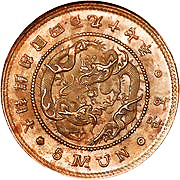
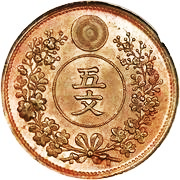
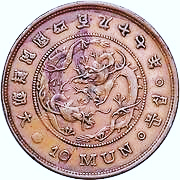
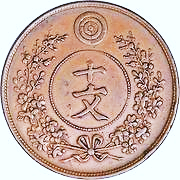
Fig. 11. Joseon. 5 munov 1888 Copper. 3.25 g, ⌀ 21.7 Fig. 12. Joseon. 10 muns 1888 Copper. 6.5 g, ⌀ 27.5
© Heritage Auctions (photo) © Heritage Auctions (photo)
In 1892, King Gojong signed the “New Money Ordinance,” and the monetary system began to function according to the silver standard. At this time, An Kyung-so, the director of the Central Mint, traveled to Japan and received a loan on the condition that he receive 1/4 of the profits from minting, and also attracted Japanese engineers to produce modern coins. The Japanese firm Osaka Copper Works, anticipating a profit from minting, proposed to the Korean government to transfer the Central Mint to the port city of Incheon. Incheon was chosen by the Japanese because it was easier to ship mint machines and coin mugs from Japan than to Seoul, the equipment for which was not available in Korea. The new mint in Incheon (仁川典局), fully staffed by Japanese specialists from the Copper Plant and the Japanese Mint in Osaka, began operations in November 1892. The main monetary unit was the yang (YANG, 兩), which was divided into 100 pun (in English, it was written FUN, on POON stamps, hanja character 分). 5 yang was equal to 1 won or wang (WHAN, 圜). The intermediate monetary unit was the jeon (JEON / CHON, 戔 – hieroglyph for “small”), equal to 1/10 of the yan. The chon itself was never minted, but served as an auxiliary monetary unit when writing the denomination on the current coin of 1/4 yan, equal to 25 puns – “2 chon 5 puns” (Fig. 13).
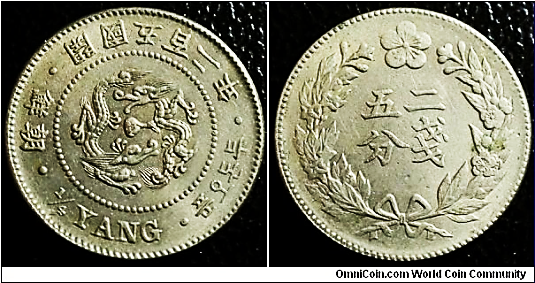
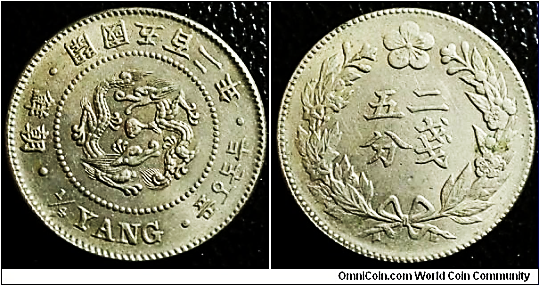
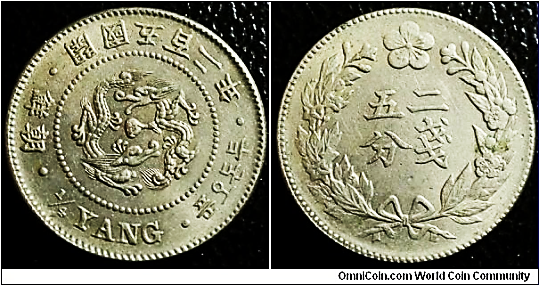
五 二
分 戔
5 2
Phunov Chona
Fig. 13. 1/4 Jan, 1893.
In 1901, Korea switched to the gold standard, and from 1902 the main monetary unit was the won (WON, 圜), which was divided into 100 jeons (CHON, 錢 is another hieroglyph: “money” in contrast to the hieroglyph on previous coins 戔 “small”) and 1000 ri (REE / RI, 厘). The ri were not minted, but were used to denote the value of postage stamps. The jeon was depreciated by a factor of 2 compared to the previous monetary system. According to the old system, 5 yang was equal to 1 wang (won), and 10 jeons were equal to 1 yang, therefore, 1 wang (won) was equal to 50 jeongs. Now the won included 100 jeons. This was the last monetary system of independent Korea. the monetary unit is the yen.
The coin nominally weighed 416 grains or 26.96 grams (24.26 grams of pure silver), which corresponded to 1.5 grams of gold. When the won was switched to the gold standard in 1902, the gold content of the won was reduced to 0.75 grams. But since 1907 it was reduced to 16.2 g in won (only 1/2 won coins weighing 10.13 g with a pure silver content of 8.1 g were issued from silver). Large 900 silver coins with a denomination of 1 won ceased to be issued after the introduction of the gold standard.
NIANG and YANG (hieroglyph 兩) denoted the same monetary unit, which we call “yang”. The coin was 1/5 won and weighed 5.2 grams. The pure silver content was 4.16 g.
The monetary systems of Korea looked like this:
1886-1891
1 yang (兩, NIANG, nian) = 1/5 won (圜, WARN, varn) = 200 mun (文, MUN).
1 won (圜, WARN, varn) = 5 yen (兩, NIANG, nian) = 1000 mun (文, MUN).
1892-1901
1 yang (兩, YANG) = 1/5 won (圜, WHAN) = 10 jeons (戔 – the character for “small”, JEON / CHON, not minted) = 100 phuns (分, FUN / POON).
1 won (圜, WHAN, wang) = 5 yang (兩, YANG) = 50 chon (戔, JEON/CHON, not minted) = 500 pun (分, FUN/POON).
1902-1910
1 won (圜, WON) = 100 jeons (錢 – the character for “money”, CHEUN / CHON) = 1000 ri (厘, REE / RI, not minted).
The silver standard existed in Korea from 1892 to 1901, and the first coins were supposed to enter circulation at the end of 1892.
The denominations of the coins and their composition were as follows: 1 phun (brass), 5 pun (copper), 1/4 yang (originally a copper-nickel alloy, and later copper clad with silver), 1 yang (5.2 g, 80% silver) and 5 yang (90% silver). It was possible to produce in sufficient quantities, only 19,923 pieces were minted. The first coins were minted in 92 AD, but were not put into circulation until 94 AD, due to the fact that the name of the country appeared on the obverse of the coins as “Great Joseon” (26,96 г1893 г4 декабря 1820 августа 18大朝鮮), which angered the Chinese resident general in Seoul, Yuan Shikai. The word 大 – “Great” could only refer to the Chinese Empire, and Joseon, as its tributary, had no right to such an epithet. As a result, this word had to be removed from the coins of 1893 and 1894. Only after the Chinese entered the war with Japan and lost it, the mint again issued coins with the “Great Joseon” (Figs. 14, 15). The sharp drop in nickel prices made it extremely profitable to mint copper-nickel coins in denominations of 1/4 of the jan. They immediately began to be counterfeited on an industrial scale in Japan and smuggled to Korea, which caused a wave of distrust among the population in the new coins.
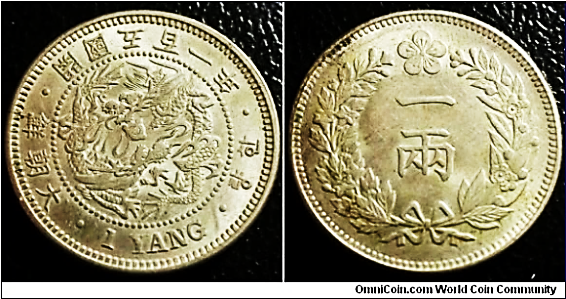
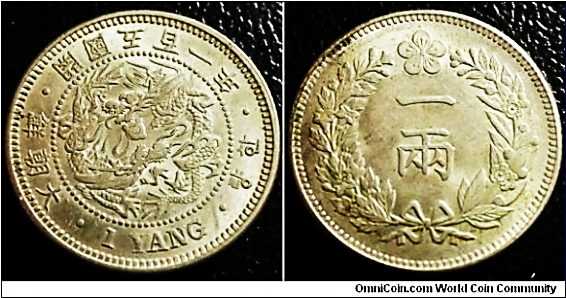
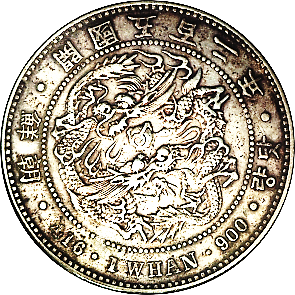
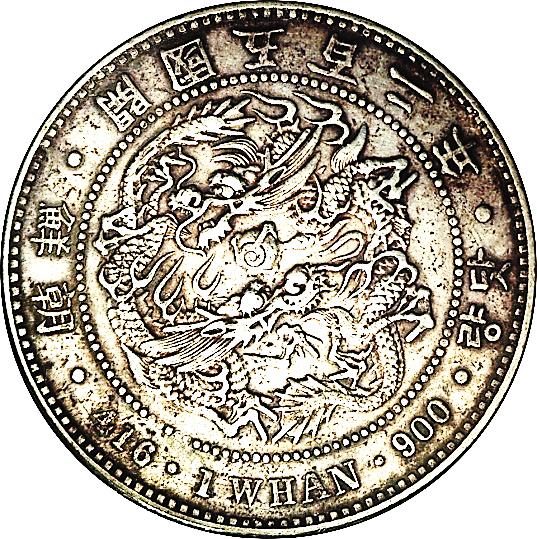
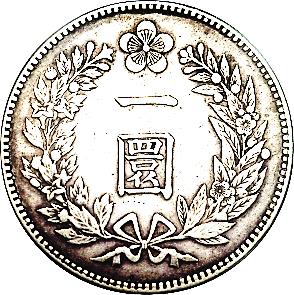
Fig. 14. 1 Jan. 1892. On the obverse Fig. 15. 1 van 1893. On the obverse on the left
left at 9 o’clock 鮮朝大 “Great Joseon” for 9 hours 鮮 朝 “Joseon” without the epithet “Great”
© Korean type set (photo) © Heritage Auctions (photo)
At this time, new cataclysms struck Korea.
After the conclusion of the Tianjin Convention of 1885, Japan built up its army and methodically modernized its military industry. Preparations for a major war with China were in full swing.
In 1893-1894, a peasant uprising led by the religious sect Donghak broke out in Joseon.
On March 28, 1894, on the territory of China in Shanghai, a Japanese agent, the leader of the “coup of the year Kapsin” Kim Ok-kyun was killed by four shots from a revolver (Fig. 16). His murderer, Hong Jong-woo, was not punished, but was simply exiled by the Chinese authorities to his homeland in Korea, where King Gojong immediately appointed him to a government position. The body of Kim Ok-kyun, whom he killed, was also brought to Korea, over whom, as a traitor to the motherland, a posthumous trial was arranged. He was sentenced to be dismembered, the body of the traitor Kim, cut into eight pieces, was sent to each of the eight provinces of Joseon, and the head was placed on Mount Cheongyesan, towering over Seoul. In the context of international political tensions, this event had a great resonance. The Japanese call the assassination of Kim Ok Kyun one of the events that pushed Japan into the First Sino-Japanese War. As a pretext for war, it was, of course, difficult to use. But a pretext was soon found.
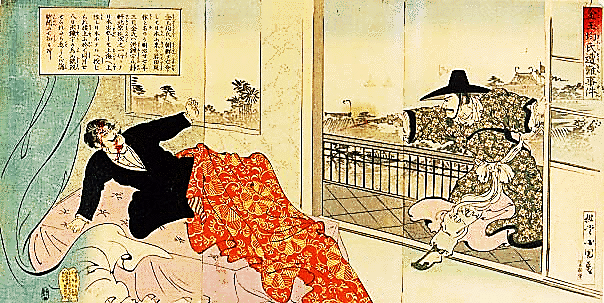
Fig. 16. Utagawa Kokunimasa. 1894. Assassination of Kim Ok-kyun
Nishiki-e Collection, Joseon Era, Vault of Tokyo University Keizai
In the spring of 1894, the Donghak rebellion in Korea reached unprecedented proportions. Government troops suffered defeat after defeat, and on June 1, the Korean government requested China’s help in suppressing the uprising. In accordance with the obligations of the Tianjin Convention, the Chinese government informed the Japanese of its military operation. Upon receiving the notification, the Government of Japan reacted immediately. The pre-prepared army landed on June 8 in the port of Incheon, which was closest to Seoul. On July 23, Japanese troops entered Seoul, stormed the royal palace of Gyeongbokgung, killing about 70 people, and made Gojong their hostage. The government, consisting of relatives of Queen Ming, was disbanded, and a new pro-Japanese puppet government was formed, headed by Kim Hong-jip. The supreme power was accepted by Taewongun, who dreamed of cracking down on his political opponents. On July 25, under the dictation of his new masters, Taewongun notified the Chinese side of the severance of Korea’s “vassal relations” with China and “authorized” the Japanese army to expel the Chinese from Korea. The lack of professional experience among the Chinese military leaders and the poor training of the soldiers immediately led to a series of major defeats for the Chinese army. In the autumn of 1894, the Japanese drove it out of Korea, and the war moved to Chinese territory. The Japanese captured Taiwan and southern Manchuria, during the capture of Lüshun (Port Arthur) massacred the entire population of the city.
Realizing China’s complete inability to continue the war, Li Hongzhang was forced to sign the Shimonoseki Peace Treaty with Japan (March 30, 1895), according to which China ceded to Japan the island of Taiwan, the Penghu archipelago and the Liaodong Peninsula, paid a huge indemnity and forever renounced sovereignty over Korea.
Immediately after the Japanese occupation of Seoul, the puppet government of Lee Hong-jip launched a series of reforms based on an initial bill introduced by Japanese Ambassador Otori Keisuke (“Reforms of the Year of Kabo”). These reforms, which had the character of modernization, rebuilt the governing bodies and economy of Korea according to the Japanese model. First of all, the Central Mint and revenues from customs were withdrawn from the Department of the Royal Household. The minted coins of the 1892 model were finally put into circulation. The Japanese yen was allowed to circulate in Joseon. The palace guard, reorganized in 1894, remained under the control of American military instructors invited to Korea in 1888 to teach at a new military school, and two battalions of the Seoul garrison were placed under the command of Japanese officers at 6% for five years secured by income from Korean customs. In exchange for the loan, Japan received a number of concessions, in particular, for the construction of the Busan-Seoul railway, for the development of mines, etc. We must not forget that Japan itself was in credit slavery to financial tycoons from Great Britain and the United States, and robbing Korea was the most effective way for it to pay interest on loans. As the Russian envoy to Korea, Karl Ivanovich Weber, wrote: “The first article of the Sino-Japanese treaty again confirmed the independence of Korea; Meanwhile, it probably did not often experience such a vile yoke and such attempts on its own autocracy as in the second half of 1894 and in 1895. However, it is impossible not to do justice to the Japanese that they have indeed introduced some improvements in administration, established control over finances, reorganized the police, etc.; but their activities were too feverish, sometimes even naïve; moreover, the abrupt implementation of reforms only poorly disguised their efforts to strengthen their power and influence in the country in order to exploit it as thoroughly as possible in their own favor. Their despotism was not destined to last very long.”[26]
Alarmed by Japan’s invasion of the Asian mainland, the Russian Empire, with the support of France and Germany, demanded that Japan withdraw its troops from the Liaodong Peninsula. Otherwise, the three powers threatened to start military operations against it (“Tripartite Intervention”). Under pressure, Japan was forced to give up the Liaodong Peninsula and began withdrawing troops on May 5, 1895. The Russian Empire began to consider Lüshun (Port Arthur) and Dalian (Dalian) located on Liaodong as ice-free ports in the Pacific Ocean for the deployment of the navy. On June 3, 1896, Russia and China signed the Treaty of Aigun, which implied joint military action against Japan in the event of an attack on either side, as well as on Korea. In addition, Russia received a concession for the construction of the strategically important Chita-Vladivostok railway (Chinese Eastern Railway) through the territory of Manchuria belonging to China. In agreement with Li Hongjang, in December 1897, Russian warships anchored in the roadstead in Port Arthur. And on March 27, 1898, Russia and China signed the Russian-Chinese Convention in Beijing, according to which Port Arthur and Dalny with adjacent territories were leased to Russia for a period of 25 years. The news that Russia had received the Liaodong Peninsula, which Japan had been forced to relinquish, led to an increase in the militarization of Japan, this time directed against Russia.
In Korea, Japan’s rejection of Liaodong was perceived as a sign of its weakness. Queen Ming and her entourage now saw liberation from Japanese domination only in Russia. In June-July 1895, the most odious pro-Japanese ministers were expelled from the government, who were replaced by others who adhered to a pro-Russian orientation. However, the Russian government did not show political activity in the Korean question. doctors, engineers and other specialists. Even a personal letter from Gojong in June 1895 with a request to “restrain the enslaving force” of Japan and “support a weak Korea” was not [27]answered.
The Japanese government, feeling a threat to its influence in Korea, decided to take unprecedented measures. It organized the assassination of the head of the anti-Japanese party, Queen Ming. The conspiracy was led by the new Japanese envoy to Korea, Lieutenant General Miura Goro. An accomplice was a hater of Queen Taewongun, who on August 16, 1895, personally signed an oath that he would contribute to her removal. On October 8, 1895, Japanese and Korean soldiers trained by them, led by Miura, dressed in civilian clothes, entered the Gyeongbokgung Palace and staged a real massacre there (Fig. 17). Since none of the attackers knew the queen by sight, they killed all the women by throwing them down the stairs and throwing them out of the windows, and then kicking them to death. The queen was found in the chambers, knocked to the floor, the murderer thrust a sword into her chest three times and cut off her head. After that, the queen’s body was dragged out into the courtyard, poured with oil and burned.
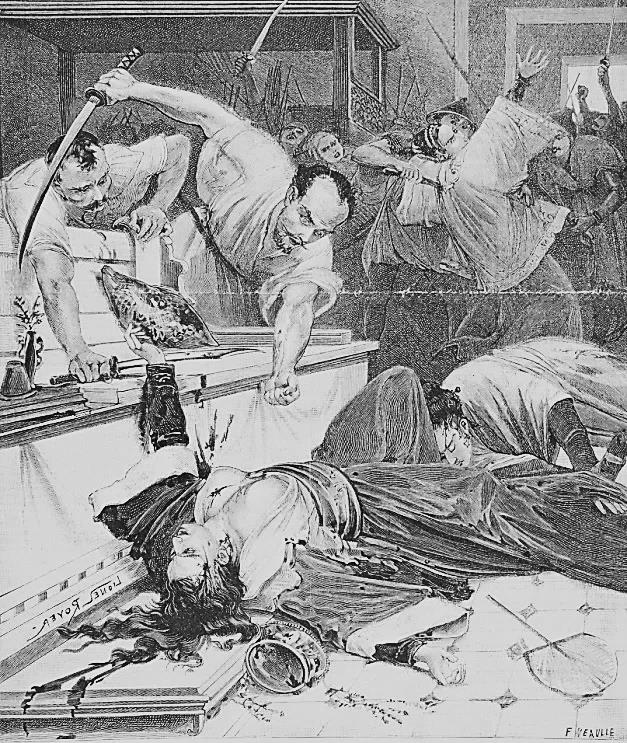
Fig. 17. Assassins’ attack on the Queen of Korea.
Illustration from the weekly Le Journal illustré (France), October 27, 1895.
The intimidated Gojong again became a hostage in his palace, fearing that he could be killed at any moment as his wife. The newly formed puppet government of Kim Hong Jeep, at the behest of the Japanese, began to carry out another round of reforms, which were openly mocking the people of Korea and their culture. which was called santo (hangul 상투). The hair collected in this way was supported on the head by a traditional mangyeong headband (hangul 망건). A haircut was regarded as sacrilege, a violation of filial piety, since hair was considered a “gift from parents”. The new decree banned the wearing of beards, santios and mangyongs, as well as smoking pipes. Moreover, it was carried out in the most offensive way: soldiers grabbed men right on the street and forcibly cut their hair. The murder of the “mother of the country” – Queen Min and new odious decrees overflowed the cup of patience of the Koreans. Uprisings broke out throughout the country. The Japanese were killed, the pro-Japanese government lost control over entire provinces, taxes did not go to the treasury.
On February 11, 1896, having secretly corresponded with the Consul General of Russia K. I. Weber, Gojong with his favorite Princess Om and Crown Prince Sunjeong in two women’s palanquins (the female ones were not inspected by the Japanese), escaped from the Gyeongbokgung Palace and took refuge in the building of the Russian mission, which was guarded by 160 Russian guardsmen of the naval crew from the cruiser Admiral Nakhimov. The situation in the country immediately changed. Gojong dissolved the government and sentenced Kim Hong-jip and other pro-Japanese ministers to death. The body of the executed Kim Hong Jip was chopped up and sent in parts to each of the 8 provinces of Joseon. The decrees of the pro-Japanese government, including those on hairstyles, were canceled.
Gojong lived in the Russian mission for more than a year. The new government he formed was also located there. It was impossible to call it completely pro-Russian. Groups of corrupt officials took the side of the power that paid more. Nevertheless, on the whole, it was anti-Japanese, and Gojong expected some more decisive measures from Russia to ensure his personal safety and restore the country’s economic development. However, Russia did not take any measures in this regard. In order to contact the Russian government, Gojong sent Minister Plenipotentiary Min Young-hwan to Moscow for the coronation of Nicholas II. On May 22, 1896, Min received an audience with the Russian Emperor, then visited St. Petersburg. There he met with the Minister of Foreign Affairs, Prince Lobanov-Rostovsky, and conveyed to him five requests of the Korean government: to send a reliable guard to protect the king until the Korean army was reformed; military instructors; councillors: one for the royal court to be close to the king; one for ministries; for the management of mines, railways, etc.; to lay telegraph lines between Russia and Korea on terms favorable to both sides; to provide a loan of 3 million yen to repay Japan’s debt. Lobanov replied that it would be impossible to ensure the protection of the Korean king because of predictable conflicts with the British or Germans, but agreed to send a financial agent to pay off the debt, establish telegraph lines and send military instructors. Despite the fact that Russia showed a half-hearted response to Korea, Min brought 13 Russian military instructors to Korea.
Exceptionally favorable circumstances for Russia, when it could completely take control of the situation in Korea, were not used by the Russian government. Russia, adhering to the principle of “non-interference in the internal affairs of Korea”, did not derive any benefits for itself from this. It was unable to obtain important concessions for the construction of railways, the laying of telegraph lines and the development of deposits. Their receipt was constantly blocked by supporters of the Americans in the government, and the Russian plenipotentiary representative in Korea, K. I. Weber, despite his proximity to Gojong, did not have the necessary abilities to overcome their resistance. Revenues from customs duties and duties since 1893 were in the hands of the British financier General Commissioner of Customs, John McLeavy Brown. And since customs represented the most significant source of income for the Korean treasury, Brown was the de facto financial adviser to the Korean court, having the right of personal access to the king.
Kojong’s flight to the Russian mission seriously worried not only the Japanese, but also their British-American curators. “Heavy artillery” was sent directly from the United States to Korea – foreign agents So Jae-pil and Yoon Chee-ho. The first of them, So Jae-pil, was trained in Japan in his youth, then he was the youngest of the participants in the “Kapsin coup”. After its suppression, he fled to Japan, from there he moved to the United States, where he continued his studies, married the niece of US President James Buchanan, received American citizenship and even changed his name to European Philip Jason. Despite the fact that Gojong declared an amnesty for the participants in the coup d’état, Seo was not going to return to his homeland. However, the owners had other plans for him, and he had to part with a carefree life in America. Together with a lesser American agent, Yoon Chi-ho, in April 1896, they began to publish the newspaper “Dongnip Sinmun” in Seoul (the second name in English is Independent), where they published anti-Russian and anti-government articles that in every possible way discredited the king’s stay in the Russian mission. The most cynical thing was that they organized the financing of this anti-government newspaper at the expense of the government itself. Then, without any hesitation, this newspaper was headed by the US envoy to Korea, Horace Newton Allen. In July 1896, So Jae-pil created the so-called “Independence Club”, which was supposed to raise funds for the construction of the Arch of Independence, but in fact, thanks to the clever demagogy of its creators, it turned into a broad anti-Russian and anti-government movement, which was called the “Independence Society”.
Pushed by its Anglo-American masters and regarding Russia’s indecisive position on the Korean issue as weakness, the Society organized a series of large-scale anti-Russian pickets and rallies in Seoul, demanding that Gojong leave the Russian mission. On February 20, 1897, under external pressure, Gojong moved to the palace, but not back to Gyeongbokgung, but to present-day Deoksugung, which was smaller but within walking distance of the Russian mission.
Realizing that in the new conditions it was possible to completely lose its positions in Korea, the government of the Russian Empire decided to change its passivity to more active actions. Evidence of this departure from the previous policy of non-interference in the affairs of Korea was the appointment of Alexei Nikolaevich Speyer to the post of Russian envoy to Korea on September 7, 1897 instead of Weber. From the moment he arrived in Seoul, Speyer made it clear that he had been sent to give a new impetus to Russian policy toward Korea. Together with him, a new batch of Russian military instructors arrived in Seoul.
In order to rid Korea of credit slavery to Japan, it was decided to grant Gojong’s request and provide him with a loan of 3 million yen to pay off Japan’s debt. To service the loan, it was necessary to create a credit institution in Seoul, which was supposed to be called the Russian-Korean Bank. But to be sure that the Korean government would be able to make payments on the loan, it was necessary to send a financial adviser to the court of Gojong. But not a simple adviser, but one who could snatch from the hands of the Briton McLevy Brown the main source of income for the treasury – maritime customs.
On May 21, 1897, the Minister of Finance of Russia, Sergei Yulievich Witte, gave his consent to the appointment of a Russian financial adviser to the Korean court. His candidacy for this post was Kir Alekseevich Alexeev, the head of the office of the Department of Customs Duties of the Ministry of Finance, whose task, thus, was the careful but steady transfer of the Korean customs administration into the hands of Russia. As St. Nicholas of Japan wrote about Alexeev: “He is a positive phenomenon: he can say by heart the entire financial list for the year, he can dictate papers to three scribes at once, while talking to a stranger, he can play on two chessboards by heart, without confusing the moves at all. At the same time, he is a very sympathetic person, fascinating in conversation, speaking like a book, frank.” [28]In order not to arouse suspicion among the British and Americans about the true purpose of Alexeev’s arrival in Seoul, he was sent there as an agent of the Russian Ministry of Finance[29], which the ministry often sent to other countries.
October 5, 1897[30] Alexeev, together with his secretary Garfield, came to Seoul and was immediately received by the king, with whom he had a secret conversation. However, his inauguration was postponed, as Gojong decided to assume the title of emperor and make profound and rather significant changes in the international status of Korea.
On October 12, 1897, Gojong was solemnly crowned with the imperial crown. At the same time, Gojong himself took a new “imperial” name Kwang Mu (hanja 光武, approximate translation of “Shining Warrior” from the hieroglyphs “lightning” and “armed”). Korea from Joseon was renamed Tae Han (hanja 大韓), that is, “Great Han”. into which the Korean Peninsula was divided, the supposed ancestors of the Koreans. Interestingly, in the modern era, when Korea is divided into North and South, North Korea has the self-name Joseon, and South Korea is called Tae Han. That is, North Korea considers itself the heir of traditional Korean culture, before its Europeanization, and South Korea is the successor of a state with a higher status, that is, a sovereign empire.
Since Gojong had now become an emperor, and in the East the “emperor” was not just the head of state, it was a sacred figure reflecting the new heavenly world order, a new chronology was introduced. Instead of the “Keguk era” – the chronology, which began with the year of the founding of Joseon (1392), the “Kwang Mu era” was introduced, beginning in the first year of Gojong’s reign as emperor. Thus, the year 1897, or the 506th year of Kwanguk, was declared the 1st year of Kwang Mu.
The design of Korean coins has generally remained the same. The changes affected only the legend on the obverse. They reflect the change of the name of the country and the change of dating (Figures 17A are the old legend and 17B are the new legend).
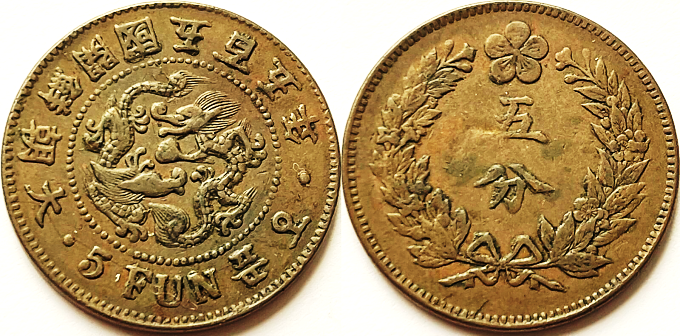
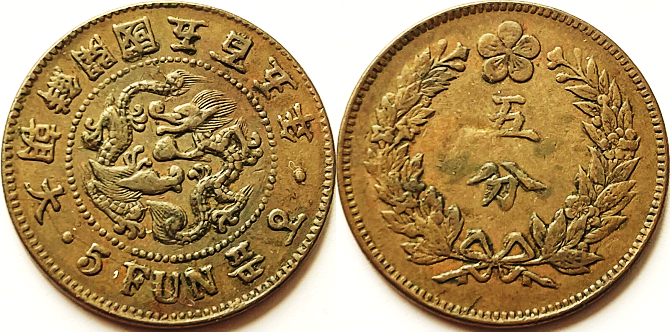
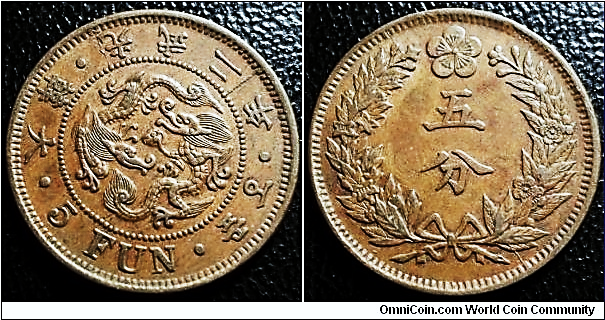
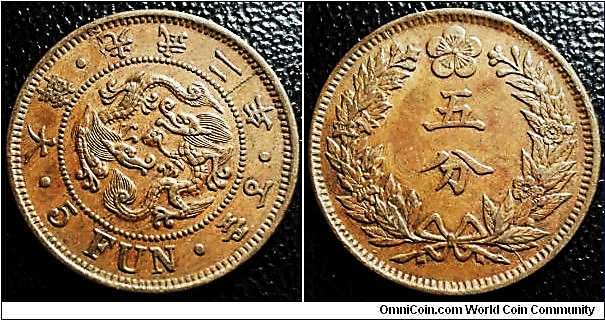
Fig. 17A. 5 Phuns 1896 Fig. 17B. 5 Phuns 1898
On the obverse at the top: • 大朝鮮 開國五百五年 • Top obverse: • 大韓 • 光武二年 •
Translation: Great Joseon. Ke Guk 505 Translation: The Great Khan. Kwan Mu 2 Year
After the celebrations on the occasion of his new status, Gojong received Alekseev in private several times. The emperor liked him for his refined manners, erudition and business qualities. Alexeev, having familiarized himself by that time with the accounting records of MacLeavy Brown, found out that he uncontrollably used the interest due to the treasury on the current account of state revenues, and, writing out money for the payment of Korean debts, speculated in millions of sums, sometimes for several months. For example, in 1896, having written out 1 million yen to pay off part of Japan’s debt on the 3 million loan of 1895, he uncontrollably disposed of this million for 4 months. Upon learning of this, Gojong was furious and demanded the immediate dismissal of McLevy Brown and the appointment of Alexeev in his place.
But firing Brown turned out to be a matter of incredible difficulty. In the British Mission, Kojong’s order provoked an immediate response. The British consul general in Seoul, John Jordan, attacked Kojong with intimidation, hinting at the use of naval artillery by the British against Korea in the event of Brown’s dismissal. At the same time, the pro-British Minister of Foreign Affairs of Korea, Min Chun Mook, found all sorts of tricks to prevent the termination of the contract with McLeavy Brown. Only after the Russian envoy A. N. Speyer persuaded Kojong to dismiss Min Chun Muk and appoint a pro-Russian minister, Cho Byung-sik, in his place, the latter signed an agreement with Alexeev on November 5, 1897 appointing him chief adviser to the Ministry of Finance and Commissar General of the Customs Department.
Despite the fact that China lost the war with Japan and was forced to give up suzerainty over Korea, the Korean customs department for some reason remained subordinate to the General Commissioner of Chinese Customs, Robert Hart, a compatriot of McLeavy Brown. Hart ordered Brown to completely ignore Alexeev’s appointment and refuse to hand over cases to him. At the same time, Jordan overpowered Kojon with threats on behalf of the British government. In this situation, Speyer compromised. Brown remained in the customs department, but under Alexeev, while resigning as an adviser to the Ministry of Finance. On December 14, 1897, Brown signed a memorandum on his subordination to Alexeev and the withdrawal of Korean customs from the jurisdiction of Robert Hart. Thus, the budget of the Korean Ministry of Finance passed into the hands of Alexeev. This was not the entire budget of Korea. As I have already said, a significant part of the income was withdrawn from the jurisdiction of the Ministry of Finance and was in the hands of the Ministry of the Court, which was headed by Lee Young-ik at that time, but we will talk about it later.
British banking houses were by no means going to let even such a small thing as the Korean budget and customs out of their hands. The news of the creation of the Russian-Korean Bank added fuel to the fire. S. Y. Witte hesitated for a long time whether it should be established. Having worked all his life as a railway manager and rising to the position of Minister of Railways, he got to the influential post of Minister of Finance only thanks to the clever intrigues of international financiers, in whose circles his wife Mathilde moved. There he was in the wrong place. For example, when Witte carried out the monetary reform of 1897 in Russia on the advice of the American banker John Pierpont Morgan to establish a gold standard, Witte devalued the Russian ruble by a third and increased the public debt by 53%. At heart, Sergei Yulievich remained a railway worker. It was not for nothing that he took such patronage of the Chinese-Eastern Railway (CER), for the lending and servicing of which the Russian-Chinese Bank was created in 1895. In the spring of 1897, Witte decided to try to obtain further railway concessions from China. In May of the same year, bypassing official diplomatic channels and the Minister of Foreign Affairs, he sent the chairman of the board of the Russian-Chinese Bank, Prince Esper Ukhtomsky, to Beijing. Witte instructed Ukhtomsky to “probe” Li Hongzhang for the construction and acquisition of rights to a railway line running from the Chinese Eastern Railway to the south to the Yellow Sea. Ukhtomsky’s private visit caused such irritation in the “Yellow Bismarck” Li Hongzhang that he categorically refused to consider the possibility of any new concessions. The failure of Ukhtomsky’s mission in China led Comrade (as the post of Deputy Minister of Finance Pyotr Mikhailovich Romanov was called) to the idea of the possibility of building a railway line to the Yellow Sea through Korea. In a letter to Witte, he explained his position as follows:
«… at present, the Chinese would hardly allow us to reach one of the ports of the Liaodong Peninsula by rail, as they understand that this would completely put Beijing at our mercy; on the other hand, they would not object much to the construction of a railway from Bodong through Kirin to one of the ports of the Liaodong Peninsula. Or other Korean ports, as this would protect them from any takeover of Korea by the Japanese. In order for us to get such permission from Korea, we first need to ensure influence over its financial affairs, so we do not need to avoid financial sacrifices, because our investment will be returned a hundredfold in the near future.”[31]
Romanov’s arguments were quite convincing, since on October 28, 1897, Witte finally approved the creation of the Russian-Korean Bank. From the above words of Romanov, it is clear that such an institution should be considered as another flexible instrument created by Witte under his new program of Far Eastern expansion. On December 5, 1897, according to the report of the Minister of Finance Witte, Emperor Nicholas II approved the Charter of the Joint-Stock Company under the name “Russian-Korean Bank” (in Latin the name was written Russo-Korean Bank, not Russian-Korean Bank). The founders of the Russian-Korean Bank were: the above-mentioned Prince Esper Esperovich Ukhtomsky; Member of the Board of Directors of JSC Saint Petersburg International Commercial Bank Fyodor Karlovich Nothaft; Chairman of the Board of JSC “Vladikavkaz Railway” and Vice-Chairman of JSC CER Stanislav Ippolitovich Kerbedz; Member of the Board of Directors of the Russian-Chinese Bank Alexander Frantsovich Kokh; Interestingly[32], the board of directors of the newly created bank was almost identical to the board of directors of the Russian-Chinese Bank, established in December 1895. The authorized capital of the Russian-Korean Bank was 500 thousand rubles. The main office was located in St. Petersburg. in Seoul, where S. B. Gabriel and V. M. Koreilin were appointed co-managers.
When discussing in the Ministry of Finance of Russia the question of the main goals of the creation of the Russian-Korean Bank, one of its founders, A.Y. Rotstein, considering it unprofitable for the Russian-Chinese Bank to take any serious part in the political combinations of the Russian government in Korea, believed that it was the Russian-Korean Bank, and not a branch of the Russian-Chinese Bank, that should have served as an instrument for transferring a loan to the Korean government from the funds of the Chinese Eastern Railway, i.e., in fact from the sums of the state treasury[33]Alexeev’s unexpectedly rapid success, what seemed to be achievable at the cost of long, cautious efforts without any particular hope of success, was accomplished in the shortest possible time and as if by itself: Russia became formally the master of Korean finances, and it had only to develop its success unceasingly. which kept their branches in two main (open) ports – Busan and Incheon[34].
As of the end of 1897, there was only one properly Korean bank in Korea, the [35] Hanseong Eun-heng, which had been founded a few months earlier, on February 19, 1897. The bank was successful because, despite lending money at twice the rate at which it borrowed it, the bank’s interest rates were much lower than those of Japanese and English banks. According to anecdotal history, The first property that the bank used as collateral for the loan was a donkey. The bank’s employees were faced with the task of feeding and taking care of their collateral, since the loan had expired. It was impossible to rely on the reliability of such a bank, since its predecessor, the Joseon Eun-heng, established in 1896, had already collapsed by that time.
The other three banks with branches in Korea belonged to the states hostile to Russia – Japan and Great Britain. In Korea, there was a branch of the largest British bank in East Asia, The Hongkong and Shanghai Banking Corporation, and branches of two Japanese banks: Daiichi Ginko, Japan’s first joint-stock bank, in Incheon and Busan, and Yuhachi Ginko in Incheon. But all these branches were located in peripheral cities. The rumor that the Russians were allowed to open their own bank in the capital of Korea, Seoul, excited foreign bankers and consolidated them in the fight against Russia.
The dominant bank in the Korean economy was Japan’s Daiichi Ginko. When Japan switched to the gold standard in 1897, it retired its 1 yen silver coins. Since they were used for international trade in Korea, there was some confusion among the Japanese, who were actively establishing commercial affairs there. Daiichi Ginko Bank presented the arguments of entrepreneurs to the Ministry of Finance of Japan. As a result, some withdrawn coins were reminted (to prevent re-exchange for gold at the Japanese Mint) and allowed to circulate in Korea and other Asian regions where Japan had interests. In this way, Japan has been able to expand its presence in Asian markets at a fraction of the cost. Having become the chief adviser to the Ministry of Finance of Korea, Alexeev resolutely opposed the circulation of reminted Japanese yen in Korea. The Japanese ambassador in St. Petersburg immediately protested against the appointment of Alexeev to the post of chief financial adviser, motivating this by the violation of treaties between Japan and Russia regarding non-interference in the internal affairs of Korea.
On March 1, 1898, the branch of the Russian-Korean Bank in Seoul was opened. Japanese, British and American diplomats sent a joint note of protest to the Russian envoy in Korea, Speyer, against the opening of the branch. But this was just a non-binding formality. The main blow against Russia was prepared by its enemies through the notorious “Independence Society”. to publish provocative “open letters” to the government, clearly misleading readers and sowing panic among ordinary people. From the very first lines, these “letters” contained deliberately false information. “The public,” the newspaper wrote, “was informed that the Finance Department had withdrawn government money deposits from two local Korean banks and deposited them in the Russo-Korean Bank.” [36]Although we saw that there was only one local bank in Korea, and all that could be extracted from it was a donkey that had not been redeemed from the pledge. that your department has transferred a large sum of money from the treasury vault to the vault of the Russian Bank. In addition, the said bank was authorized to collect and pay all government revenues for the Finance Department. This is a matter for people, and they need to know the facts of the case. If these rumors are true, we must assume that the Russo-Korean Bank is in fact our treasury, and your department will be only a nominal head. We hope this is not true, but after hearing such rumours, we, in the sense of our moral obligations which we have to the Government, are deeply interested and anxious to know the exact relations and privileges which the said bank has received from the Government[37].” In addition to this, a petition was drawn up in the British Mission on behalf of the Society on February 20, 1898, which stated that “the transfer of the financial and military departments of the empire to foreigners and the actual granting of supreme leadership of the empire’s domestic and foreign policy to one foreign power is not in accordance with the principle of Korean independence.”[38]
Against the backdrop of hysteria whipped up in the press, from February 21, 1898, activists of the Society organized numerous rallies in Seoul, at which crowds of ordinary people were told that predatory Russia was trying to “take possession of the money of Koreans, turn them into slaves and send them to the construction of the Trans-Siberian Railway.”[39] Korean officials collaborating with Russia were accused of selling their homeland and openly demanded their deaths. On February 22, 1898, assassins attacked the head of the pro-Russian party, the interpreter of the Russian mission, Kim Hong Nyuk, and only thanks to the intervention of Chinese workers from the British mission, he miraculously survived. After Speyer demanded that Gojon come to the Russian mission and apologize for this incident, the leaders of the Society stirred up a wave of nationalist rallies and outrages. Bribed by the British, officials of the Korean Ministry of Foreign Affairs went to an unprecedented action: they went on strike, refusing to obey the “Russian puppet” Min Chun Muku. The culmination of the events was a truly unprecedented mass anti-Russian political demonstration organized by the Society on March 10, 1898 in front of the Gojong Palace, to which a crowd of about 10 thousand people was herded.
All this coincided with an unexpected U-turn in the Far Eastern policy of the Russian government. Russian Foreign Minister Mikhail Nikolayevich Muravyov managed to do what Witte failed to do – to persuade Li Hongzhang to lease to Russia – not only the land allocation for the railway in Chinese Manchuria, but also part of the Liaodong Peninsula with the cities of Lüshun (Port Arthur) and Dalian (Dalian). On December 15, 1897, the Russian naval squadron set out on a roadstead in Port Arthur. Russia was acquiring the long-awaited ice-free port for the Pacific Fleet. Since Liaodong was occupied by Japan during the Sino-Japanese War, and only the “triple intervention” of Russia, France and Germany forced it to withdraw its troops from there in 1895, the threat of war with Japan, from which Korea was now also taken away, became real. Great Britain could be drawn into this war on the side of Japan, whose interests in Korea were also violated. Considering that Russia was not ready to wage war at this stage, and that the acquisition of Port Arthur was more important for it than economic expansion in Korea, the Russian government decided not to escalate the confrontation and make concessions to hostile countries on the Korean issue, withdrawing military instructors and a financial adviser from Seoul.
On March 7, 1898, Speyer addressed an official letter to Gojong, in which the question was raised whether the emperor considered it expedient to continue in their posts as a Russian financial adviser and military instructors. On March 12, the Korean government sent Speyer a formal reply that it accepted his proposal to recall the Russian military instructors and K. A. Alexeev.
Alexeev settled accounts with the Korean government on March 20, handing it 1,278,122 yen against receipt (at the time of his assumption of office, the total amount of funds left in the treasury by McLevy Brown was about 23 thousand yen). Here I would like to note that some researchers, publishing works concerning the income and expenditure part of the customs budget of Korea in the 1890s, make the same mistake. which is called “won”. As I have already pointed out, the currency of Korea at that time was not the won, but the silver yang (兩, YANG). Until October 1, 1897, the yang was pegged to the Japanese yen at the rate of 5 yen = 1 yen. After Japan’s transition to the gold standard on October 1, 1897, the yen was devalued by half, and the exchange rate of the silver yen against the Japanese yen became dependent on the difference in the price of gold and silver. Western financiers often used the word DOLLAR in relation to the currency in which the budget of the Korean customs was calculated. Some researchers mistranslate this word as “wonu”, but in fact in this case it means the Japanese yen.
Since the tasks for which the Russian-Korean Bank was created disappeared by themselves, on April 8, 1898, the branch of this bank in Seoul was closed, and by the end of the month its employees vacated the rented building. In my work, I gave an exhaustive list of operations for which this bank was created. It was not engaged in the issue of paper or metal money, although according to the charter it had the right to do so with the permission of the Korean [40]government. The statements found in the works of some authors that the Russian-Korean Bank minted Korean coins with the Eagle are nothing more than the fruit of the authors’ imagination.
The head of the Independence Society, So Jae-pil, returned to the United States in April 1898. The hosts considered that he had completed his task. The “society” was headed by his younger comrade Yoon Chi-ho, who continued to play the revolution. The “society” began to demand the introduction of a representative body of power, organized rallies and riots on the streets of Seoul, which by the end of 1898 grew into real armed clashes with government forces. But when the Society began to demand the termination of all contracts and concessions with foreigners, hurting the interests of their Anglo-American-Japanese patrons, they themselves became alarmed and gave the Society to Gojong to be torn to pieces. The “society” was dispersed, the leaders were executed and thrown into prison, the most successful of them fled abroad. The mouthpiece of the opposition, the Society’s newspaper, the Tongnip Sinmun (Independent), was cynically sold by the U.S. envoy, Horace Newton Allen, to the Korean government, and it was instantly shut down.
K. A. Alexeev was sent as an agent of the Russian Ministry of Finance to Yokohama. There he humorously told Nicholas of Japan “a lot of interesting things about Korea; for example, that “in Korea, the first swindler…, stealing the state, is the King himself; Sometimes he is delighted when an official deftly steals from the treasury.” When Alexeyev managed the finances there, and the ministers were not allowed to steal, some complained to the King about this, and he himself instructed how to swindle money from Alexeev, and so on.”[41]
From the middle of 1898, Russian influence in Korea began to weaken.
After Alexeev’s resignation as chief commissioner of customs, McLeavy Brown was rehired by the Korean government. Now no one prevented him from deftly using his powers to make the maritime customs independent of the Ministry of Finance. He openly pursued a pro-British and Japanese policy. Brown agreed to the free circulation of Japanese silver coins, extended the right of the Japanese Daiichi Ginko Bank to receive customs duties, and also allowed the circulation of credit notes issued by the Daiichi Ginko Bank. Thus, Japan owes much to Brown for building a solid base in this area. Brown’s pro-Japanese policy coincided with British foreign policy. They worked in close partnership on all issues, especially in blocking the Russian and French loan in 1901. Brown defended the rights of England and Japan, while Britain and Japan gave him full support. In conclusion, Brown, as counselor and commissioner general of customs, played an active role in the penetration of these countries into the Korean economy. This ran counter to the goals of the Korean government, which hired foreign advisers to modernize the country while maintaining its economic independence.
In the late 1890s, Lee Yong Ik became Gojong’s absolute favorite (Fig. 18). Lee was born in North Hamgyong, and due to the geographical location of this province on the border with Russia, he learned Russian, gaining an advantage that served him well after Gojong’s flight to the Russian mission[42]. Being a minor official, during the king’s stay in the Russian mission, he began to enjoy such favor from Gojong that he was soon appointed administrator of his personal property and treasury, which were in the Department of the Court. Possessing all the qualities of a cunning courtier and a skillful schemer, Lee Young-ik was able to defeat all his rivals and soon reached unprecedented heights, becoming the most important Korean nobleman and keeper of the imperial seal.
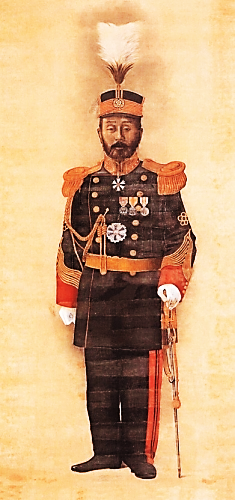
Fig. 18. Minister of Finance of the Korean Empire and Director of the Central Mint Lee Yong Ik
Fragment of a ceremonial portrait. National Folk Museum of Korea
At the disposal of the Department of the Court, i.e., practically under the control of Lee Yong Ik, were the most profitable sources of tax revenue. After persuading Gojong to repeal the provisions of the “Kabo Year Reforms” to bring the taxation system under the full control of the Ministry of Finance, Yi Young-ik transferred to the Office of the Court the revenues from the monopoly on the sale of ginseng, tax revenues from mines and the lease of state land, etc. Huge undocumented sums on a Korean scale, received mainly as bribes from those wishing to get a position in the state apparatus, ended up at the personal disposal of Lee Yong Ik.
On November 29, 1897, Lee, while remaining the manager of the Mint Department, was appointed head of the Jeonghwan Division of the Ministry of Finance, which was responsible for issuing money, and director of the Central Mint. On December 3, 1897, he was also appointed in charge of all mining operations in Korea. During his tenure in these positions, an exemplary sericulture workshop was created to teach modern methods of silk weaving. Lee established industrial training centers in each province and tried to train modern engineers in dyeing, weaving, papermaking, silversmithing, and woodworking. He also founded a porcelain company in Seoul and built an arms factory. In addition, in 1898, he introduced a modern lithographic printing machine for the production of postage stamps, trademarks, and banknotes. In 1900, Lee was appointed hyopang (deputy) minister of finance, and in 1902 he was appointed minister of finance. All Korean coins were minted under his direction or under a license issued by him.
At the turn of the 19th and 20th centuries, due to a sharp drop in the price of nickel on the world market, the copper-nickel quarter of the jan coin was the only minted coin that did not contain the intrinsic value of the metal, so its production was profitable. The cost of making a quarter coin was only 5 puns, which was ridiculously low compared to its face value of 25 puns. As more and more coin-minting equipment appeared, more and more institutions received minting licenses from Yi Young-ik, but all the coins they produced were quarter-yang coins. The spread of mints that cast Sangpyeong Dongbo was revived.
Silver or copper coins soon ceased to be minted in Korea—silver for international trade was imported from Mexico and Japan, while domestic transactions were made primarily in copper-nickel coins or various forms of credit designed to eliminate the need for coinage (paper money was still used in limited use). Most quarter-yang coins were dated 1898 (2nd year of Kwang Mu: 光武二年); The stamps were used until they wore out, then they were replaced with stamps with the same date. Official stamps were rented out to licensees and even non-licensees. The Japanese minted counterfeit copper-nickel coins for distribution in Korea at their mints, then smuggled 150 minting machines into Korea and minted them directly in the country. Therefore, some unofficial issues could not be distinguished from real coins. The government was eventually forced to recognize counterfeits as legal tender and divided the copper-nickel coins into three classes: official, Class A counterfeits, and Class B counterfeits, which were accepted for payment at different rates. Even “official” issues were accepted for payment below par, as the market was overflowing with counterfeit coins. In the end, copper-nickel coins accounted for more than half of the total circulating money supply. The withdrawal of these coins from circulation became a problem for the Japanese after the occupation of Korea in the initial period of 1904-1910. The Japanese divided quarter-coins into three classes and exchanged them at the following rate. Class A (甲) was exchanged at face value (2 chon 5 pun). Class B (乙) coins with a denomination of 2 chon 5 pun were exchanged for the price of 1 chon, while class C (丙)[43] was not exchangeable.
Local banks and quasi-state firms tried to introduce paper money, but the population did not accept it. Daiichi Ginko Bank, wishing to buy up as many silver yen coins as possible withdrawn from circulation, asked the Japanese government to allow the issuance of credit notes in Korea (national banks lost the right to issue banknotes in Japan in 1885). Permission was granted, and the first issues of 1, 5 and 10 yen notes, printed at the Japanese Ministry of Finance Printing House, were issued in May 1902. They were eagerly received in the southern ports, but rejected in Seoul and Incheon due to the opposition of Lee Young-ik.
In 1898, Gojong ordered the closure of the Central Mint in Incheon and, in order to take it out of Japanese control, moved it to Yongsan on the southern outskirts of Seoul, closer to his center of government. Construction of the Yongsan Mint was completed in September 1900. On May 22, 1901, Gojong issued Imperial Decree No 4, promulgating the “Regulations on Currency Circulation” (hanja 貨幣條例). Lee Yong-ik embarked on radical measures to implement financial reform. One of the measures was the announcement of the introduction of the gold standard, a ban from September 11, 1902. for the credit notes of the Daiichi Ginko Bank and the introduction of coins of a new design, which began to be minted as early as 1901.
Since 1902, the main monetary unit of Korea has been the gold won (圜, WON) with a nominal gold content of 0.75 grams instead of the silver yang (兩, YANG). One won was divided into 100 jeons (錢 – the hieroglyph for “money”, CHON) and 1000 ri (厘, RI / REE). The design of the new coins generally did not differ from the coins of the 1892-1901 model. However, on the obverse of the coins, in the center of the circle of beads, instead of “playing dragons”, there appeared a completely new pattern – the heraldic Eagle. These coins are the subject of this study.
COIN DESCRIPTION
Trial coins of the new design were born in preparation for the reform even before the official decree of Gojong was issued.
The first such coin was a test coin dated the 3rd year of Kwan Mu (光武三年,1899) with a denomination of half dollar (Fig. 19). Which mint minted it has not yet been established[44]. It is not in Krause’s catalog. At the Hwadong Coin Auction (Seoul) in 1995, a copy of this coin was sold for 4 million 700 thousand South Korean won[45].
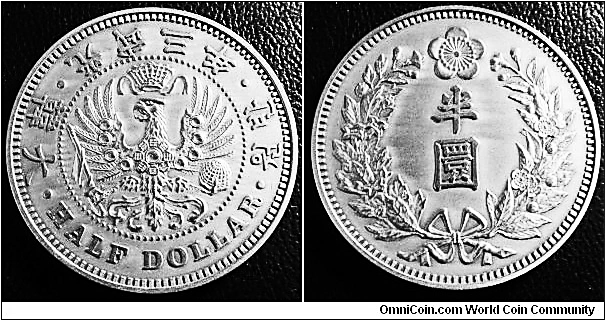
Fig. 19. Half Dollar Trial Coin 3rd year of Kwan Mu (1899).
The hieroglyph 圜 on the reverse represents the word “DOLLAR”
The appearance of such an unusual denomination is associated by some researchers with the Korean government’s attempt to create its own silver trade coin capable of replacing the Mexican dollar and the Japanese yen[46]. However, this assumption is erroneous. With the transition to the gold standard, silver trade coins turned into an analogue of credit notes. Due to the widespread introduction of the gold standard, the price of silver in relation to gold fell steadily and rapidly, and the issuer had to exchange any credit money for gold at face value without restriction, so the minting of a silver trade coin would lead to a financial catastrophe for the issuer. The name of the monetary unit in English did not matter for the domestic market, since Koreans learned to read only hanju and hangul in their sodan-schools. On hanja, the denomination was denoted by the numeral and hieroglyph 圜, and on Hangul by the sign 원, which in Korean were always pronounced “won”, regardless of its English name. As we have seen, coins of previous issues with this denomination were duplicated in English as WARN and WHAN.
On the Korean postal stamps of 1903, also with the image of the heraldic Eagle, in Latin transcription, the value of the stamp in won is duplicated for foreigners by the dollar sign $ (Fig. 20).
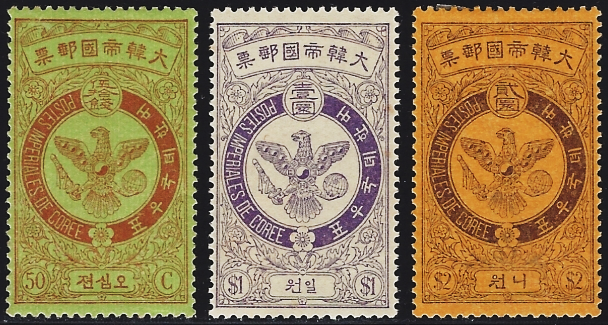
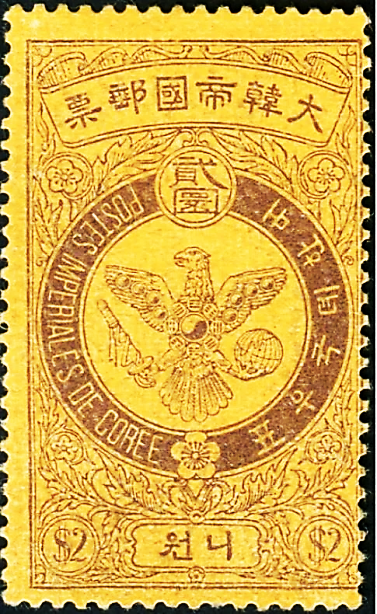
Fig. 20. Postage stamps of the Korean Empire with the heraldic Eagle of 1903.
The cost in won is duplicated in Latin by the dollar sign $
The next coin in this series was the 20 won test coin of the 4th year Kwang Mu (光武四年,1900). For the first time since 1885, it did not have an English denomination. Judging by the absence of an English legend, Yi Yong Ik and his subordinates responsible for minting coins have not yet decided on the answer to the question of how the name of the new currency will be written in English. but it is identical to the 20 won coin of the 6th year Kwan Mu (光武六年, 1902) shown in Fig. 21. All coins of large denominations (5, 10 and 20 won) of subsequent years were also minted without an English legend.
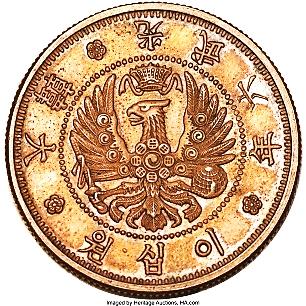
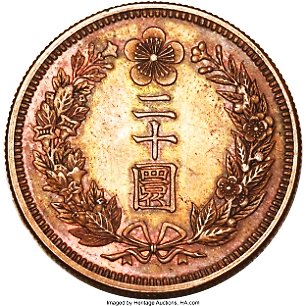
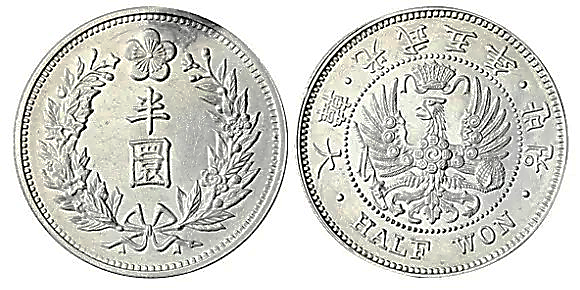
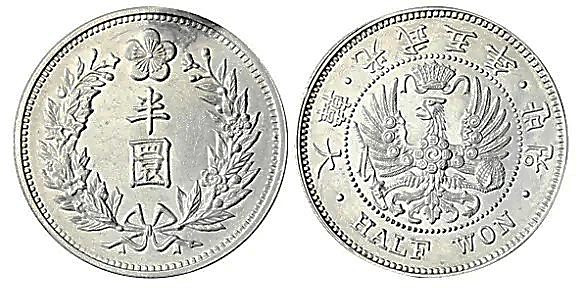
Fig. 21. 20 won trial coin Copper Fig. 22. Polvony. The 5th Year of Kwang Mu (1901)
The 6th Year of Kwang Mu (1902) Silver 0.800
There is no legend in English The hieroglyph 圜 on the reverse stands for the word “WON”
In the end, the new monetary unit, which we call “won” in Russian, was named WON on the 1/2 won coin issued in the 5th year of Kwan Mu (光武五年, 1901) by the English word WON (Fig. 22). This name was already used in the previous year, 1900, when a series of postage stamps was printed, the value of which was indicated in new monetary units: Wonag ( Hangul 원, Hanja 圓; WN), jeonah (hangul 전, hanja 戔 – the character for “small”, eng. CHEUN) and ri (Hangul 리, Hanja 厘, Eng. REE, abbr. RE) – Fig. 23-25. The denomination ri in the form of Ri also appears on one of the stamps with the heraldic Eagle of 1903 (fig. 26).
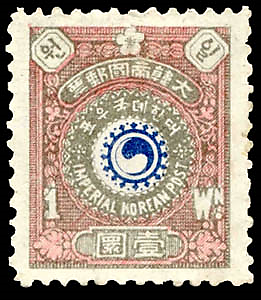
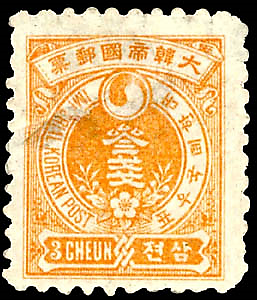
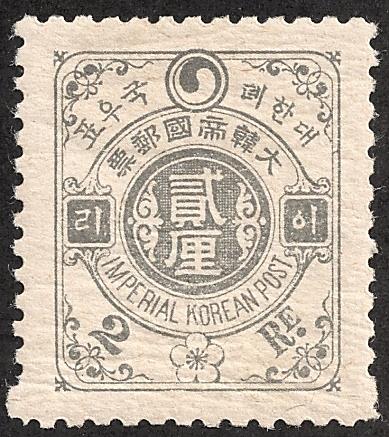
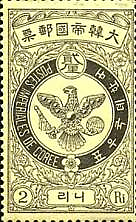 Fig. 23. Postage stamp Fig.24. Postage stamp Fig.25. Postage stamp Fig.26. Postage stamp
at a price of 1 won. 1900 price 3 chon. 1900 at a price of 2 ri. 1900 at a price of 2 ri. 1903
The hieroglyph 厘 (“ri”) is written in exactly the same way as the hieroglyph for the Japanese token coin rin, equal to 1/10 of the sen and 1/1000 of the yen. And since the monetary system of Korea fully corresponded to the Japanese one, the ratio of the new Korean money to each other was as follows:
1 won (원/圓 /WON) = 100 chong ( 전/ 钱/ CHON) = 1000 ri (リ/厘 /REE)
Small coins expressed in ri were never minted, since the value of the metal in the coin would exceed the value of the coins themselves.
The Chinese character “jeon” on the 1900 postage stamp was written as on the “old-style” coin with a face value of 1/4 yang: 戔 “small” (Fig. 24). But in Korean, “jeon” was written 전- in the same way as on the coins of 1902 (Fig. 27) and on the postage stamp of 1900 (Fig. 26). It was also written in Korean on the stamp of 1903 (Fig. 28). But on the coins of 1902 and stamps of 1903, the Chinese character “chon” is different: 錢 “money”, as in the Japanese sen small change coin. The change of the hieroglyph was due to the fact that the average person could distinguish the “new pattern” chongs, equal to 1/100 won (which corresponded to Japanese sen, equal to 1/100 of the yen), from the “old-style” chons, which cost twice as much. In English, the denomination “chon” on the 1902 1 chon and 5 chon coins was transformed from CHEUN (as the name was written on the 1900 stamps) to CHON (Fig. 27).
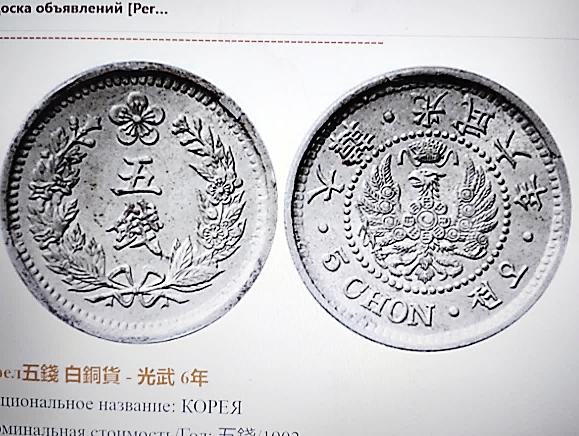
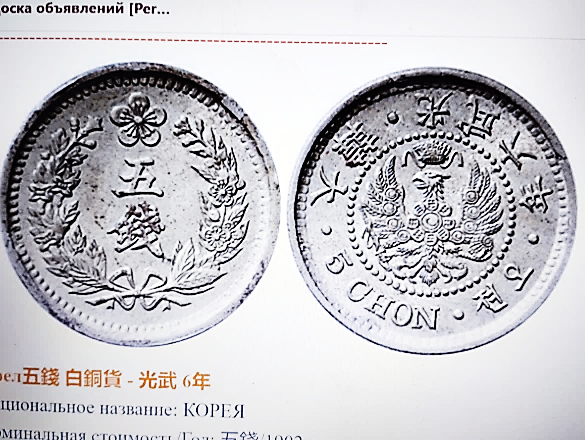
Fig. 27. Copper-nickel 5 chons. The 6th Year of Kwang Mu (1902) Fig.28. Postage stamp with a price of 1 chon. 1903
The full series of coins of the new design was supposed to look like this: 1/2 chon (copper, 3.4 g, ⌀ 21.9 mm), 1 chon (copper. 6.8 g, ⌀ 28 mm), 5 chon (copper-nickel alloy, 4.3 – 4.7 g, ⌀ 20.8 mm), 10 chon (silver 0.800, 2.7 g, ⌀ 17.6 mm), 20 chon (silver 0.800, 5.4 g, ⌀ 22.8 mm), 1/2 won (silver 0.800, 13.5 g, ⌀ 30.9 mm), 5 won (0.900 gold, 4.1666 g, ⌀ 17 mm), 10 won (gold 0.900, 8.3333 g, ⌀ 21.2 mm) and 20 won (gold 0.900, 16.667 g, ⌀ 28.8 mm). However, a full-fledged series of coins was minted only after the transformation of Korea into a protectorate of Japan in 1905, the closure of all Korean mints and the transfer of minting to Osaka, Japan. The Japanese, of course, removed the eagle from the obverse and returned the “playing dragons”.
Coins with the eagle were issued in only 7 denominations (the Bank of Korea counts half dollars and half won as one denomination): 1 jeon (copper), 5 jeons (copper-nickel alloy), 20 jeons (0.800 silver), half dollar/half won (0.800 silver), 5, 10 and 20 won (trial copper and gilded copper – models of coins that were to be minted from gold). 5 chons and half wons. According to the Bank of Korea, from 1901 to 1904, the Yongsan Mint issued a total of 915,000 silver polwon coins with the date of the 5th year of Kwang Mu (光武五年, 1901), 126,000 copper-nickel coins with the date of the 6th year of Kwang Mu (光武六年, 1902), and 981,000 one-piece copper coins with the date of the 6th year of Kwang Mu (光武六年, 1902). Krause’s catalog gives other figures. Although in practice, Korean mints never minted coins with future dates, but on the contrary, when minting a new batch of coins of a certain type that was trusted by the population, the stamps of previous years with the corresponding old dates were reproduced. Krause gives the following number of coins minted: 3,001,000 pieces of one-chon coins, 2,800,000 pieces of five-ton coins and 1,831,000 pieces of half-won.
Due to lack of funds, the mint could not issue gold coins, and only a few copper-gilded test coins have survived. Trial coins of five won and a silver coin of twenty jeon, despite the existing information about their minting, have not yet been seen in physical terms.
The Bank of Korea summarizes all known coins with the eagle in the table below (Table 1).
Tab. 1. Yongsan Mint Eagle Coin Chart[47]
Legend
R: Rare
R2: Very rare
R3: Extremely rare
R4: 11~20 pieces
R5: 6 ~10 pieces
R6: 3~5 pieces
R7: 1~2 pieces
| Year \ Nominal | 一錢
1 chon |
五錢
5 chon |
二十錢
20 chon |
半圜
½ Dollar или ½ won |
五圜
5 won |
十圜
10 won |
二十圜
20 won |
| 3rd(光武三年)1899 | R5 | ||||||
| 4th(光武四年)1900 | R7 | ||||||
| 5th(光武五年)1901 | R3 | R6 | |||||
| 6th(光武六年)1902 | R3 | R2 | exists hypothetically | exists hypothetically | R6 | ||
| 7th(光武七年)1903 | exists hypothetically | R5 |
With the exception of the eagle located in the center of the obverse instead of the “playing dragons”, the design of the new coins generally did not differ from the coins of the 1892-1901 model. The prototypes were made at the mint in Osaka by the Japanese court metal engraver Natsuo Kano together with Tomoo Masuda, who worked on the design, and Hyoka Ishii, who specialized in calligraphy[48].
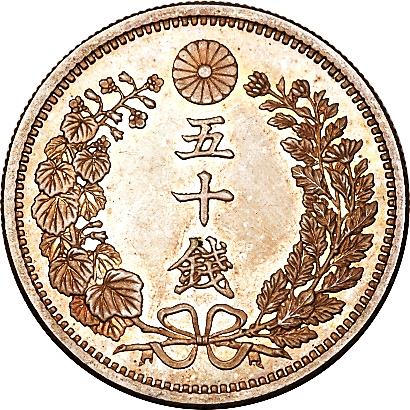
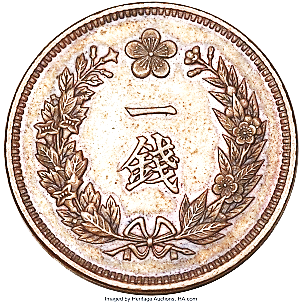
Fig. 28. Reverse of the Japanese 50 Sep 1876 coin. Fig. 29. Reverse of the 1 chon Korean coin from 1902.
To the left of the denomination is a branch of a To the left of the denomination is a branch of platycodon
paulownia flower,
On the right is a branch of a chrysanthemum flower on the right – a branch of a plum tree with flowers
At the top is a stylized chrysanthemum flower bud Plum blossom bud at the top
The reverse of Japanese and Korean coins is of the same type (Fig. 28 and 29). In the center, hanja hieroglyphs are the denomination of the coin. In the center at the top is a stylized flower bud. To the left and to the right of the denomination along the edge of the coin there are two branches of flowering plants, connected at the bottom by a ribbon tied in a bow. The differences between the coins are in the varieties of plants and the symbols that these plants are.
On the Japanese coin, in the center at the top, there is a chrysanthemum flower (the coat of arms and seal of the Emperor of Japan). To the left of the denomination is a branch of a paulownia flower (heart-shaped leaves), to the right is a branch of a chrysanthemum flower.
On the Korean coin, to the left of the denomination there is a branch of platycodon (broad-bellflower), to the right is a branch of a plum. At the top in the center there is an open calyx of a 5-petal plum blossom, in each of the petals of which we see four stamens characteristic of this plant (Fig. 29, 31). In 1892, the plum blossom replaced the “symbol of the great principles Daegeuk” or “Yin-Yang” on the coins, which had previously been something like the national emblem of Joseon (Fig. 30). With the proclamation of the empire in 1897, the plum blossom received the Korean name “Ihwamon” (hangul 이화문), on the hanja 李花紋 – “Lee’s seal”. but also on postage stamps and orders, as well as on the facades of public buildings. In numismatic catalogs, the name of this emblem is found as “the state seal of Korea”, but this name does not correspond to reality.
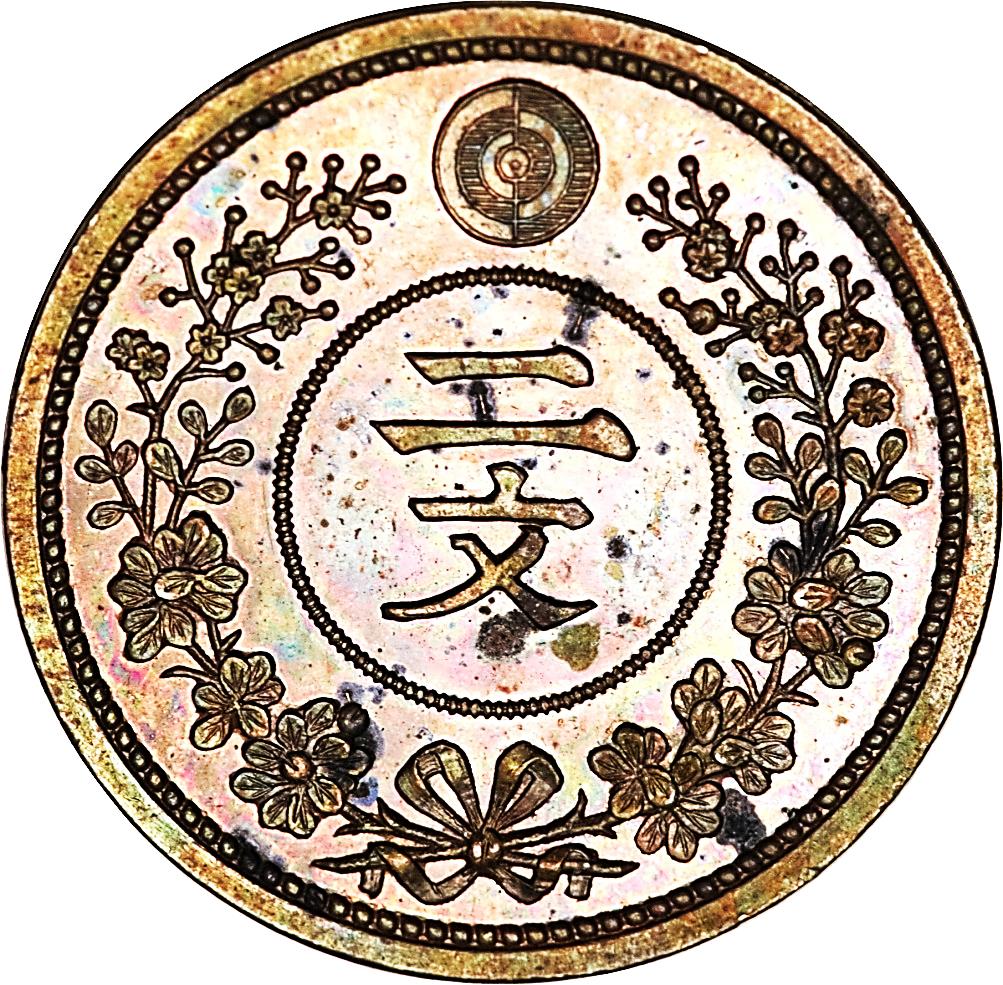
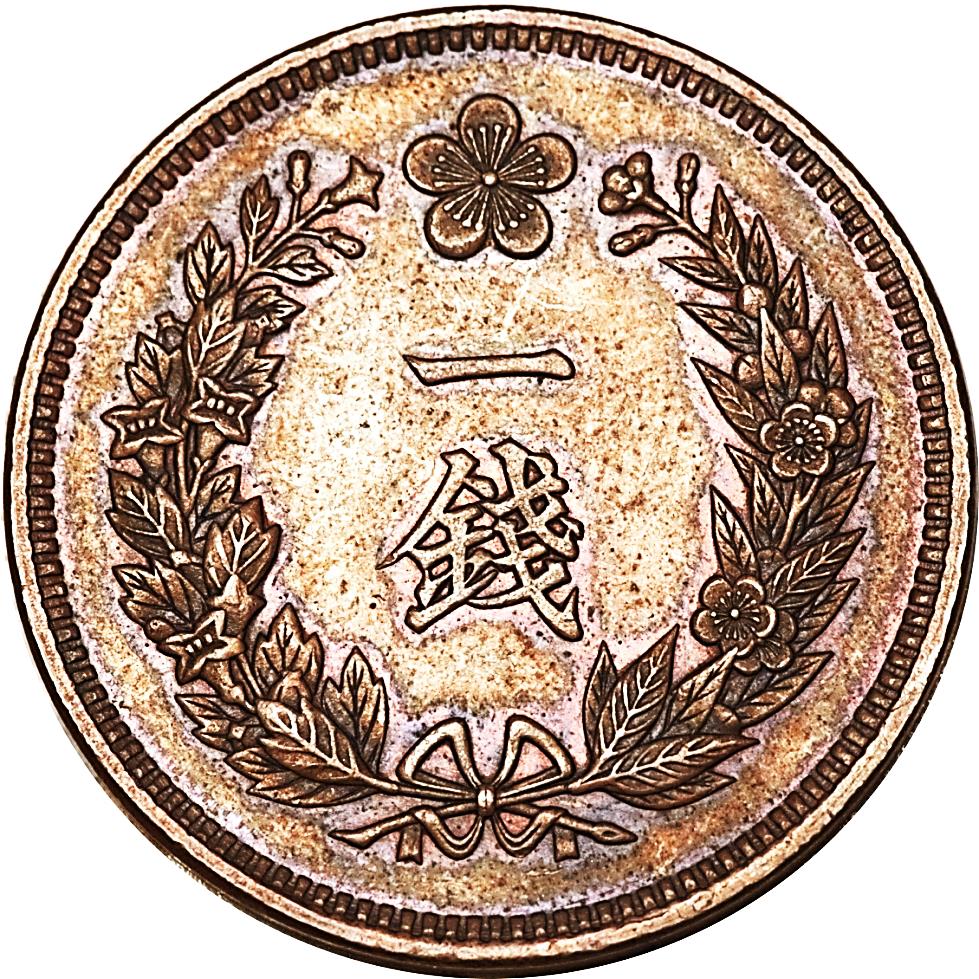
Fig.30. Yin-yang symbol on the 2 muna coin of 1886. Fig. 31. The flower “Ihvamon” on the 1 chon coin of 1902.
The Ihwamon plum blossom should not be confused with the current symbol of South Korea – the Syrian hibiscus flower or the “Sharon’s rose”, which in Korean is called “mugunghwa” (hangul 무궁화). Mugunghwa became the national flower of Korea in 1910-1945 during the Japanese occupation, when it symbolized the struggle for Korea’s independence from the Japanese colonizers.
To read the reverse of Korean coins, it is enough to know the Chinese numerals and hieroglyphs of hanja, denoting monetary units (tables 2 and 3). The number was always placed on top, the name of the monetary unit under it (see Fig. 29). The translation of the denominations on the reverse of the coins is given in Table 4.
Tab. 2. Chinese numerals
| ½ | 1 | 2 | 3 | 4 | 5 | 6 | 7 | 8 | 9 | 10 | 20 |
| 半 | 一 | 二 | 三 | 四 | 五 | 六 | 七 | 八 | 九 | 十 | 二
十 |
Tab. 3. Money units (hanja)
| WON / DOLLAR | CHON |
| 圜 | 錢 |
Tab. 4. Denominations of coins on the reverse side
| 一
錢 |
五
錢 |
二
十 錢 |
半
圜 |
半
圜 |
五
圜 |
十
圜 |
二
十 圜 |
| 1
chon |
5
chon |
20
chon |
½
dollar |
½
won |
5
won |
10
won |
20
won |
In the center of the obverse, in a circle of beads, there is an image of an eagle with raised wings. The head is turned to the left. The eagle holds a sword in one paw, in the other of the globe. Above the head of the eagle is a crown. Along the edge of the coin there is a circular legend. On small coins with a face value of 1 chon to 1/2 won, there is a legend in three languages: hieroglyphs Hanja, Korean Hangul and in English (Fig. 30). 10 and 20 won) – only on hanja and hangul (Fig. 31). Hanja is inscribed on 1) the name of the country 大韓 (“Tae Han”) – “Great Han” or “Great Korea”; 2) the year of the reign of Emperor Kwang Mu, when the coin was minted. For example, the 6th year of Kwan Mu (1902 according to our chronology), as in Figures 30 and 31: 光武六年, where 光武 is “Kwan Mu”, 六 is the number “6”, 年 is the word “year”. The numbers can be found in Table 2, the full dates of Kwan Mu in Table 1.
![1 чон. Бронза. 28 мм, 8 г (6,8 г). 6 год эпохи кванму (1902 год) [2]](http://episs.ru/wp-content/uploads/2026/04/1-chon-bronza-28-mm-8-g-68-g-6-god-epohi-kva-2.png)
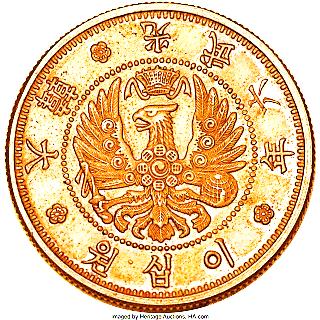
Fig. 30. Obverse of the 1 chon coin 1902 Fig. 31. Obverse of the 20 won coin from 1902.
The denomination of the coin is written in English and in Hangul. A breakdown of the denominations is given in Table 5.
Tab. 5. Denominations of coins on the obverse
| Par | Hangul | English language |
| 1 chon | 젼일 | 1 CHON |
| 5 chon | 젼오 | 5 CHON |
| 20 chon | 젼십이 | 20 CHON |
| Half dollar | 원반 | HALF DOLLAR |
| Half won | 원반 | HALF WON |
| 5 won | 원오 | – |
| 10 won | 원십 | – |
| 20 won | 원십이 | – |
Now let’s move on to the main topic of this study – the heraldic Eagle. As we have seen, this Eagle was depicted not only on coins, but also on postage stamps as the state symbol of the “Great Khan”. In addition, the image of a bird of prey – an eagle, a hawk or a falcon – can be seen on the Cheungjang Military Order established by Gojong on April 17, 1901 (Fig. 32).
Fig. 32. Cheungjang Order of Distinguished Military Service
Established by Emperor Kwang Mu on April 17, 1901.
South Korea, which considers itself the successor of the “Great Han”, uses coats of arms, emblems and their derivatives inherited from the era of the Korean Empire as state symbols. The eagle emblem is currently used by the Republic of Korea Air Force (Figure 33), the National Police Agency (Figure 34), the Coast Guard (Figure 35) and the National Fire Department (Figure 36). Strictly speaking, the only eagle of these birds is a symbol of the Air Force, the rest of the birds are not eagles. The symbol of the National Police Department is the Pacific Steller’s sea eagle, the Coast Guard is the white-tailed eagle, and the National Fire Department is the bird hawk, but the eagle has become the standard image of a bird of prey, which is why many people consider all of these birds to be eagles. The name of the T-50 Golden Eagle supersonic trainer aircraft of the Korean Air Force also comes from the English phrase “Golden Eagle”.
Fig. 33. Emblem of the South Korean Air Force Fig. 34. Emblem of the National Police
Department of South Korea
Fig. 35. Emblem of the South Korean Coast Guard Fig. 36. Emblem of the National
Fire Brigade of South Korea
The Chinese character 鷹 has several translations, including “Falcon”, “Eagle” and “Hawk”. The point is not which bird of prey is the symbol of a particular state institution in South Korea, but that they all go back to a single source – the State Coat of Arms of the Korean Empire.
It was officially approved by Emperor Kwang Mu in 1902 as the “National Seal” (i.e. coat of arms) of the Korean Empire (hanja 大韓帝國國章), although it appeared on coins and in the design of orders, as we can see, much earlier. In 1903, some changes were made to it, and it began to look as a whole as in Figure 37.
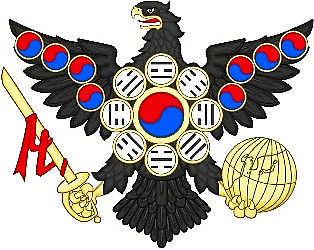
Fig. 37. Coat of arms of the Korean Empire in the 1903 edition (armiger – Emperor of Korea) [49]
Due to the fact that any bird of prey in Korean was called an “eagle”, and, for example, for a falcon there was only a name borrowed from English 팔콘 (falcon), it is possible to establish which of these birds was the Korean coat of arms only from translated materials. And translators interpret this bird either as a falcon or an eagle – depending on how it is beneficial to them.
Perhaps only the Koreans themselves know that they once had an imperial coat of arms. They call it the Golden Eagle, less often the Falcon. The Japanese arrogantly deny the existence of not only state symbols, but also the very existence of the Korean Empire, and interpret its coat of arms not as an imperial symbol, but exclusively as a drawing of a goshawk, “copied from the Japanese stamp of 1875” (Fig. 38).
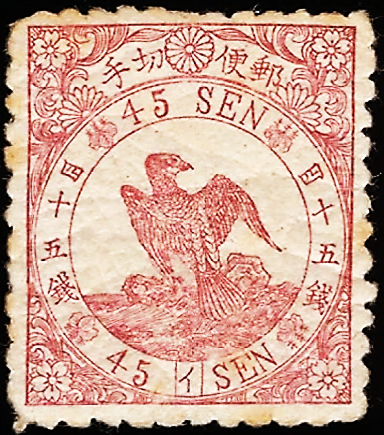
Fig. 38. Japanese postage stamp of the 1875 “Birds” series
with the image of a goshawk
© solbery.com (photo)
Western philatelists and numismatists are characterized by their attitude towards the imperial coat of arms of Greater Korea, which can be called damnatio memoriae (“curse of memory”) in Latin, as if it had never existed at all: “It is anything but a coat of arms. Most likely, it is a falcon, but maybe it is the emblem of the Russian-Korean Bank or a copy of the “Russian” eagle, or maybe a bird, the image of which is placed just for beauty.” I do not know what this marginal position is connected with, but it testifies to the complete incompetence and professional unsuitability of those who adhere to it.
It is sad that foreign classifiers are not able, consciously or due to a lack of basic education, to distinguish the state emblem with all its attributes compiled according to the rules of heraldry from a simple image of a wading bird. Only in one thing they are undoubtedly right: there is a “Russian trace” here. The State Eagle of the Russian Empire was indeed taken as a model of the Korean coat of arms (Fig. 39, 40). Emperor Gojong sincerely sympathized with Russia, since it was the only power that in the most difficult moment extended a helping hand to him, without demanding anything in return. In general, Gojong loved to talk with Russian diplomats and military men, to listen to stories about Russia, about its customs and symbols. He liked the bearing and military awards of Russian officers, the devotion to them of the Korean guards, whom they taught in the art of war. And, of course, due to the Eastern mentality, Gojong was flattered to bear the title of “emperor”, equal to the title of the Russian monarch, and to have a coat of arms modeled on the one that seemed to him the most ambitious of all the imperial coats of arms.
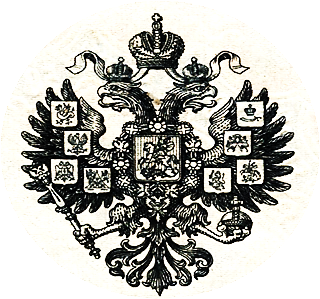
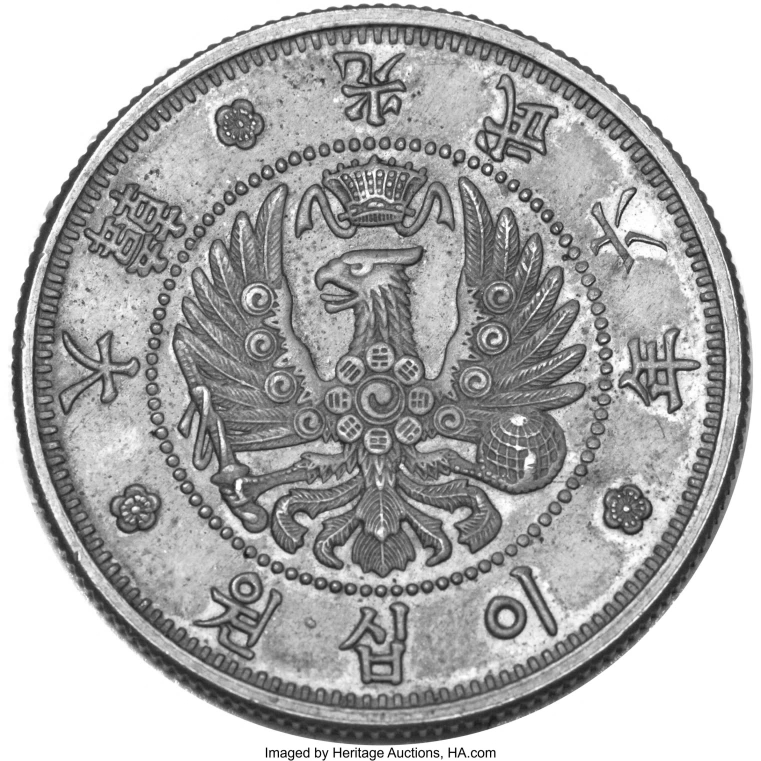
Fig. 39. Russian State Eagle Fig. 40. The Imperial Coat of Arms of Great Korea
State credit note 50 rubles 1899 20 won coin 1902
In Figures 39 and 40 we can see that the Korean heraldic Eagle is formed according to the same principle as the Russian one. The wings of the Eagle are raised up, on the chest there is a large coat of arms, on the wings there are four smaller coats of arms, in one paw of the eagle there is a round object, in the other oblong, the eagle is crowned with a large crown with a waving ribbon. But the Eagles are not identical. The Russian Eagle is two-headed with three crowns, the Korean Eagle is single-headed, and the crown is one. All the attributes of the Korean Eagle are purely traditional and Confucian. The Russian Eagle clutches a scepter and an orb in its paws, as symbols of the monarch’s power. The symbols of the power of the Korean emperor are different. In his left paw, the Eagle holds a globe on which the outlines of China, Japan, Russia and Korea itself are visible, which emphasizes the equality of the Tae Han Empire with these world empires (Fig. 37). In his right paw, the Eagle holds a ceremonial Korean straight sword with a round guard and a round pommel, which is called “Ingyom”. The sword is in a sheath, a cord or belt is attached to the pommel of the handle, because the Korean sword is adapted to be carried in the hand with the cutting edge down, unlike Japanese swords, which are worn on the belt. The cord is wrapped around the scabbard of the sword. “Ingyom” is considered the “sword of the Tiger”; it was intended for ceremonial purposes rather than for use on the battlefield. During the Joseon and Tae Han era, from 1392 to 1910, the royal court believed that this sword could ward off evil, prevent disasters, and allow people to live in peace.
On the chest of the Russian Eagle there is the coat of arms of Moscow, framed by the chain of the Order of St. George. Andrew the First-Called. In the center of the figure of the Korean Eagle is the symbol of the “Great Principles of Daegeuk” or Yin-Yang, framed by an amulet of eight trigrams “Bagua” (Fig. 41). Eight smaller Yin-Yang signs are located on the wings of the Eagle – 4 on each (Fig. 42).
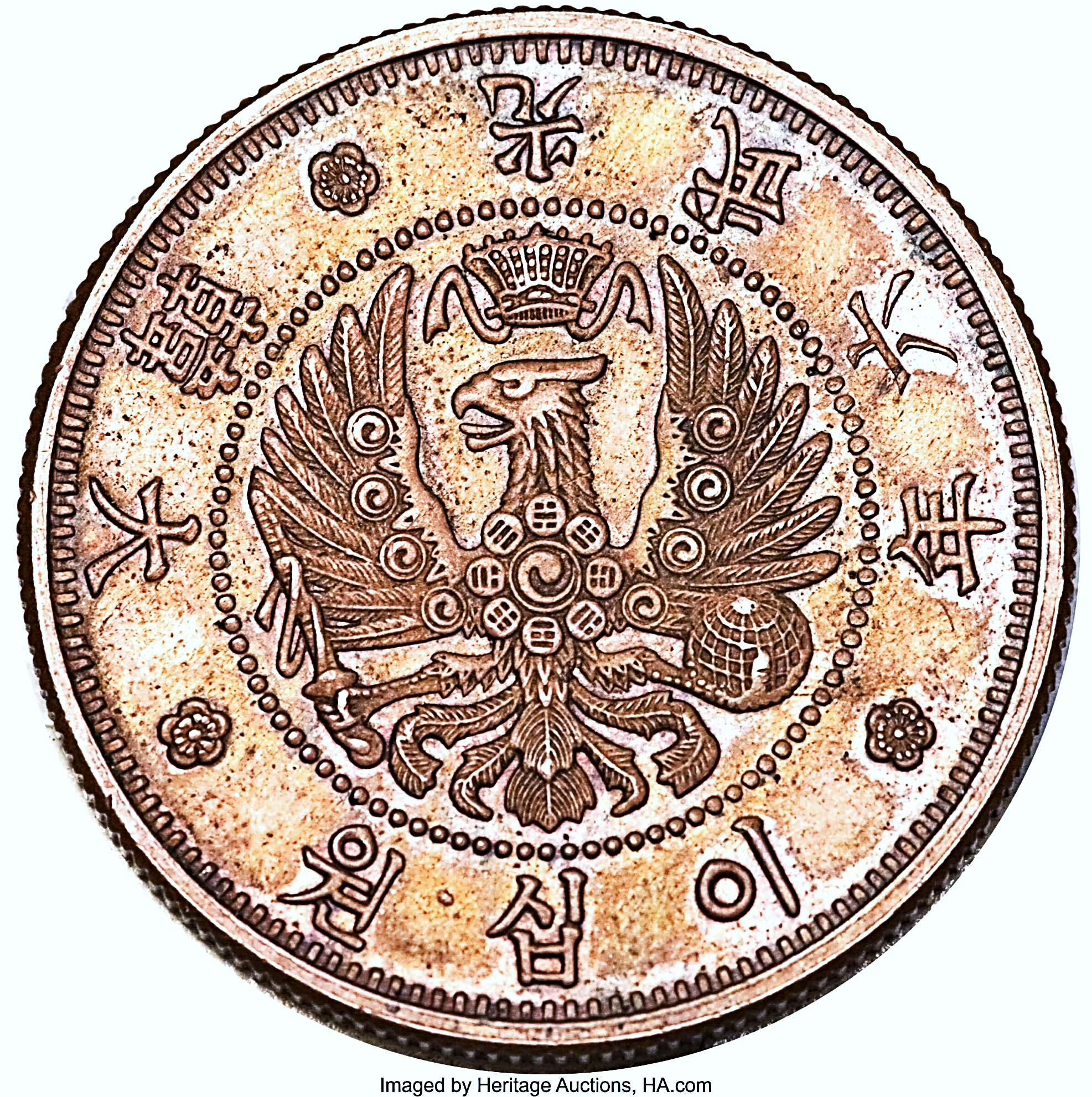
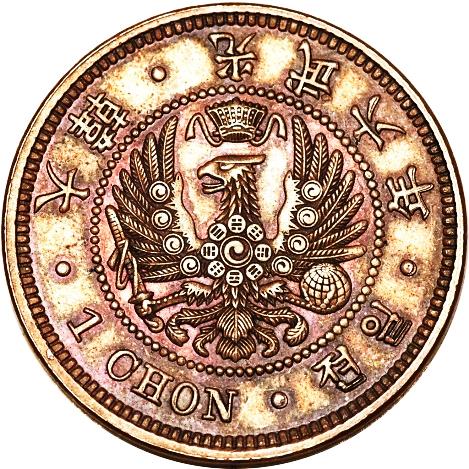
Fig. 41. Yin-Yang symbol surrounded by Fig. 42. Yin-Yang signs on the chest
eight trigrams (Bagua) on the breast of the Eagle and the wings of the Eagle
Yin-Yang (Ym-Yang in Korean) is a term for the main opposites of the Universe, for example, light and dark, strong and weak, male and female, heat and cold, day and night, etc., as well as a symbol of the “Great Principles of Daegeuk” – the main cosmic driving forces, as the root causes of constant variability in nature. In Chinese cosmology, the universe is created from the primordial chaos of material energy, organized into cycles of Yin and Yang, form and matter. “Yin” is inherently retracting, passive, and squeezing, while “yang” is repulsive, active, and expansive. In principle, this dichotomy manifests itself in one form or another in everything in nature—in patterns of change and difference, such as biological and seasonal cycles, the evolution of the landscape over days, weeks, years, and epochs (the original meaning of these words is the shadow of a north-facing hill and the brightness of a south-facing hill), gender (female and male), as well as the formation of the character of individuals, and the great arc of socio-political history in disorder and order.
A trigram (hanja 卦 “gua”) is a symbol consisting of three lines. Each of the three lines in a trigram can be either a continuous “—” or a broken “-—” in the middle. The solid line symbolizes Yang and the broken line symbolizes Yin. There are eight possible combinations of these components of the trigram, and these combinations are known as the “eight trigrams” or 八卦 (“Ba-Gua”) in Chinese. Bagua is a set of symbols designed to illustrate the nature of reality, which is made up of mutually opposing forces that reinforce each other. In the old days, people believed that the bagua amulet could ward off bad influences and ward off evil spirits. For this reason, it was not uncommon for people to wear the bagua amulet on their chests. Families often nailed bagua-style amulets to the beam of the roof of their house or to the top of the gate, and sailors attached them to a high place on their boat.
The bagua amulet surrounding the central Yin-Yang symbol on the Eagle consists of eight trigrams arranged in sequence, as in Figure 41. The layout of the bagua trigrams on the eagle’s chest (starting at 12 o’clock clockwise) is shown in Table 6:
Table 6. Arrangement of trigrams on the chest of the Eagle, starting from the top
clockwise
| Sign | Name
(hanja) |
Element | Animal | Cardinal point
(“Early Heaven” by Fuxi) |
Body Part | Family |
| ☵ | 坎 Kagnes | water | pig | West | ear | The middle son |
| ☳ | 震 Zhen | Thunder and lightning | dragon | Northeast | Feets | senior
son |
| ☶ | 艮 Gen | mountain | dog | Northwest | hand | cadet |
| ☱ | 兌 Dui | Pond / Lake | sheep | South-east | lips | Youngest daughter |
| ☲ | 離 Lee | fire | Pheasant | East | eye | middle daughter |
| ☷ | 坤 Kun | earth | cow | North | stomach | mother |
| ☴ | 巽 Sun | wind | hen | Southwest | legs | eldest daughter |
| ☰ | 乾 Qian | sky | horse | South | head | father |
In the Joseon era, Korea did not have any state symbols. It had no anthem, no coat of arms, no flag. From the point of view of heraldry, it simply did not exist. When the Japanese designed the first Korean coins in the 1880s, they inserted the only symbol familiar to Koreans on the reverse of their chrysanthemum flower, the Yin-Yang sign. At that time, it looked like a disk consisting of four concentric rings, divided in the middle into two parts, the right of which was a negative reflection of the left (Fig. 43).
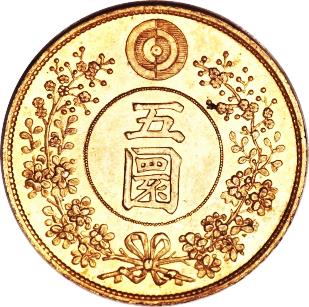
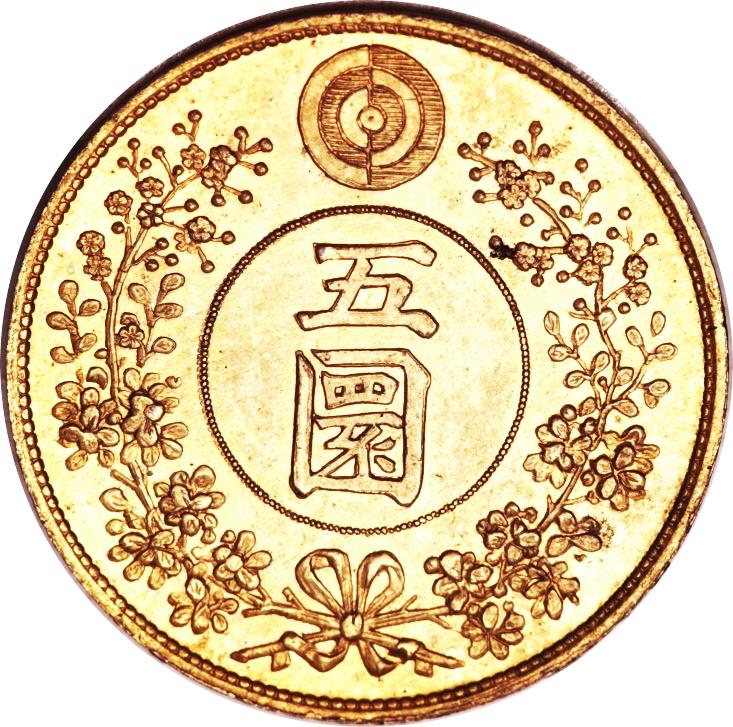
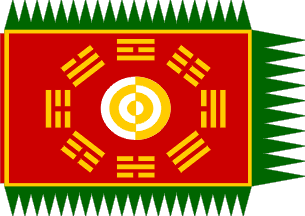
Fig. 43. Yin-Yang sign on the reverse Fig.44. Flag of Korea of the 1882 model
Trial coin of 5 varnas 1886
This emblem appeared on the national flag of Korea approved in 1882 (Fig. 44), thus becoming the national emblem of Korea. The flag consisted of red cloth decorated with a Yin-Yang of yellow and white rings, surrounded by eight yellow trigrams (Bagua) and framed by a border of green triangles. In the 1890s, the Yin-Yang sign changed several times until it took the form of a disk divided into two equal parts in the form of a comma, red and blue (Fig. 45). In this approximate form, it migrated to coins with an eagle (Fig. 46).
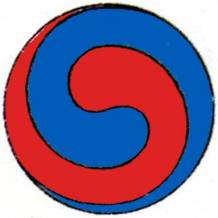
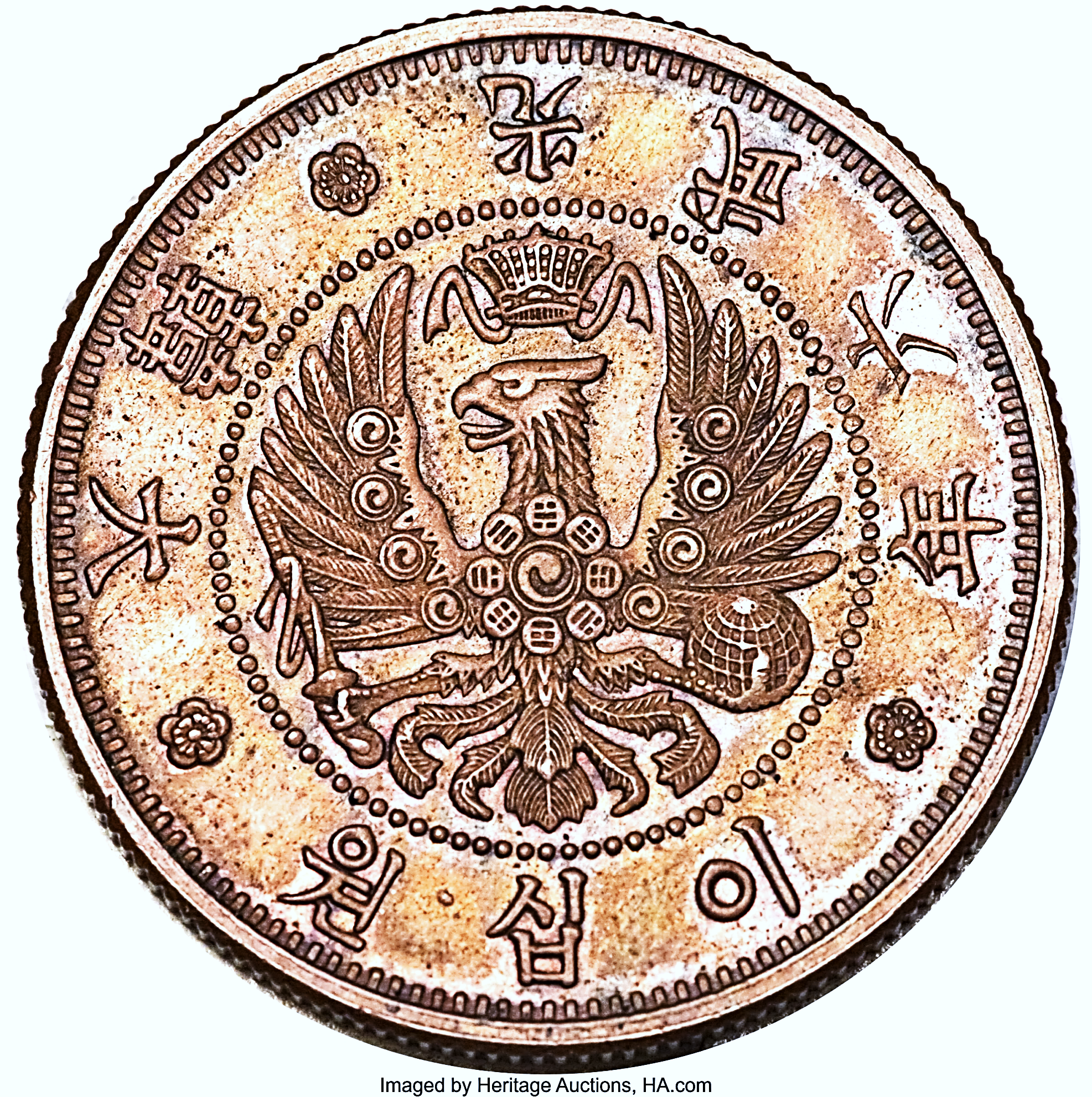
Fig. 45. Yin-Yang sign of the late 1890s – early 1900s. Fig.46. Yin-Yang sign on coins with the Eagle
The central Yin-Yang symbol on the Eagle’s chest represented Korea as a whole. The eight smaller Yin-Yang signs on the eagle’s wings represented the eight provinces that were part of the Korean Empire.
Above the eagle’s head on the coins is the Imperial Crown of Gojong, strongly stylized in the “European” manner (Fig. 47). The imperial crown was a type of ceremonial crown worn by high-ranking officials. It consisted of a top hat covered with a cup of black silk and a cap decorated with gold lines, the number of which indicated rank. The cap was pierced with a gold needle with purple tassels (Fig. 48, 49).
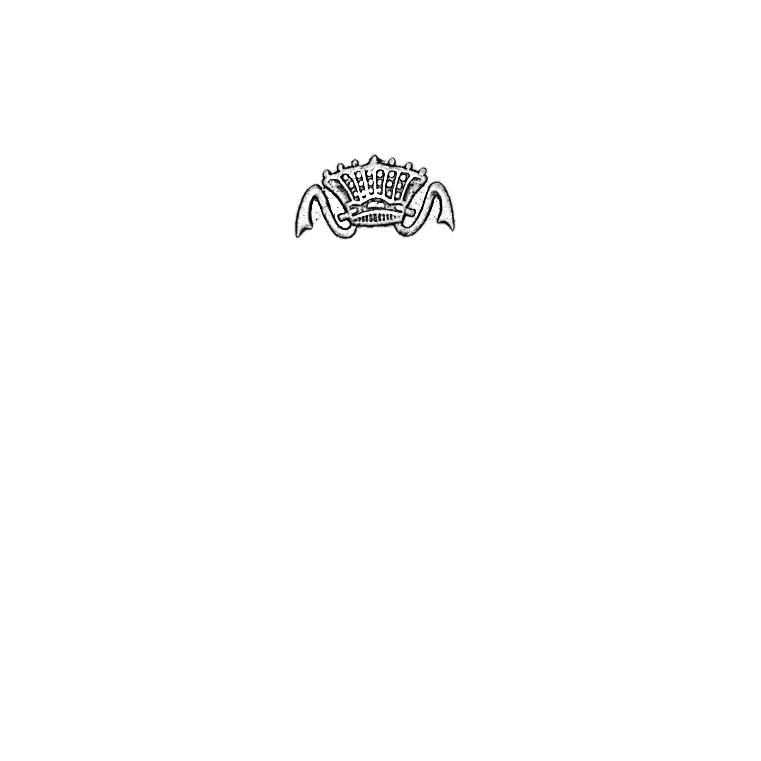
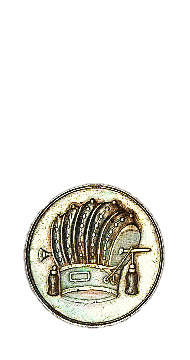
Fig.47. Crown on coins with an eagle Fig. 48. Imperial Crown
on the jubilee medal of 1901,
Dedicated to the 50th Anniversary of Gojong
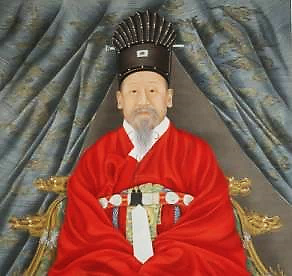
Fig. 49. Portrait of Impreator Kwang Mu (Gojong) wearing a crown
The images of the eagle on the coins are not identical. The obverse on each coin was minted with an individual stamp, so the Eagles on the coins are different from each other. In addition to some differences in the head and neck shape of eagles, differences in the size of the Yin-Yang and Bagua on the chest, the shape of the crowns and the size of the globe, there are significant differences according to which they can be divided into three types: Type I, Type II and Type III (Figs. 50, 51, 52).
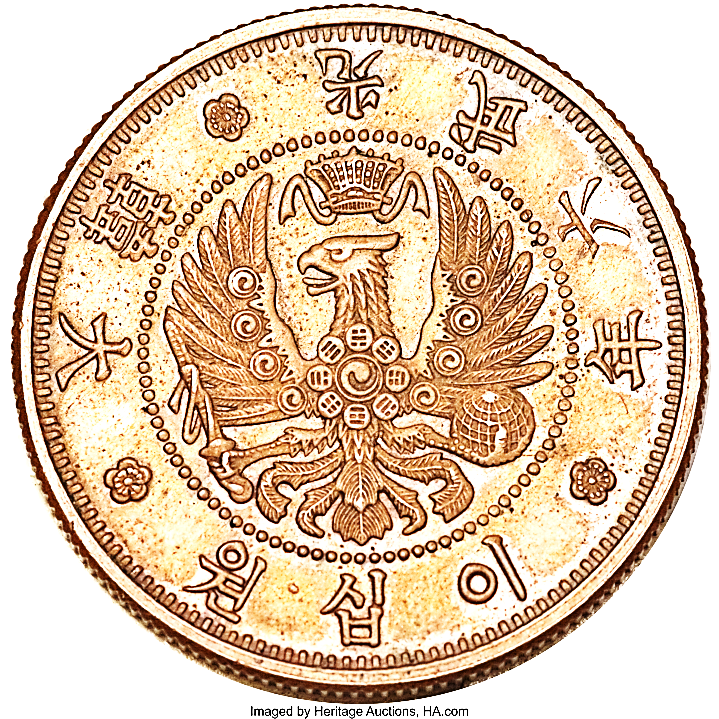
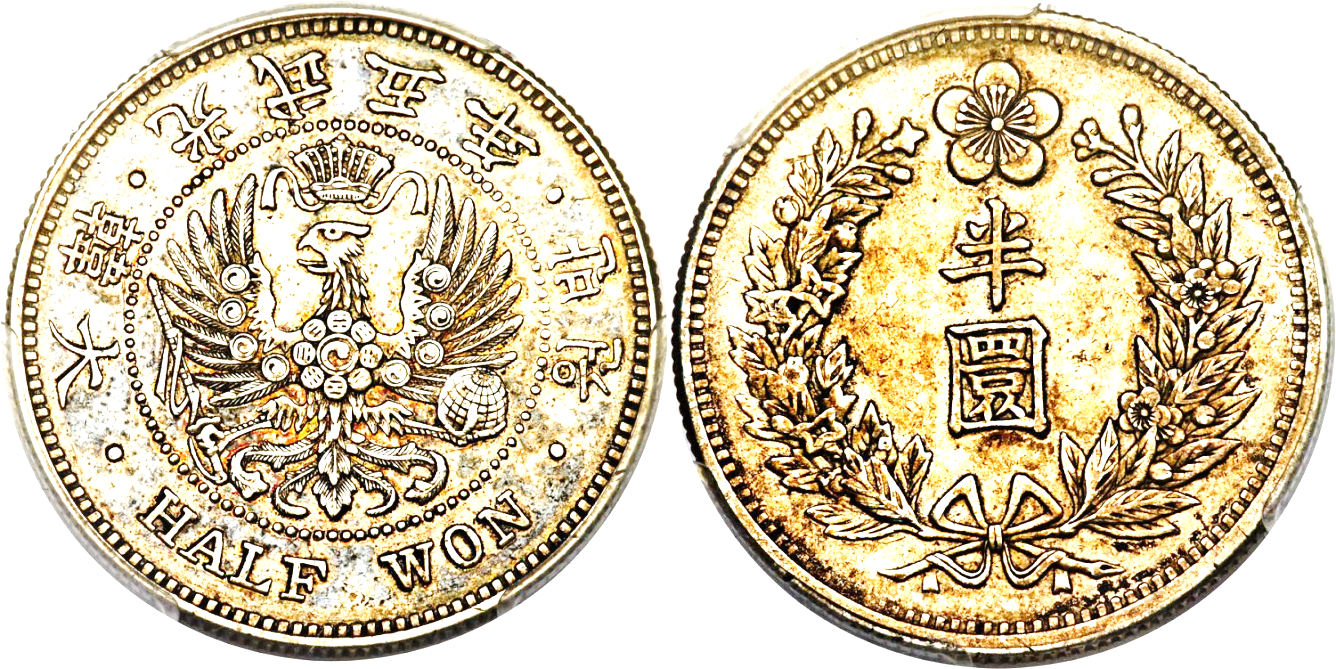
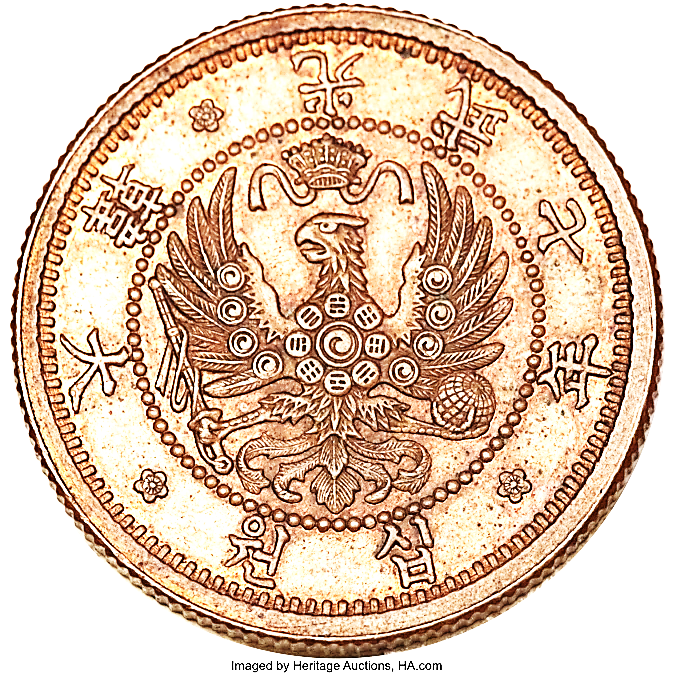
Fig. 50. Type I Fig.51. Type II Fig. 52. Type III. 5 chon 1902,
1 chon 1902, 20 won 1902. 1/2 dollar 1899, 1/2 won 1901 10 won 1901 and 1903
The significant differences between Types I and II and Type III are that Type I and II eagles have 9 feathers on each wing, while Type III eagles have 7 feathers on each wing. The difference between Types I and II is in the size of the sword. The sword of the Type I eagle is a short ceremonial sword “ingyom”, its length is 4 lower feathers on the wing (Fig. 53). The Type II Eagle has a long and narrow sword with a round pommel, which is called “sa-ingyom”, or “Sword of the Four Tigers”. Its length occupies 5 lower feathers on the eagle’s wing (Fig. 54).
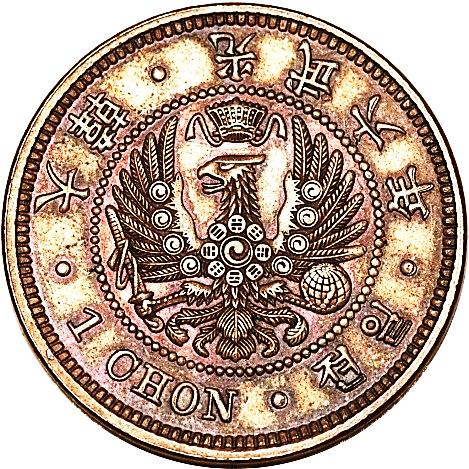
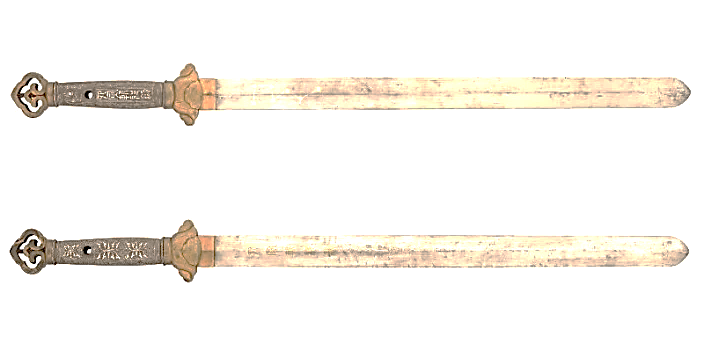
Fig. 53. Ingyom or Tiger Sword (Type I)
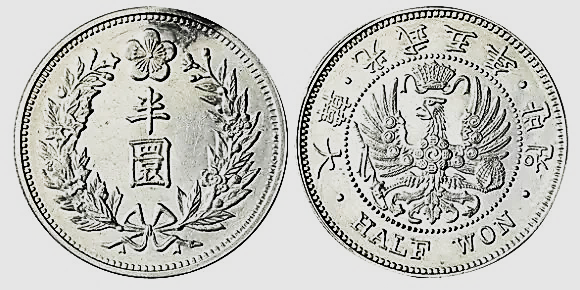
Fig. 54. Sa-Ingyom or Sword of the Four Tigers (Type II)
Type I eagle coins include 1 chon 1902, 20 won 1902, Type II – 1/2 dollar 1899, 1/2 won 1901, Type III – 5 chon 1902, 10 won 1901 and 1903.
COIN CATALOG
Note: for coins, the existence of which is doubtful today, only a drawing of the proposed reverse is given.
Abbreviations in column “No”
SC – Standard Circulation (Coin of standard circulation or regular minting).
PC – Pattern Coin.
Table A
Regular coinage coins
| № | №
Krause |
Denomination / circulation | A.D.
Year of Gwangmu |
Obverse | Reverse | Metal | Diameter, weight, thickness | Auction prices /
примечания |
| SC01 | KM# 1121 | 1 CHON
一 錢 1 CHON According to the Krause catalog[50] 3,001,000 pcs. Bank of Korea Information[51] 981,000 pcs. |
1902
光武六年 6 |
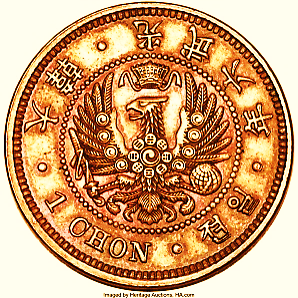
In the center in a circle of beads is an eagle, type I. In the upper margin in hanja characters: •大韓 • 光武六年• • Great Khan • Kwang Mu 6 year• Below in English. and Korean Hangul denomination: • 1 CHON•일젼• (“1 chon”). Fluted bezel |
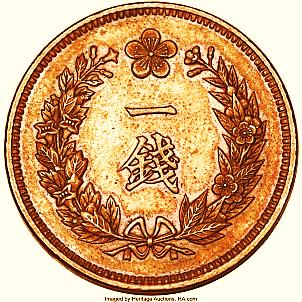
In the center The denomination of the coin in hieroglyphs of Hanja: One 1 錢 Jong framed by a wreath from the branches of platycodon (left) and plum (right) At the top is the plum blossom “ikhvamon”. Fluted bezel |
Copper
Cu 98% Sn 1% Zn 1% |
⌀ 28 мм
6,8 g[52] |
Heritage Auctions, 8 сен. 2011[53]
(from the collection of Norman Jacobs) MS65 $ 149 500 R3 rarity according to the Bank of Korea |
| SC02 | KM#
1122 |
5
CHONOV Five Money 5 CHON According to the Krause catalog 2,800,000 pcs. Bank of Korea Information 126,000 pcs. |
1902
光武六年 6 |
In the center in a circle of beads is an eagle, type III. In the upper margin in hanja characters: •大韓 • 光武六年• • Great Khan • Kwang Mu 6 year• Below in English. and Korean Hangul denomination: •5 CHON •오젼• (“5 chons”). Fluted bezel |
In the center, framed by a wreath, is the denomination of the coin in hanja hieroglyphs: 5 5 錢 Jongov At the top is the plum blossom “ikhvamon”. Fluted bezel |
Copper–
Nickel alloy Cu 75% Ni 25% |
⌀ 20,7 мм
4,3-4,7 g[54] |
Harry Reid Auction, 2011
XF45 $ 118 800 Rarity of R2 according to the Bank of Korea |
| SC03 | KM# 1123 | 1/2 WON
half Won HALF WON According to the Krause catalog 1,831,000 pcs. Bank of Korea Information 915,000 pcs. |
1901
光武五年 5 |
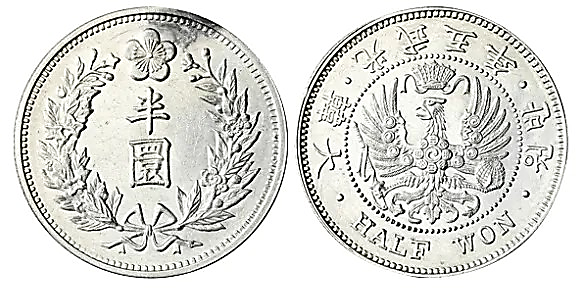
In the center in a circle of beads is an eagle, type II. In the upper margin in hanja characters: •大韓 •光武五年• • Great Khan • Kwang Moo 5 year• and Korean Hangul denomination: •반원• “1/2 won” At the bottom is the denomination in English: •HALF WON• (“Half a Won”). Fluted bezel |
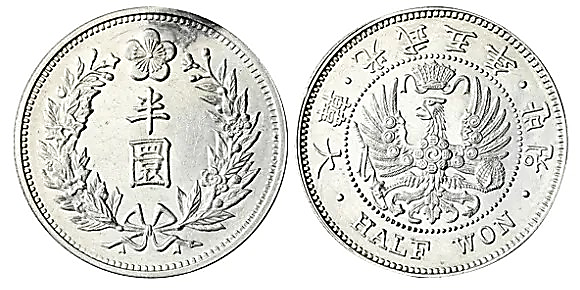
In the center, framed by a wreath, is the denomination of the coin in hanja hieroglyphs: 半 half 圜 round coins At the top is the plum blossom “ikhvamon”. Fluted bezel |
Silver Ag 0.800
0.3472 oz |
⌀ 30,9 мм 13,5 g
2 мм |
Stack’s Bowers 2021[55]
AU-58 $ 57 600. R3 rarity according to the Bank of Korea |
Table B
Trial coins and coins in other metals
| № | №
Krause |
Par | A.D.
Year of Gwangmu |
Obverse | Reverse | Metal | Diameter, weight, thickness | Auction prices /
rarity |
| PC01 | – | 1/2 DOLLAR
half Won HALF DOLLAR |
1899
光武三年 3 |
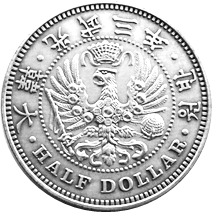
In the center in a circle of beads is an eagle, type II. In the upper margin in hanja characters: •大韓 •光武三年• • Great Khan • Kwan Moo 3 year• and Korean Hangul denomination: •반원• “Half Round Coin” At the bottom is the denomination in English: •HALF DOLLAR• (“Half a Dollar”). Fluted bezel |
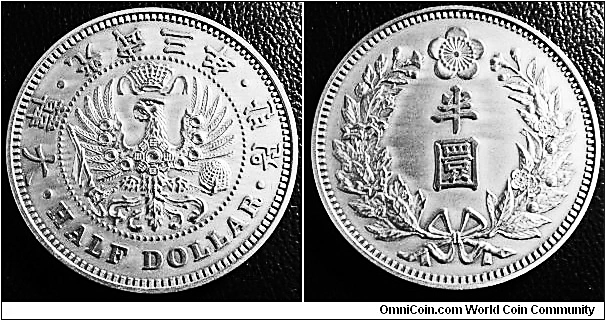
In the center, framed by a wreath, is the denomination of the coin in hanja hieroglyphs: 半 half 圜 “Round Coins” At the top is the plum blossom “ikhvamon”. Fluted bezel |
Silver
Ag 0.800 |
⌀ 30,9 мм 13,5 g
2 мм |
Hwadong Coin Auction 1995
7,400,000 won[56] Rarity of R5 according to the Bank of Korea |
| PC02 | – | 20
WON 二 十 圜 |
1900
光武四年 4 |
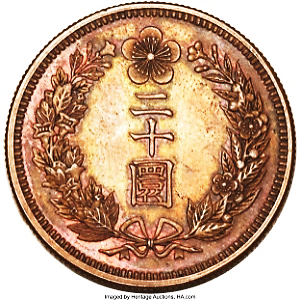 |
Copper | Rarity of R7 according to the Bank of Korea | ||
| РС03 | Pn33 | 5 WON
五 圜 |
1901
光武五年 5 |
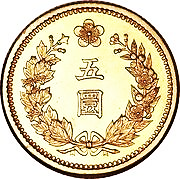 |
Copper | It is known only by its number in the Krause catalog | ||
| РС04 | Pn34 | 10 WON
十 圜 |
1901
光武五年 5 |
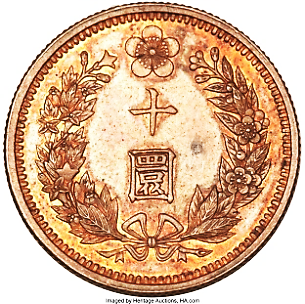 |
Copper | ⌀ 21.2 мм | R6 rarity according to the Bank of Korea | |
| РС05 | – | 10 WON 十 圜 | 1901
光武五年 5 |
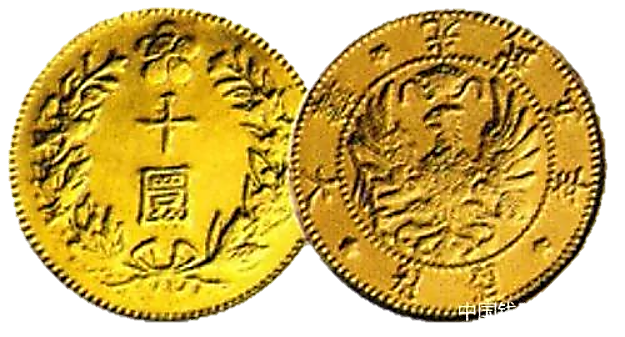
Obverse. In the center in a circle of beads is an eagle, typeII. In the upper margin in hanja characters:
Reverse. At the top is the plum blossom “ikhvamon”. In the center framed by a wreath Denomination of the coin in hieroglyphs of Hanja: 十 ten 圜 won Fluted bezel. |
Gold platter cooper | ⌀ 21.2 мм | R6 rarity according to the Bank of Korea | |
| РС06 | – | 20CHON十
錢 |
1902
光武六年 6 |
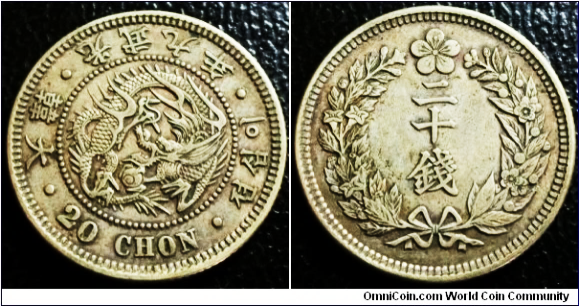 |
Silver
Ag 0.800 |
⌀ 22.8 мм
5,4 g 1,5 мм |
The Bank of Korea has information that such a coin was minted. But the coin itself has not survived | |
| РС07 | – | 5 WON
五 圜 |
1902
光武六年 6 |
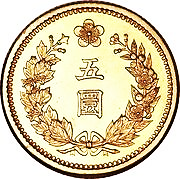 |
Copper | The Bank of Korea has information that such a coin was minted. But the coin itself has not survived | ||
| РС08 | – | 10 WON
十 圜 |
1902
光武六年 6 |
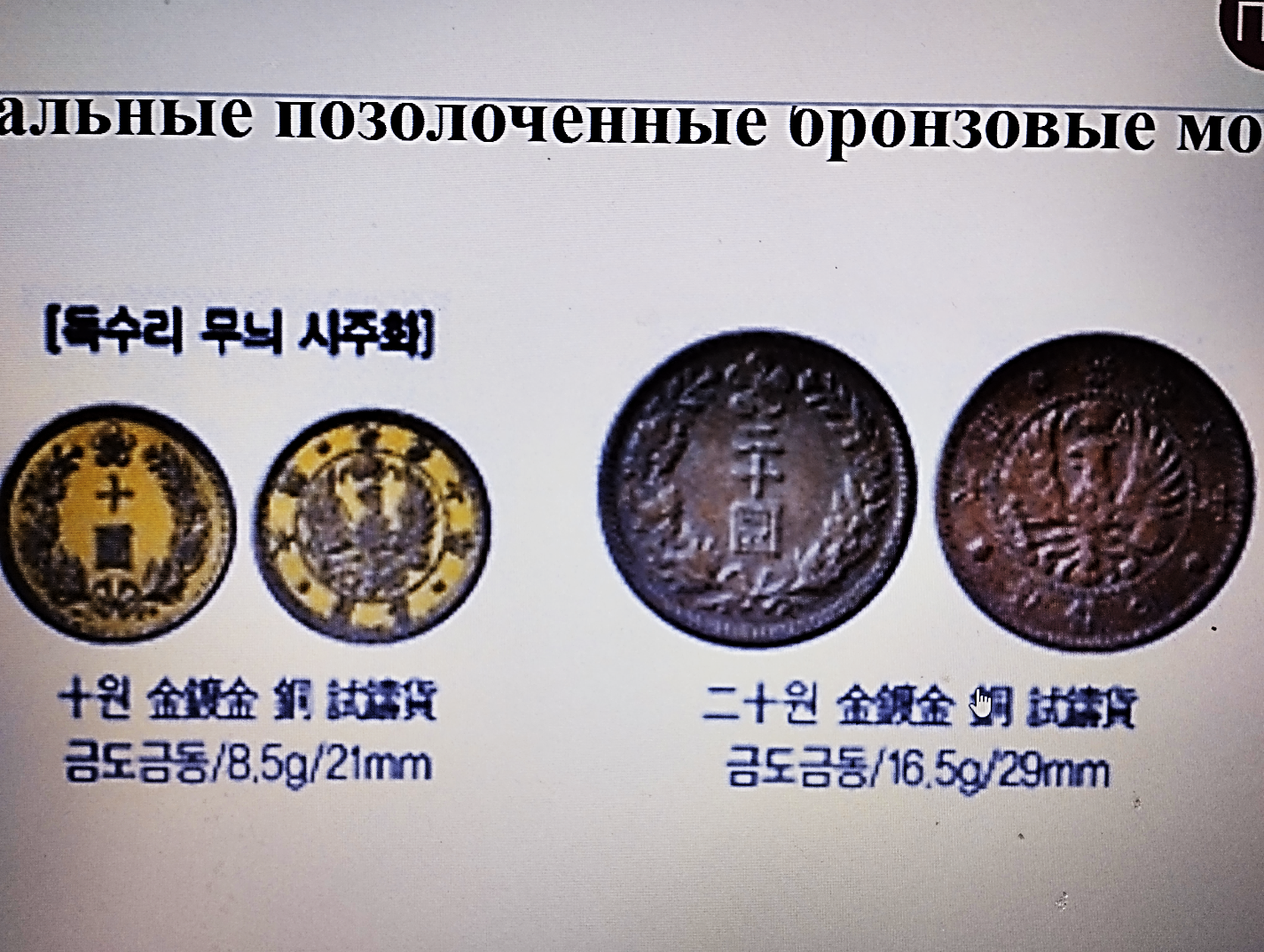
В центре в круге из бусин орёл, тип ? В верхнем поле иероглифами ханча:
|
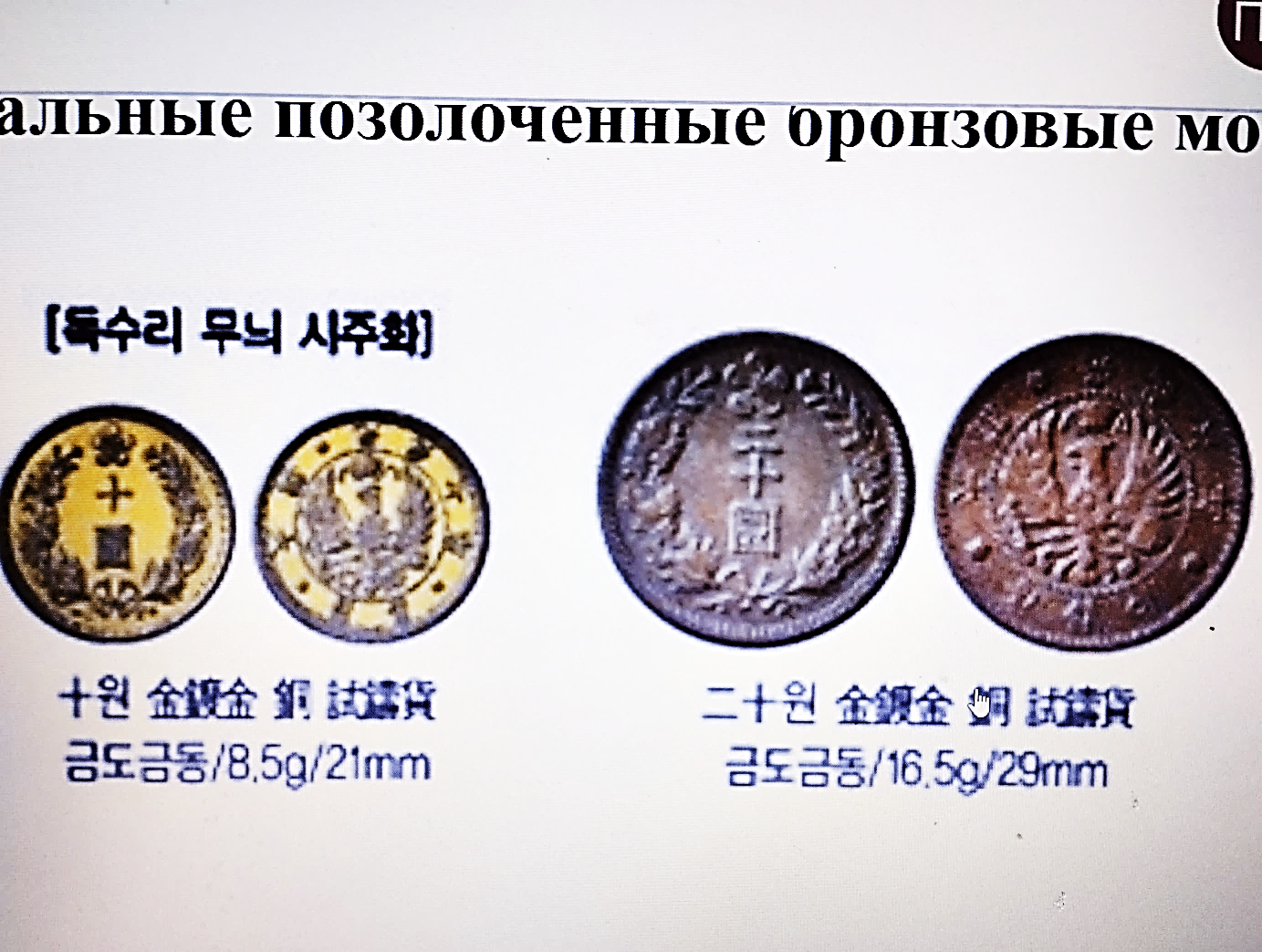
Вверху цветок сливы «ихвамон». В центре обрамлённый венком номинал монеты иероглифами ханча: 十 десять 圜 вон Рифлёный ободок |
Gold plated cooper | ⌀21 мм | |
| РС09 | Pn35 | 20 WON
二 十 圜 |
1902
光武六年 6 |
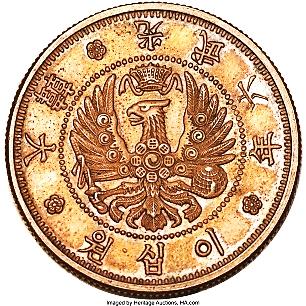
In the center in a circle of beads is an eagle, type I. In the upper margin in hanja characters:
|
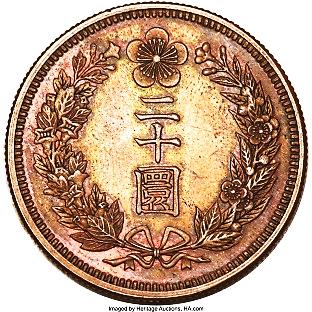
At the top is the plum blossom “ikhvamon”. In the center, framed by a wreath, is the denomination of the coin in hanja hieroglyphs: 二 十 twenty 圜 WON Fluted bezel |
Cooper | ⌀29 мм | Heritage Auctions, 8 сент. 2011[57]
(from the collection of Norman Jacobs) MS64 $ 115 000 R6 rarity according to the Bank of Korea |
| РС10 | Pn36 | 20 WON
二 十 圜 |
1902
光武六年 6 |
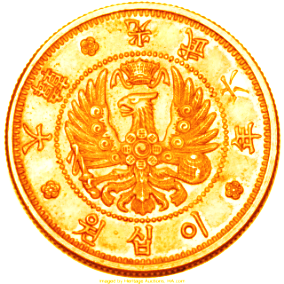
In the center in a circle of beads is an eagle, type I. In the upper margin in hanja characters:
|
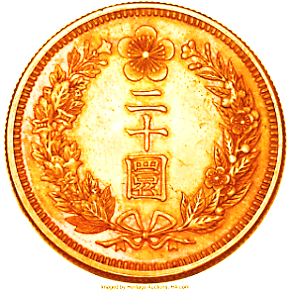
At the top is the plum blossom “ikhvamon”. In the center, framed by a wreath, is the denomination of the coin in hanja hieroglyphs: 二 十 twenty 圜 won Fluted bezel |
Gold plated cooper | ⌀ 28.8 мм | The only known specimen is in the Bank of Korea Museum |
| РС11 | Pn37 | 5 WON
五 圜 |
1903
光武七年 7 |
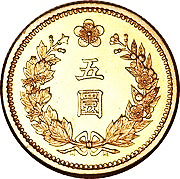 |
Copper | The Bank of Korea has information that such a coin was minted. But the coin itself has not survived | ||
| РС12 | Pn38 | 5 WON
五 圜 |
1903
光武七年 7 |
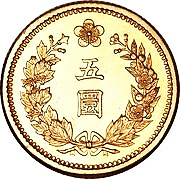 |
Gold platted cooper | It is known only by its number in the Krause catalog | ||
| РС13 | –[58] | 10 WON
十 圜 |
1903
光武七年 7 |
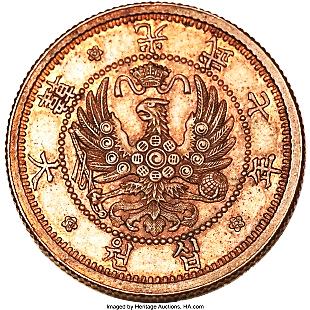
In the center in a circle of beads is an eagle, type III. In the upper margin in hanja characters:
|
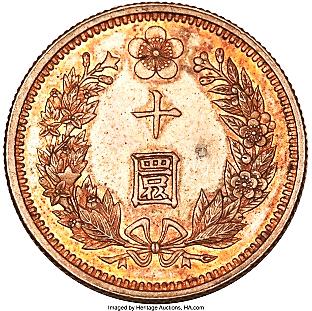
At the top is the plum blossom “ikhvamon”. In the center, framed by a wreath, is the denomination of the coin in hanja hieroglyphs: 十 ten 圜 won Fluted bezel |
Copper | ⌀ 21.2 мм | Heritage Auctions, 8 сент. 2011[59]
(from the collection of Norman Jacobs) MS64 $ 103 500 Rarity of R5 according to the Bank of Korea |
CONCLUSION
The monetary reform carried out by Lee Yong-ik was doomed to failure from the very beginning. Coins of the old designs, even the Seungpyeong Dongbo, were not withdrawn from circulation and were not exchanged for new coins with the Eagle, remaining legal tender. There was no gold in the treasury to back the gold standard. Lee Yong Ik, on behalf of the government, distributed concessions for mines, the construction of railways, for the purchase of ginseng to American and Japanese companies, took endless loans, gradually turning Korea into a semi-colony of foreign states, the absolute leader among which was Japan. The lion’s share of the money received from loans and concessions went to exorbitant expenses of the imperial court and ended up in the pockets of dishonest officials.
The Japanese bank Daiichi Ginko, whose Korean branches accounted for 60% of the funds in the accounts of Korean government agencies, actually appropriated the functions of the state bank of Korea. In 1899-1904, he was the main creditor of the Korean government.
The Japanese government itself could no longer control the flow of counterfeits made in Japan by individuals and entire corporations. Nickel was openly imported into Korea for the manufacture of counterfeit coins, which were brought into the country in finished form by almost every Japanese steamer that arrived. In November 1902, the Japanese government banned the production of Korean coins in their country and their import into Korea. Korean customs were given the right to prosecute Japanese people caught importing counterfeits. During 1902, 3.5 million counterfeit nickel coins were confiscated by customs[60].
Lee Yong-ik’s ban on Daiichi Ginko Bank credit notes of September 11, 1902 lasted only a few months until January 8, 1903. Unlike the Korean coin, which was constantly depreciating, these bonds could be exchanged for Japanese yen at a stable rate, and thus they gained even greater strength as public confidence in its issuance grew. All more or less large trade transactions were made only in Japanese money.
According to the “Regulations on Monetary Circulation” of May 22, 1901, approved by the Imperial Decree of Gojong No 4, the exchange rate of the Korean won against the Japanese yen was set at 1:1. But already in 1902, when new coins with the Eagle were put into circulation, the value of the won fell to 0.56 Japanese yen[61], and the fall continued. The minting of these coins was to be backed by gold, for which the new coins were to be freely exchanged. There was no gold in the treasury, so after 1902 the regular minting of coins with the Eagle stopped. And what had already been minted was simply washed away by a flood of old and counterfeit nickel money and money surrogates.
In February 1904, Japan attacked the Russian fleet in Port Arthur (Manchuria) and Incheon (Korea). The Russo-Japanese War began. Although Korea declared neutrality in the Russo-Japanese War, on February 9, 1904, Japanese troops entered Seoul, as they had done at the beginning of the Sino-Japanese War, and kidnapped several pro-Russian figures in Korea, including Lee Yong-ik. On August 22, 1904, the “temporary” Korean Foreign Minister was forced to sign a protocol that effectively deprived Korea of sovereignty in international relations and financial matters. This protocol obliged Korea to attract financial and diplomatic advisers appointed by Japan. In addition, the protocol obliged Korea to consult with Japan before concluding treaties with foreign powers, as well as before granting concessions or concluding contracts with foreigners. With Japan’s victory in 1905, its plans to destroy Korea as a sovereign state no longer had any obstacles. The United States finally stopped breaking the comedy and openly agreed to the handover of Korea to Japan in the Taft-Katsura Memorandum of July 1905. They recognized Japan’s right to take appropriate measures to “direct, control, and protect” Korea, and Japan in return recognized America’s “right” to the Philippines. On November 17, 1905, the “Eulsa Treaty” was forcibly concluded between the puppet pro-Japanese government of Korea and Japan, as a result of which Korea was deprived of its national sovereignty under the so-called Japanese protectorate. Emperor Gojong refused to sign it. On July 20, 1907, Gojong was deposed. He spent the rest of his life imprisoned in his palace Deoksugung, where he had moved from the Russian mission. The Japanese placed his mentally retarded son Sunjong on the throne, who was forced to sign the Treaty of Accession of Korea to Japan on August 22, 1910. As a state, Korea ceased to exist even nominally.
In 1904, the Japanese Ministry of Finance sent Megata Tanetaro to Korea as a financial adviser. One of his first measures was to close all mints in Korea and initiate monetary reform. First of all, this meant the withdrawal of copper-nickel coins from circulation. In November 1904, the Central Mint in Yongsan was closed, and all its machines and tools were taken to Osaka. Licensed and unofficial coinage was also reduced.
In 1905, the Osaka Mint began issuing Korean coins in a completely new series, almost exactly modeled after Japanese coins (even using the same blanks). The eagle disappeared from them forever. Old coins were withdrawn from circulation and exchanged for new ones at different rates. First of all, the population was obliged to hand over coins with the Eagle, as Japan sought to do away with the memories of the state symbols of the Korean Empire. They were accepted at the most favorable rate, so that the population would definitely pass them. In August 1909, the Japanese banned the use of all Korean postage stamps. The fate of coins with the Eagle pattern is even more tragic. 12 tons of coins were sold as scrap metal to a Japanese company and melted down. The Japanese meticulously destroyed single specimens. Only a few of these coins remain, which is why they are so expensive at auctions. Coin stamps were also destroyed, so copies of these coins that sometimes appear on the market are not made with the original stamps, and do not have numismatic value. Until now, Eagle coins have not been classified, and the present work is to date the first and only scientific classification of them.
In any case, I have tried to answer all the questions related to these coins. They were not minted by the Russian-Korean Bank. State Councilor K. A. Alekseev did not head this bank. They were not minted at the St. Petersburg Mint. These coins were the official state issue of coins of the Emperor of Korea Kwang Mu (Gojong). All of them were minted at the Yongsan Mint (Seoul). The eagle on the coins is not the emblem of the Russian-Korean Bank or an abstract “eagle in the Russian style”. It is the national emblem of the Korean Empire. There has never been any Russian occupation and Russian domination over Korea. And whether these coins belong to Russian numismatics, let the numismatic community decide.
__________________________________________________________________
© Vorontsov V. V. Eagle on the coins of the Korean Empire. Scientific platform “XXI century”. No 1, April 2025, pp. 89-159. http://episs.ru
__________________________________________________________________
References[62]
https://www.bok.or.kr/eng/singl/crrncySearchEng/view.do?crrncySn=40&menuNo=400391&nationEngCd=0123&listType=G&korAt=Y&crrncyStleenCd=02&crrncyKndEnCd=01&searchCnd=1&searchKwd=&pageIndex=2
https://www.bok.or.kr/eng/singl/crrncySearchEng/view.do?crrncySn=39&menuNo=400391&nationEngCd=0123&listType=G&korAt=Y&crrncyStleenCd=02&crrncyKndEnCd=01&searchCnd=1&searchKwd=&pageIndex=2
Electronic resource: https://koreanmedals.com/empire-orders-found-in-pictures/
31. Dr. Norman Jacobs Collection of Korean and Japanese Coins to debut in Heritage September 2011 Long Beach Auction / Heritage Auctions. Press Release – December 1, 2010. Electronic resource: https://coins.ha.com/heritage-auctions-press-releases-and-news/dr.-norman-jacobs-collection-of-korean-and-japanese-coins-to-debut-in-heritage-september-2011-long-beach-auction.s?releaseId=1939
https://dspace.ewha.ac.kr/handle/2015.oak/182912
https://en.namu.wiki/w/검독수리?from=국가수리#국가수리
https://www.koreatimes.co.kr/opinion/20220306/the-short-lived-russo-korean-bank-of-1898
https://ia801206.us.archive.org/4/items/NPDP18971225/NPDP18971225_text.pdf
https://www.coinworld.com/news/world-coins/jacobs-collection-stuns-nets-6-8-million.html
https://n.news.naver.com/mnews/article/032/0000063380?sid=102
https://m.cafe.daum.net/coreahistech/M5JA/795?listURI=%2Fcoreahistech%2FM5JA
《韓國의貨幣》,韓國銀行1994年版 (The National Currency of Korea, Bank of Korea Annual Publication, Seoul, 1994. Chinese)
https://www.coinworld.com/news/world-coins/jacobs-collection-stuns-nets-6-8-million.html ↑
https://en.numista.com/catalogue/pieces24481.html ↑
https://www.koreatimes.co.kr/opinion/20220306/the-short-lived-russo-korean-bank-of-1898 ↑
(The famous mint of the “Korean Empire” Yongsan mints coins – Daily Headlines. 2017-12-01 Published in History by Taoxin). (Chinese). Electronic resource https://kknews.cc/history/mebnkmg.html ↑
https://m.cafe.daum.net/coreahistech/M5JA/795?listURI=%2Fcoreahistech%2FM5JA ↑
(The famous mint of the “Korean Empire” Yongsan mints coins – Daily Headlines. 2017-12-01 Published in History by Taoxin). (Chinese). Electronic resource https://kknews.cc/history/mebnkmg.html ↑
https://m.cafe.daum.net/coreahistech/M5JA/795?listURI=%2Fcoreahistech%2FM5JA ↑

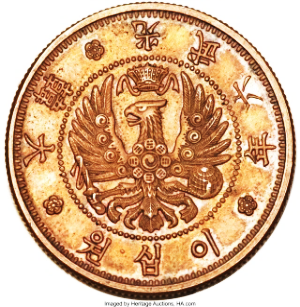 光武五年
光武五年 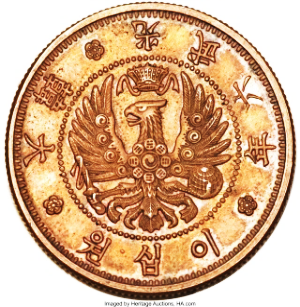 (• Great Han • Kwang Mu 5 year •). At the bottom is the denomination in Korean Hangul script
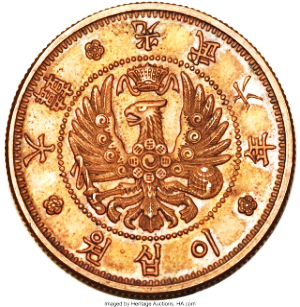 십원
십원 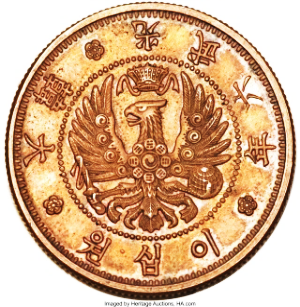 (“10 won”). Grooved headband.
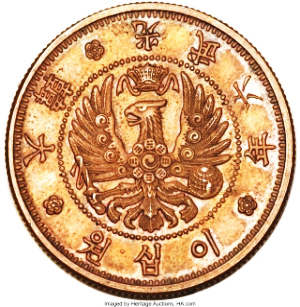 大韓
大韓 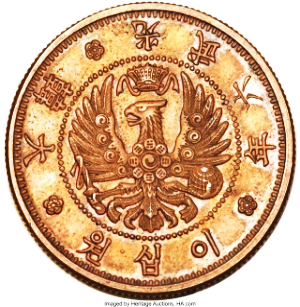 光武六年
光武六年 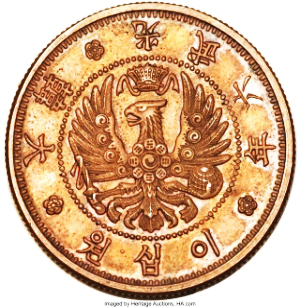 (•Великая Хан • Кван Му 6 год•). Внизу номинал корейским письмом хангыль
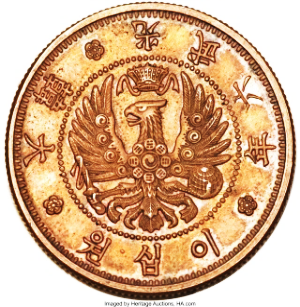 십원
십원 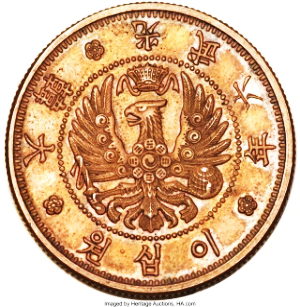 («10 вон»). Рифлёный ободок
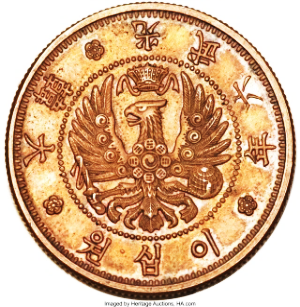 大韓
大韓 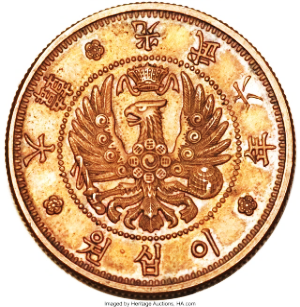 光武六年
光武六年 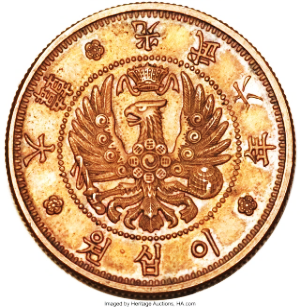 (•Great Han • Kwan Mu 6 year•). At the bottom is the denomination in Korean Hangul script
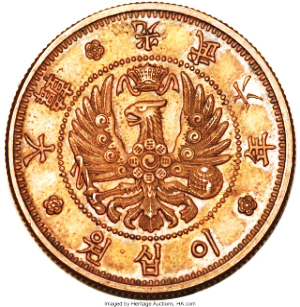 이십원
이십원 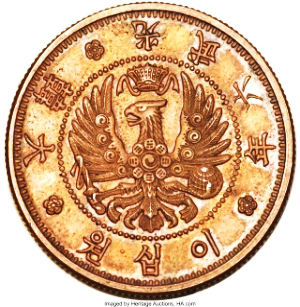 («20 won»). Fluted bezel
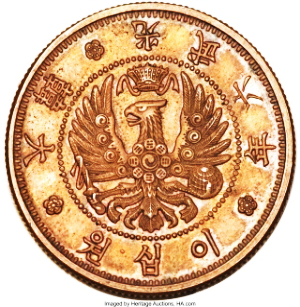 大韓
大韓 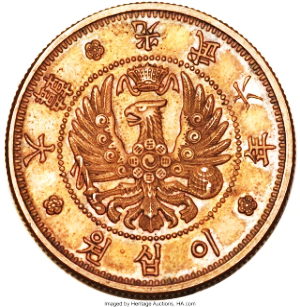 光武六年
光武六年 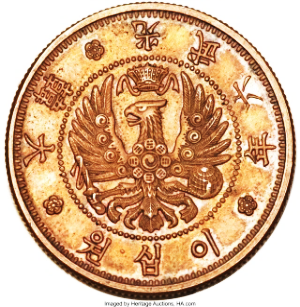 (•Great Han • Kwan Mu 6 year•). At the bottom is the denomination in Korean Hangul script
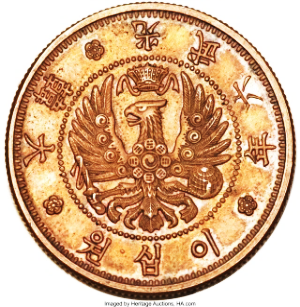 이십원
이십원 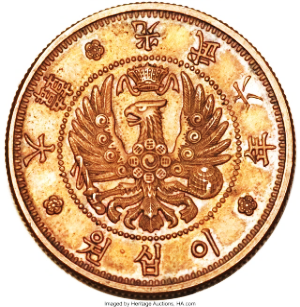 («20 won»). Fluted bezel
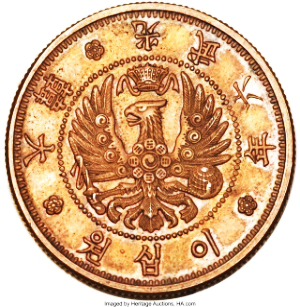 大韓
大韓 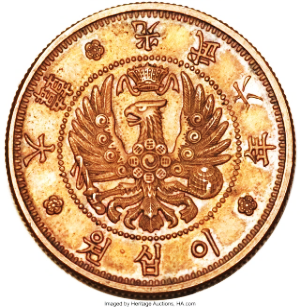 光武七年
光武七年 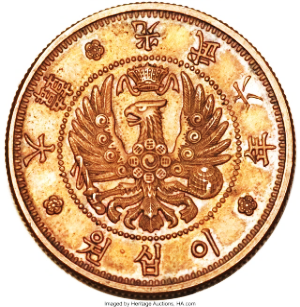 (•Great Han • Kwang Mu 7 year•). At the bottom is the denomination in Korean Hangul script
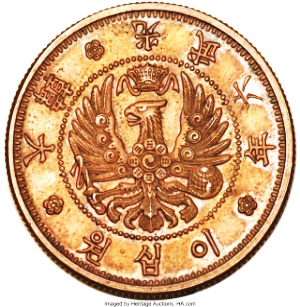 십원
십원 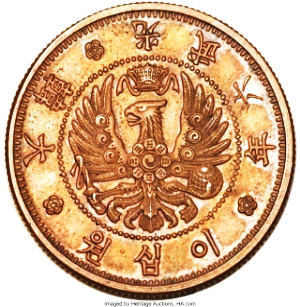 («10 won»). Fluted bezel