Articles that inspire and inform!
Publisher of POLIS LLC
Address: 190000, Saint Petersburg,
35/15 Kazanskaya Street
Publisher of POLIS LLC
Address: 190000, Saint Petersburg,
35/15 Kazanskaya Street


No1 (10), January 2026 16+
http://episs.ru
ISSN 3033-7666 (Print), ISSN 3033-7674 (Online)
Scientific periodical
(Saint Petersburg, Russia)
Roskomnadzor Certificate of Media Registration
Свидетельство Роскомнадзора о регистрации СМИ
Эл № ФС77-87449
The journal is registered and published in Russia. It publishes articles across all scientific fields. It is published in Russian and English. All articles are peer-reviewed. The online version of the journal is freely accessible. By submitting an article to the editor, the author confirms its uniqueness and assumes full responsibility for it.
Журнал зарегистрирован и издается в России. В журнале публикуются статьи по всем научным областям. Журнал издаётся на русском и английском языках. Все статьи рецензируются. Свободный доступ к электронной версии журнала. Отправляя статью в редакцию, Автор подтверждает её уникальность и несёт за неё полную ответственность.
Редколлегия Editorial staff
| Главный редактор
Воронцов, Владимир Валентинович Выпускающий редактор Иванов, Максим Дмитриевич Ответственный секретарь Холманских, Мария Викторовна Рецензенты Пырх, Андрей Иванович, к.ю.н., СПбГУ Димитриенко, Андрей Игоревич, к.м.н., Первый СПбГМУ им. Павлова |
Editor-in-Chief
Vorontsov, Vladimir Valentinovich Managing Editor Ivanov, Maxim Dmitrievich Executive Secretary Kholmanskikh, Maria Viktorovna Reviewers Pyrkh, Andrey Ivanovich, Ph.D., St. Petersburg State University Dimitrienko, Andrey Igorevich, Ph.D., Pavlov State Medical University |
Контакты / Contacts
 190031, Россия, г. Санкт-Петербург, ул. Казанская, д. 35, лит. А, кв. 15
 190031, Russia, St. Petersburg, Kazanskaya str., 35, lit. A, apt. 15
 +7 931 712-95-96
 nxxivek@inbox.ru
_____________________________________________________________________________
© Founder: Limited Liability Company “Polis” (Primary State Registration Number 1097847170871)
190031, St. Petersburg, ext. ter. Admiralteysky Municipal District, Kazanskaya St., 35, lit. A, apt. 15
UDC 737.11 UDC 94(519) UDC 93/94
CATALOGUE OF THE “RUSSIAN” EAGLE SERIES
OF THE KOREAN EMPIRE COINS 1899–1903[1]
 |
Vorontsov, Vladimir Valentinovich
Saint Petersburg State University (1992) The Russian Presidential North-Western Academy of Public Administration (1999) bras@mail.ru ORCID 0000-0003-0120-6134 |
Abstract. The author examines the issue of rare coins of the Korean Empire from the late 19th and early 20th centuries featuring a heraldic eagle on the obverse, analyzing each symbol and deciphering the legends. Drawing on primary sources—data from East Asian banks, mints, and auctions—the author presents a complete catalog of these coins with photographs of all types, including specimens unknown to Western and Russian catalogers.
Key words: Monetary system of the Korean Empire, Gojong, Gwang Mu, Chon, Won of the Korean Empire, Ri, Ree, coat of arms of Gwang Mu Emperor, Eagle Series, Russian Domination.
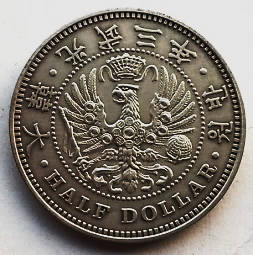
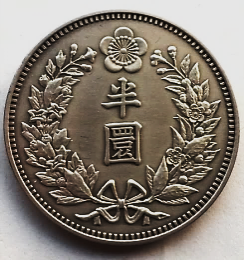
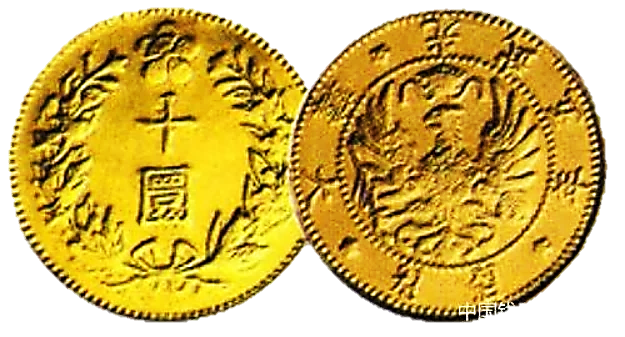
Fig. A. Pattern Eagle Half Dollar 1899. Pure Silver .800
In 1897, King Gojong of Korea proclaimed himself emperor and Korea an empire. Korea was renamed Tae Han (Hanja 大韓), meaning “Great Han.” The word “Han” means “leader” in Korean. Gojong himself adopted the new imperial name of Gwang Mu (Hanja 光武, roughly translated as “Shining Warrior,” from the characters for “lightning” and “armed”). A new calendar was introduced—the “Gwang Mu Era,” with 1897, the first year of Gojong’s reign, as its first year. The Korean Empire lasted only 13 years. In 1904, it was occupied by Japan, in 1905 it was declared a Japanese protectorate, and in 1910, Korea was annexed to the Empire of Japan.
In 1898, Gojong ordered the closure of the Incheon Central Mint and, to remove it from Japanese control, ordered its relocation to Yongsan, a suburb of Seoul, the Korean capital. Construction of the Yongsan Mint was completed in September 1900. On May 22, 1901, Gojong issued Imperial Decree No. 4, promulgating the “Regulations on Currency Circulation” (Hanja 貨幣條例). Finance Minister Yi Yong-ik embarked on radical measures to implement financial reform. One of these measures was the announcement of the introduction of the gold standard, the ban on banknotes issued by the Japanese bank Daiichi Ginko from September 11, 1902, and the introduction of a new coin design, which began minting in 1901.
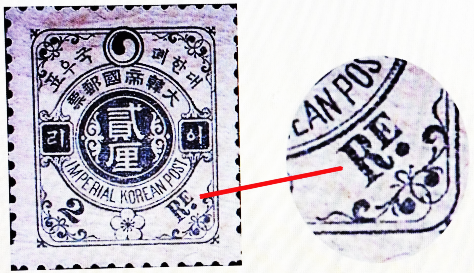
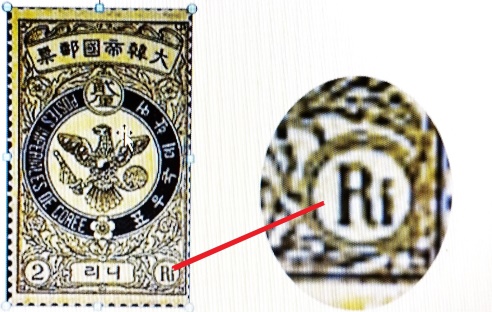
Fig.1. Postage stamp with the price of 2 ree. 1900 Fig.2. Postage stamp with the price of 2 ri. 1903
Since 1902, the gold Won (圜, WON), equivalent to the Japanese Yen and with a nominal gold content of 0.75 grams, has become the basic currency of Korea. One Won was divided into 100 Chon (錢, CHON) and 1,000 Ri or Ree (厘, RI / REE). Small coins denominated in ri were never minted, but the value of postage stamps was denominated in them (Figs. 1, 2).
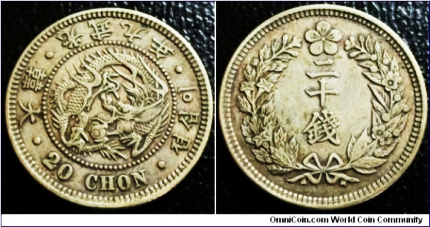
The full series of coins of the new sample should have looked like this: Half Chon (copper, 3.4 g, ⌀ 21.9 mm), 1 Chon (copper. 6.8 g, ⌀ 28 mm), 5 Chon (copper-nickel alloy, 4.3 g, ⌀ 20.8 mm), 10 Chon (silver 0.800, 2.7 g, ⌀ 17.6 mm), 20 Chon (silver 0.800, 5.4 g, ⌀ 22.8 mm), Half Won (silver 0.800, 13.5 g, ⌀ 30.9 mm), 5 Won (gold 0.900 fineness, 4.1666 g, ⌀ 17 mm), 10 Won (gold 0.900, 8.3333 g, ⌀ 21.2 mm) and 20 Won (0.900 gold, 16.667 g, ⌀ 28.8 mm). However, the full series of coins was minted only after Korea became a Japanese protectorate in 1905, all Korean mints were closed, and minting was transferred to Osaka, Japan. But these coins no longer featured the eagle.
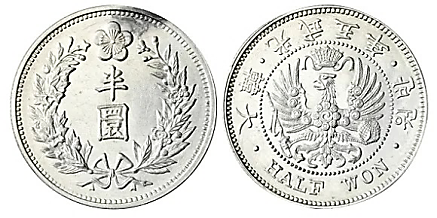
Since 1902, only change coins with the eagle in denominations of 1 Chon and 5 Chon of the 6th year of Gwang Mu (1902) and Half Won of the 5th year (1901) have been put into circulation. According to the Bank of Korea, from 1901 to 1904, the Yongsan Mint issued a total of 915,000 silver Half Won coins dated the 5th year of Gwang Mu, 126,000 copper-nickel 5 Chon coins dated the 6th year, and 981,000 copper 1 Chon coins dated the 6th year. The Krause Catalogue gives different figures: 1 Chon – 3,001,000 pieces, 5 Chon – 2,800,000 pieces, and Half Won – 1,831,000 pieces.
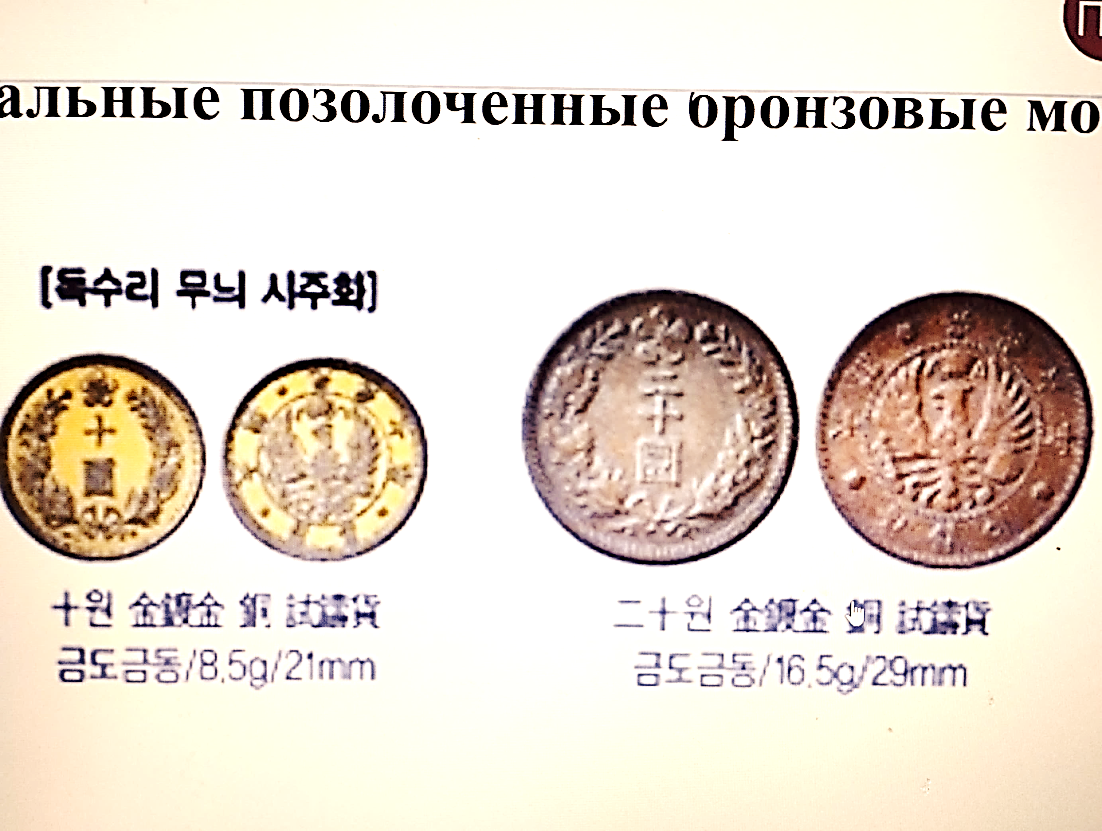
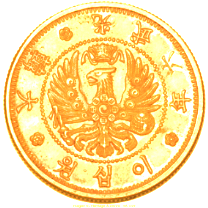
In addition, trial coins of the following denominations were minted since 1899: 20 Chon of the 4th year of Gwang Mu (1900, 0.800 silver), Half Dollar of the 3rd year (1899, 0.800 silver), 5, 10 and 20 Won of the 5th (1901), 6th (1902) and 7th (1903) years (pattern coins made of copper and gilded copper – dummies of coins that were to be minted in gold). All coins were minted at the Yongsan Mint, except for the Half Dollar of 1899. The place of its minting is unknown. Dollar and won were the names of the same monetary unit in English and in Korean. In Korean and Chinese, the dollar and won were written the same way: Hangul 원, Hanja 圜 (Korean pronunciation: won).
The design of the new coins was generally unchanged from the previous issue of 1892-1901 (Fig. 3). However, on the obverse, instead of dragons, a completely new design appeared in the center of the circle of beads: a heraldic eagle (Fig. 4).
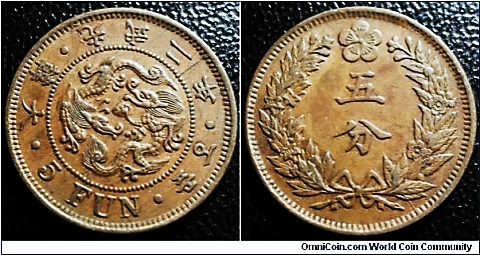
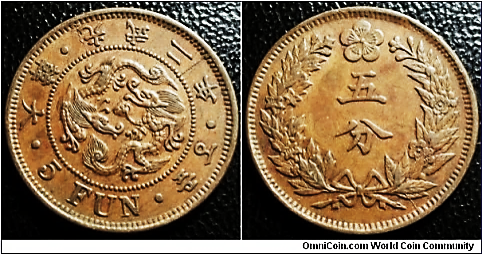
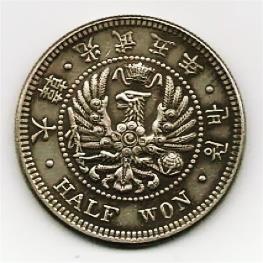
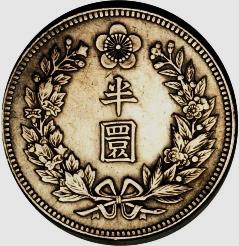
Fig. 3. Korea. 5 Fun 1898 Fig. 4. Korea. Half Won 1901
The design was based on the general appearance of Japanese 1 Yen coins from 1874–1887 and 50 Sen coins from 1873–1905 (Fig. 5). The prototypes were produced in the 1870s at the Osaka Mint by Japanese court metal engraver Natsuo Kano, together with Tomoo Masuda, who worked on the design, and Hyoka Ishii, who specialized in calligraphy[2].
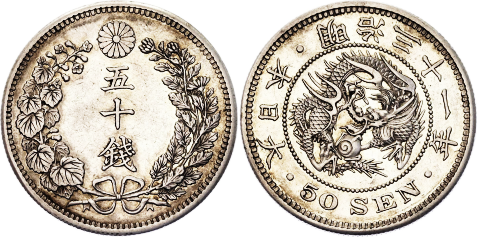
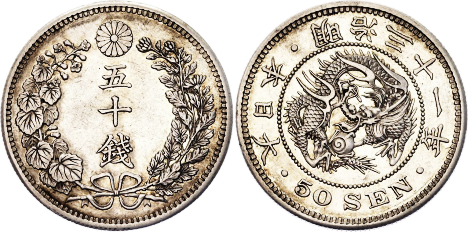
Fig. 5. Japan. 50 Sen 1898
Description of coins
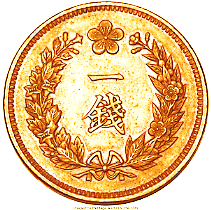
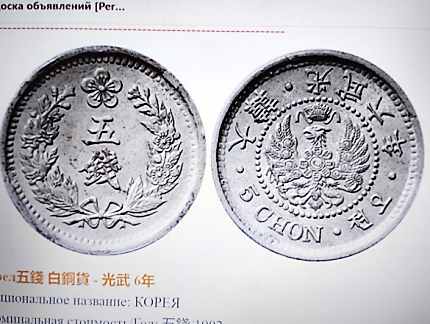
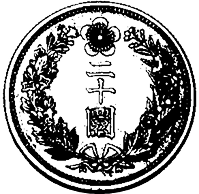
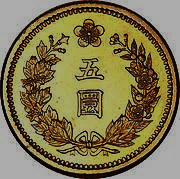
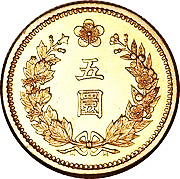
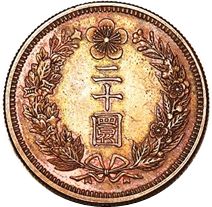
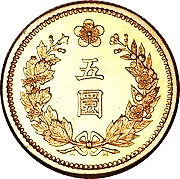
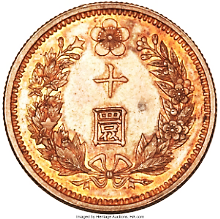
The reverses of Korean coins are identical to those of Japanese coins. The denomination is inscribed in Chinese characters (Hanja) at the center of the coin. A stylized flower bud is at the top center. To the left and right of the denomination, along the edge of the coin, are two branches of flowering plants, connected at the bottom by a ribbon tied into a bow. The differences between Korean and Japanese coins lie in the plant varieties and the symbols these plants represent.
The Japanese coin features a chrysanthemum flower (the coat of arms and seal of the Emperor of Japan) at the top center. To the left of the denomination is a branch of paulownia (heart-shaped leaves), and to the right is a branch of chrysanthemum (Fig. 6).
On the Korean coin, to the left of the denomination is a branch of platycodon grandiflorus, and to the right is a branch of plum. At the top center is the open calyx of a five-petaled plum blossom, each petal containing four stamens characteristic of this plant (Fig. 7). With the proclamation of the empire in 1897, the plum blossom was declared a sacred symbol of the ruling imperial Yi dynasty, to which Gojong belonged, and received the Korean name “Ihwamun” (Hangul 이화문, Hanja 李花紋), which translates as Flower of Yi or Seal of Yi.
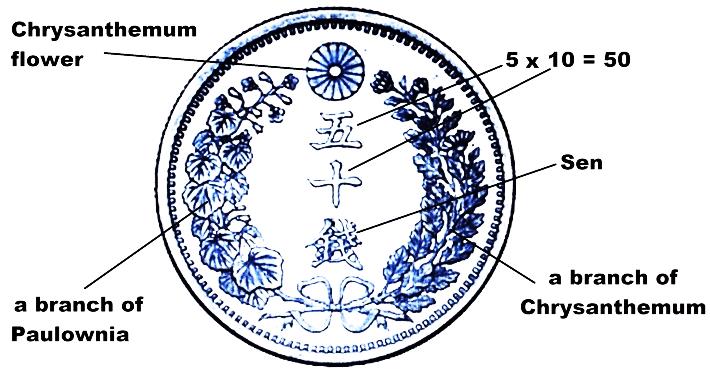
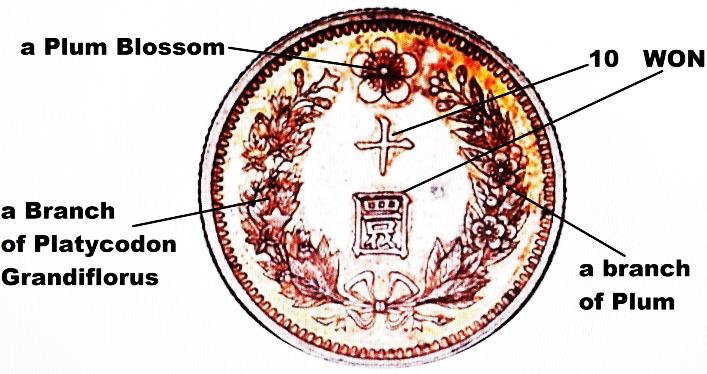
Fig. 6. Reverse of the Japanese coin 50 Sen 1876 Fig. 7. Reverse of the Korean coin 10 Won 1903
To read the legends on the reverses of Korean coins, it is sufficient to know the Chinese numerals and Hanja characters denoting monetary units (Tables 1 and 2). The numeral was always placed at the top, with the name of the monetary unit below it (see Fig. 7). The translation of the denominations on the reverses of coins is given in Table 3.
Table 1. Chinese numerals
| ½ | 1 | 2 | 3 | 4 | 5 | 6 | 7 | 8 | 9 | 10 | 20 |
| 半 | 一 | 二 | 三 | 四 | 五 | 六 | 七 | 八 | 九 | 十 | 二
十 |
Table 2. Hanja hieroglyphs denoting monetary units
| WON / DOLLAR | CHON |
| 圜 | 錢 |
Table 3. Coin denominations on the reverse side
| 一
錢 |
五
錢 |
二
十 錢 |
半
圜 |
半
圜 |
五
圜 |
十
圜 |
二
十 圜 |
| 1
CHON |
5
CHON |
20
CHON |
HALF
DOLLAR |
HALF
WON |
5
WON |
10
WON |
20
WON |
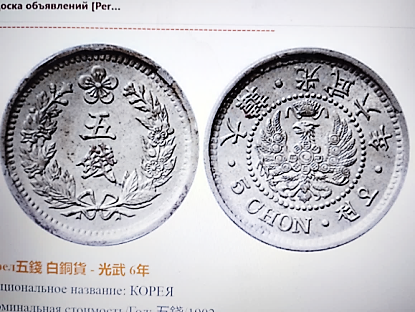
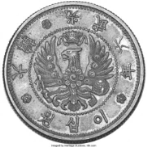
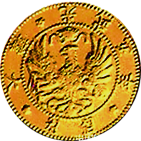
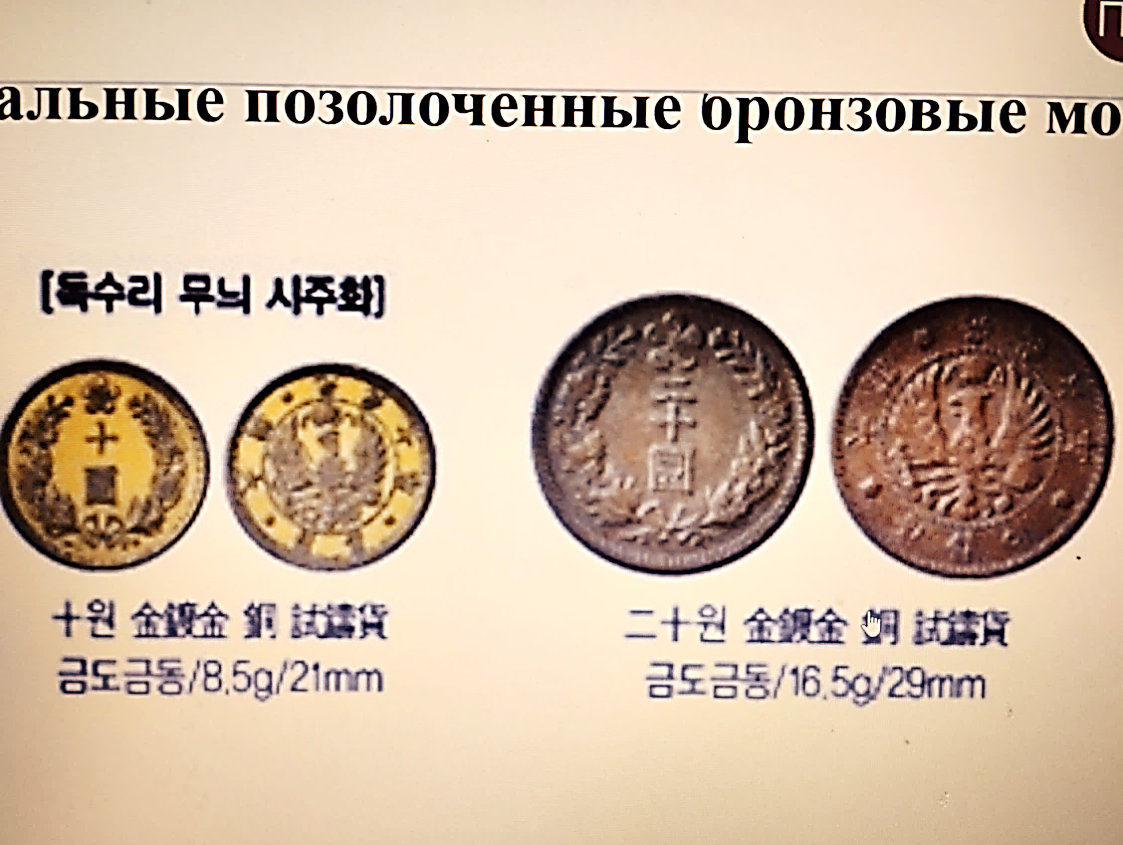
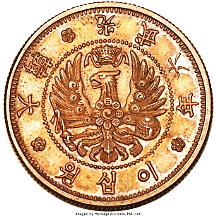
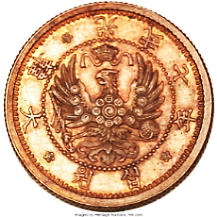
In the center of the obverse, in a circle of beads, there is an image of an eagle with raised wings. The head is turned to the left. The eagle holds a sword in one paw and a globe in the other. Above the eagle’s head is a crown with a fluttering ribbon.
There is a circular legend around the edge of the coin’s field. On small change coins from 1 Chon to Half Won, the legend is in three languages: Chinese characters (Hanja), Korean script (Hangul), and English (Fig. 8). On larger-denomination coins (5, 10, and 20 Won), the legend is in Hanja and Hangul only (Fig. 9).
The hieroglyphs of Hanja are written:
1) the name of the country is 大韓 (“Tae Han”) – “The Great Han”;
2) the year of the reign of Emperor Gwang Mu, when the coin was minted. For example, the 6th year of Gwang Mu (1902 according to our chronology), as in Figure 8: 光武六年, where 光武 – is ” Gwang Mu”, 六 is the number “6”, 年 is the word “year”.
The Chinese figures are shown in Table 1, and the full dates of the Gwang Mu are in Table 5. The country name, date, and denominations on small coins are separated by dots, and on large-denomination coins by small plum blossom rosettes.
The face value of the coin is written in English and in Hangul. The interpretation of the denominations for Hangul is given in Table 4.
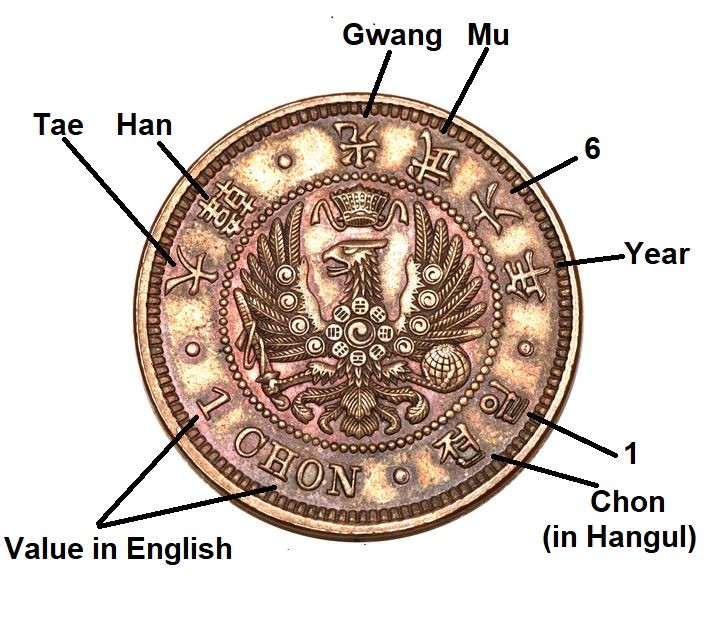
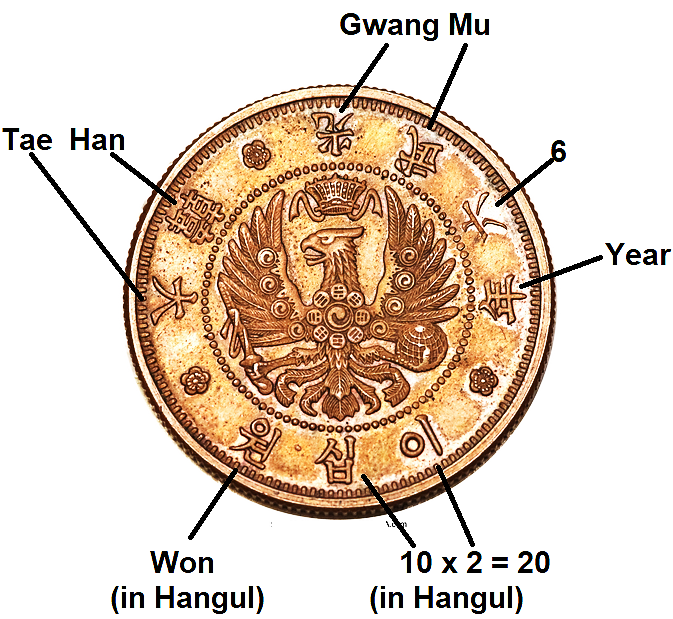
Fig. 8. Obverse of the 1 Chon coin of 1902 Fig. 9. Obverse of the 20 Won coin of 1902
Table 4. Denominations of coins on the front side
| Value | Denomination in Hangul script | Denomination in English |
| 1 Chon | 젼일 | 1 CHON |
| 5 Chon | 젼오 | 5 CHON |
| 20 Chon | 젼십이 | 20 CHON |
| Half Dollar | 원반 | HALF DOLLAR |
| Half Won | 원반 | HALF WON |
| 5 Won | 원오 | – |
| 10 Won | 원십 | – |
| 20 Won | 원십이 | – |
Throughout Korea’s history, up until the late 19th century, it had no national symbols—no coat of arms, no flag, no anthem. After becoming emperor, Gojong decided to include his own design for an imperial coat of arms on coins. It was officially approved by the emperor in 1902 as the “Imperial Seal” (i.e., coat of arms) Gwang Mu Emperor (Hanja 大韓帝國國章), although, as we can see, it had appeared on coins much earlier. Its prototype was the state eagle of the Russian Empire (Fig. 10). The Korean eagle was heraldically designed according to the same principle as the Russian one. The eagle’s wings are raised, a large coat of arms is on the chest, with four smaller coats of arms on each wing. In the eagle’s left claw is a round object, and in the right, an oblong one (Fig. 11).
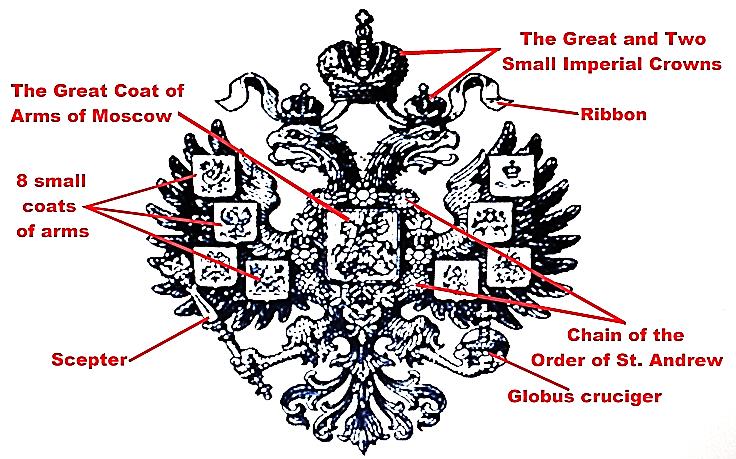
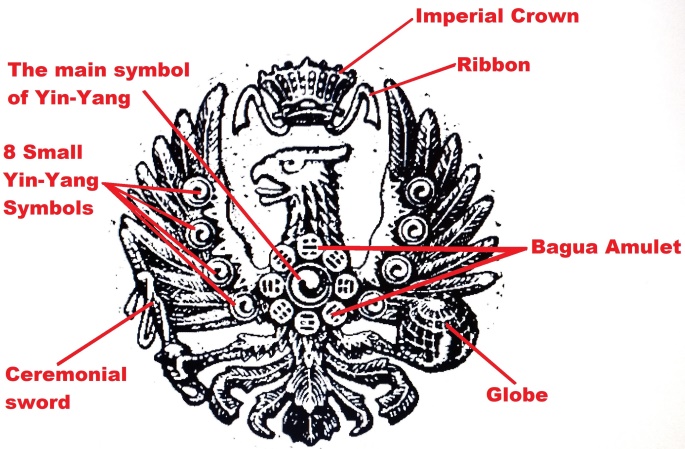
Fig. 10. Russian Empire State Eagle Fig. 11. Imperial Emblem of Great Korea
(State credit note of 50 Rubles, 1899) (20 Won 1902)
Russian and Korean Eagles are not identical. The Russian Eagle is a two–headed eagle with three crowns, while the Korean Eagle is a single–headed eagle with one crown. All the attributes of the Korean Eagle are purely traditional and Confucian.
The Russian Eagle clutches a scepter and a globus cruciger in its paws, as symbols of the monarch’s power. The symbols of power of the Korean emperor are different. In his left paw, the Eagle holds a globe, and in his right hand he holds a ceremonial Korean straight sword with a round guard and a round pommel, which is called “Ingeom.” On the chest of the Russian Eagle is the coat of arms of Moscow, framed by the chain of the Order of St. Andrew the First-Called. On the wings are 8 small coats of arms of the kingdoms and grand duchies that make up Russia.
On the chest of the Korean Eagle is the symbol of the “Great Beginnings,” the Taegeuk, or Yin-Yang, representing Korea. It is framed by an amulet of eight trigrams, the Bagua (Fig. 12). Eight smaller Yin-Yang symbols are located on the Eagle’s wings—four on each (Fig. 13). They represent the eight provinces of the Korean Empire. A trigram (Hanja 卦 “Gua”) is a symbol consisting of three lines. Each of the three lines in the trigram can be either continuous (“———”) or broken in the middle (“— —”). A solid line symbolizes Yang, and a broken line symbolizes Yin. There are eight possible combinations of these trigram components, and these combinations are known as the “eight trigrams” or, in Chinese, 八卦 (“Ba-Gua”). In ancient times, Koreans believed that the bagua amulet could ward off evil influences and ward off evil spirits. For this reason, people often wore bagua amulets on their chests. Families often nailed bagua-style amulets to the roof beams of their homes or to the top of their gates, while sailors attached them to their boats.
Above the eagle’s head on the coins is the Imperial Crown of Gojong, heavily stylized in a “European” style.
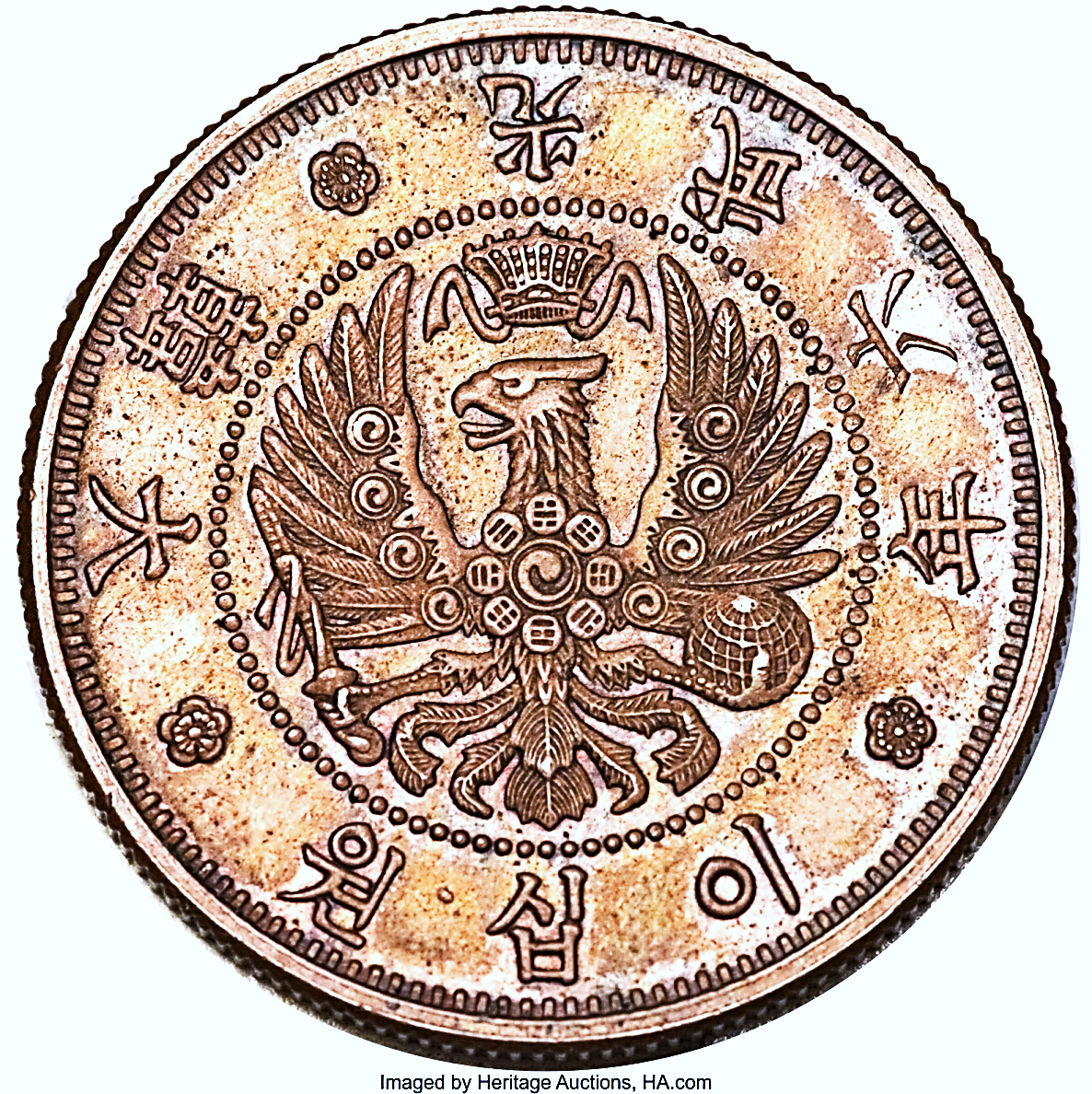
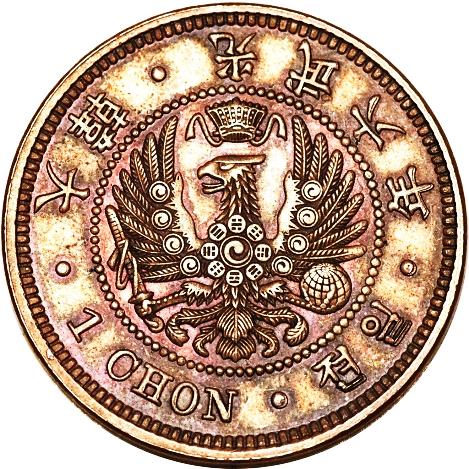
Fig. 12. The Yin-Yang symbol surrounded by Fig. 13. Yin-Yang signs on the eagle’s
8 trigrams (bagua) on the eagle’s chest chest and wings
The eagle images themselves on different coins vary slightly in the number of feathers in each wing and the length of the sword. Based on these differences, they can be divided into three types: Type I, Type II, and Type III (Fig. 14).
Fig. 14. Types of eagles
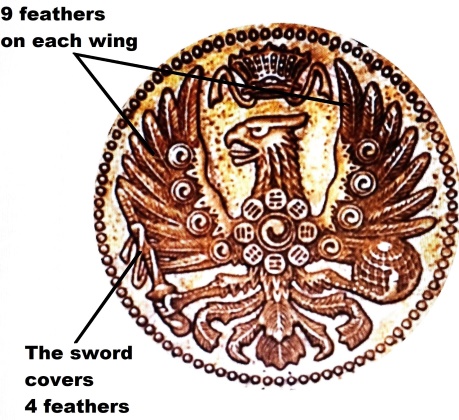
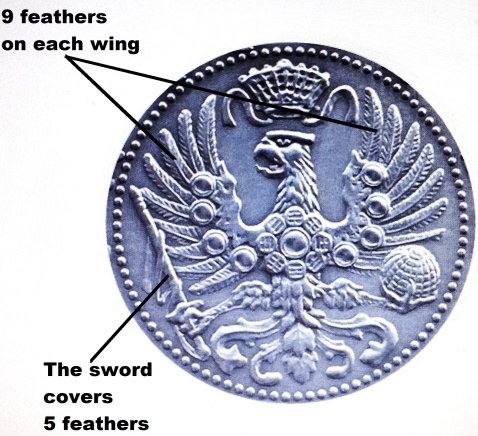
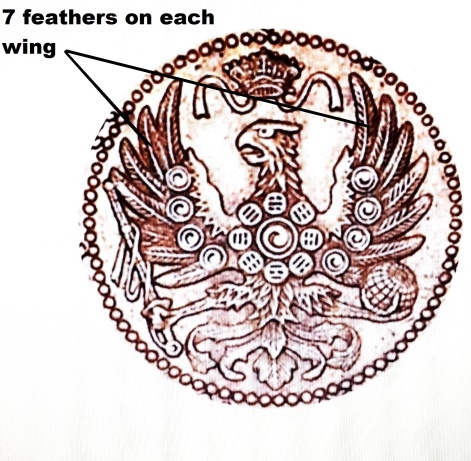
Type I Type II Type III
1 Chon 1902, 20 Won 1902 Half Dollar 1899, Half Won 1901 5 Chon 1902, 10 Won 1901, 1903
3. Edge
The 1, 5, 20 Chon coins have a smooth edge. Coins of large denominations – Half, 5, 10 and 20 Won – have a ribbed edge.
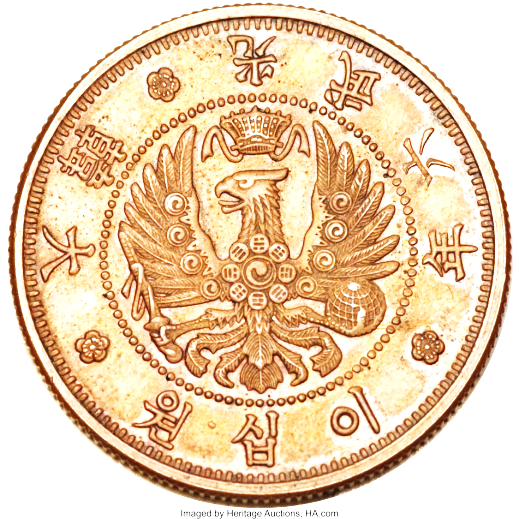
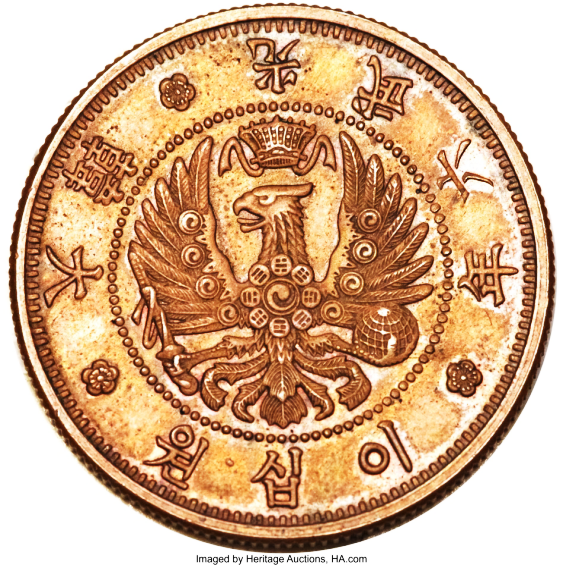
Fig. 15. Edge of the 20 Won coin of 1902

Fig. 16. Edge of the Half Won coin of 1901
Table 5. Table of the minting of the Eagle Series of the Yongsan Mint[3]
Symbols
| R: rare
R2: very rare R3: extremely rare R4: 11 ~20 pieces R5: 6 ~10 pieces R6: 3 ~ 5 pieces R7: 1 ~ 2 pieces |
| Year \ Denomination | 一
錢 1 Chon |
五
錢 5 Chon |
二
十 錢 20 Chon |
半
圜 Half Dollar or Half Won |
五
圜 5 Won |
十
圜 10 Won |
二
十 圜 20 Won |
| 3rd(光武三年)1899 | R5 | ||||||
| 4th(光武四年)1900 | R7 | ||||||
| 5th(光武五年)1901 | R3 | R6 | |||||
| 6th(光武六年)1902 | R3 | R2 | Unknown | Unknown | R6 | ||
| 7th(光武七年)1903 | Unknown | R5 |
In 1904, at the beginning of the Russo-Japanese War, Japan occupied Korea. All Korean mints were closed. In 1905, the Osaka Mint began issuing an entirely new series of Korean coins, almost exactly modeled on Japanese coins (even using the same blanks). The eagle design disappeared forever. Old coins were withdrawn from circulation and exchanged for new ones at various prices. The public was primarily required to hand over coins featuring the eagle, as Japan sought to erase the memory of the national symbol of the Korean Empire. They were accepted at the most favorable rate to encourage the public to turn them in. In August 1909, the Japanese banned all Korean postage stamps, including those featuring the Imperial Eagle. The fate of the eagle coins was even more tragic. Twelve tons of the coins were sold as scrap metal to a Japanese company and melted down. The Japanese meticulously destroyed even individual specimens. Very few such coins remain, which is why they fetch such high prices at auction[4].
COIN CATALOGUE
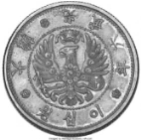
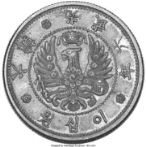
Note: For coins that have not been offered at auction and are not in museum or private collections, only a drawing of the reverse is provided, and instead of the obverse, a small image of an eagle.
Abbreviations in the “List” column
SC – Standard Circulation Coin.
PС – Pattern Coin.
| A. Regular minting coins | ||||||||
| 1 Won = 1 Dollar = 100 Chon = 1000 Ri / Ree | ||||||||
| List | No
Kra-use |
Value
Hanja English Hangul |
Year of production | Obverse
Eagle type |
Reverse | Composition
⌀ Diameter Weight ↔ Thickness Edge |
Rarity according to the Bank of Korea
Mintage |
Auction prices
(in brackets the Coin grading) |
| SC 01 | KM# 1121 | 一
錢 1 CHON 젼일 |
1902
光武六年 6th year of Gwangmu |
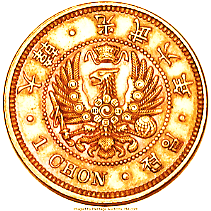
Eagle type I |
 |
Copper
(Cu 98%, Sn 1%, Zn 1%) ⌀ 28 mm 6,8 g ↔1.5 mm Edge: smooth |
R3
3,001,000 ps. (Krause)[5] 981 000 шт. (Банк Кореи) 981,000 pcs. (Bank of Korea) [6] |
Heritage Auctions, 2011 September 8
$ 149,500 (MS65)[7] |
| SC 02 | KM#
1122 |
五
錢 5 CHON 젼오 |
1902
光武六年 6th year of Gwangmu |
Eagle type III |
 |
Copper-Nickei
(Cu 75%, Ni 25%) ⌀ 20,7 mm 4.3 g Edge: smooth |
R2
2,800,000 ps. (Krause) 126,000 pcs. (Bank of Korea) |
Heritage Auctions,
2013 January 6 $ 18 800 (XF45)[8] Heritage Auctions, 2011 September 12 $ 7,791 (VF)[9] |
| SC 03 | KM#
1123 |
半
圜 HALF WON 원반 |
1901
光武五年 5th year of Gwangmu |
Eagle type II |
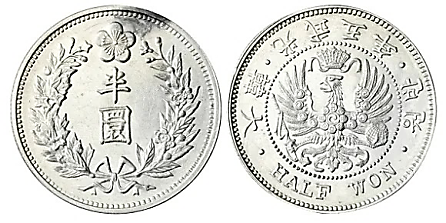 |
Silver (Ag 0.800)
⌀ 30,9 mm 13,5 g 0.3472 oz ↔ 2 mm Reeded edge |
R3
1,831,000 ps. (Krause) 915,000 pcs. (Bank of Korea) |
Heritage Auctions
2024 December 8 $ 52,800 (XF)[10] |
| B. Pattern coins and coins in other metals | ||||||||
| PC01 | — | 半
圜 HALF DOLLAR 원반 |
1899
光武三年 3rd year of Gwangmu |
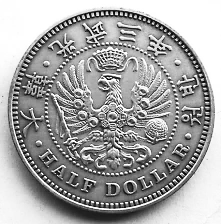
Eagle type II |
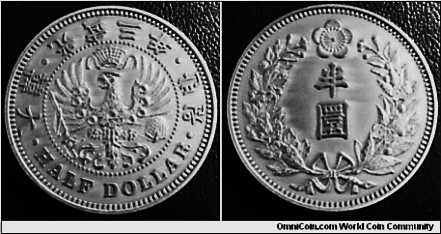 |
Silver
Ag 0.800 0.3472 oz ⌀ 30,9 mm 13,5 g ↔ 2 mm Reeded edge |
R5 | Hwadong Coin Auction 1995
7,400,000 Won[11] |
| PC02 | — | 二
十 圜 20 WON 원십이 |
1900
光武四年 4th year of Gwangmu |
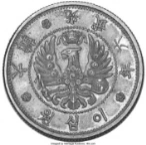 |
 |
Copper
↔ 2 mm |
R7 | |
| PC03 | Pn33 | 五
圜 5 WON 원오 |
1901
光武五年 5th year of Gwangmu |
 |
 |
Copper | It is known only by its number in the Krause catalog | |
| PC04 | Pn34 | 十 圜
10 WON 원십 |
1901
光武五年 5th year of Gwangmu |
Eagle type III |
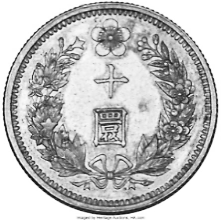 |
Copper
⌀ 21.2 mm + |
R6 | |
| РС05 | — | 十 圜
10 WON 원십 |
1901
光武五年 5th year of Gwangmu |
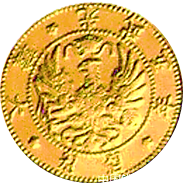
Eagle type III |
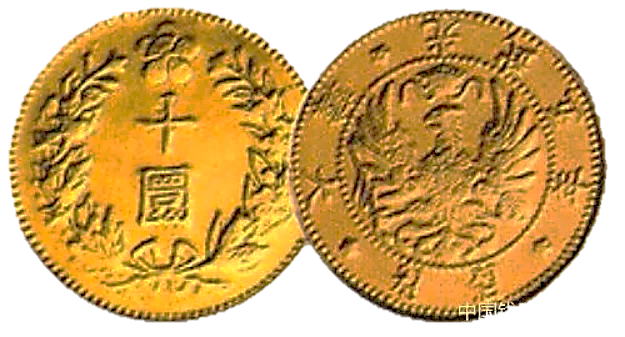 |
Gold plated
Cooper ⌀ 21.2 mm Reeded edge |
R6 | |
| РС06 | — | 二
十 錢 20 CHON 젼십이 |
1902
光武六年 Кван Му 6 год 6th year of Gwangmu |
 |
 |
Ag 0.800
⌀ 22.8 mm 5,39 g ↔ 1,5 mm Edge smooth |
The Bank of Korea has information that such a coin was minted. But the coin itself has not survived | |
| PC07 | — | 五
圜 5 WON 원오 |
1902
光武六年 6th year of Gwangmu |
 |
 |
Copper
⌀ 17 mm ↔ 1 mm |
The Bank of Korea has information that such a coin was minted. But the coin itself has not survived | |
| РС08 | — | 十 圜
10 WON 원십 |
1902
光武六年 6th year of Gwangmu |
Eagle type III |
 |
Gold plated
Cooper ⌀ 21.2 mm Reeded edge |
||
| РС09 | Pn35 | 二
十 圜 20 WON 원십이 |
1902
光武六年 6th year of Gwangmu |
Eagle type I |
 |
Copper
⌀ 28.8 mm Reeded edge |
R6 | Heritage Auctions, 2011 Septem. 8
$ 115,000 (MS64) |
| PC10 | Pn36 | 二
十 圜 20 WON 원십이 |
1902
光武六年 6th year of Gwangmu |
Eagle type I |
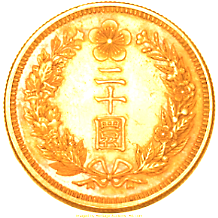 |
Gold plated
Cooper ⌀ 28.8 mm Reeded edge |
R7
The only known specimen is in the Bank of Korea Museum |
|
| PC11 | Pn37 | 5 ВОН
五 圜 5 WON 원오 |
1903
光武七年 7th year of Gwangmu |
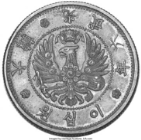 |
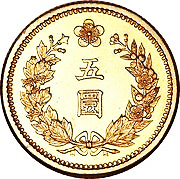 |
Copper | The Bank of Korea has information that such a coin was minted. But the coin itself has not survived | |
| PC12 | Pn38 | 5 ВОН
五 圜 5 WON 원오 |
1903
光武七年 7th year of Gwangmu |
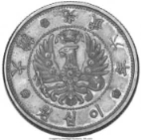 |
 |
Gold plated
Cooper |
It is known only by its number in the Krause catalog | |
| C13 | —[12] | 10 ВОН
十 圜 10 WON 원십 |
1903
光武七年 7th year of Gwangmu |
Eagle type III |
 |
Copper
⌀ 21.2 mm Reeded edge |
R5 | Heritage Auctions, Sept. 8, 2011
$ 103,500 (MS64)[13] |
References
Электронный ресурс: https://primaltrek.com/koreancoins.html
https://dspace.ewha.ac.kr/handle/2015.oak/182912
https://en.namu.wiki/w/검독수리?from=국가수리#국가수리
https://www.coinworld.com/news/world-coins/jacobs-collection-stuns-nets-6-8-million.html
https://n.news.naver.com/mnews/article/032/0000063380?sid=102
https://www.kci.go.kr/kciportal/ci/sereArticleSearch/ciSereArtiView.kci?sereArticleSearchBean.artiId=ART002688497
17.《韓國의貨幣》,韓國銀行1994年版 (National Currency of Korea, Annual Publication of the Bank of Korea. Seoul, 1994. Chinese language).

No 1 (10), January 2026
Scientific periodical (St. Petersburg, Russia)
ISSN 3033-7666 (Print), ISSN 3033-7674 (Online)
Certificate from the Federal Service for Supervision of Communications, Information Technology, and Mass Media (Roskomnadzor)
Эл № ФС77-87449
The journal is registered and published in Russia. It publishes articles from all over the world and across all fields of science. It is published in Russian.
Articles are accepted daily.
Submission frequency: as soon as material becomes available.
All articles are peer-reviewed.
Each author receives a free publication certificate.
Free access to the online version of the journal.
By submitting an article to the editor, the author confirms its uniqueness and assumes full responsibility for any potential copyright infringement.
Editorial staff
Editor-in-Chief
Vorontsov, Vladimir Valentinovich
Managing Editor
Ivanov, Maxim Dmitrievich
Executive Secretary
Kholmanskikh, Maria Viktorovna
Reviewers
Pyrkh, Andrey Ivanovich,
Ph.D., St. Petersburg State University
Dimitrienko, Andrey Igorevich,
Ph.D., Pavlov State Medical University
_____________________________________________________________________________
Contacts
 190031, Russia, St. Petersburg, Kazanskaya str., 35, lit. A, apt. 15
 +7 931 712-95-96
 nxxivek@inbox.ru
_____________________________________________________________________________
© Founder: Limited Liability Company “Polis” (Primary State Registration Number 1097847170871)
190031, St. Petersburg, ext. ter. Admiralteysky Municipal District, Kazanskaya St., 35, lit. A, apt. 15
https://episs.ru/wp-content/uploads/2026/04/1-Number-2025-ENGLISH.pdf ↑
https://www.greysheet.com/news/story/a-unique-collecting-opportunity-for-a-japanese-national-treasure ↑
https://m.cafe.daum.net/coreahistech/M5JA/795?listURI=%2Fcoreahistech%2FM5JA ↑
https://coins.ha.com/itm/korea/russian-domination-kuang-mu-copper-pattern-10-won-year-7-1903-/a/3015-24532.s?ic16=ViewItem-BrowseTabs-Auction-Archive-ThisAuction-120115# ↑
