Articles that inspire and inform!
Publisher of POLIS LLC
Address: 190000, Saint Petersburg,
35/15 Kazanskaya Street
Publisher of POLIS LLC
Address: 190000, Saint Petersburg,
35/15 Kazanskaya Street

UDC 94(47).084
RAYMOND ROBINS: SERVANT OF WORLD MONOPOLY CAPITAL
Kildeev Adel Khanyafievich
Leningrad State University named after A.A. Zhdanov (1990)
PhD in Law
ORCID: 009-0001-2211-4944
Annotation : The article examines the activities of the American politician and entrepreneur Raymond Robins in the context of the Russian Revolution and the first years of Soviet power. Special attention is paid to his contacts with V. I. Lenin and his role in the formation of Soviet American relations. The author shows that Robins, who acted as an intermediary between the Bolshevik leadership and American financial and political circles, was not only a witness, but also an active participant in the processes which determined the nature of Soviet Russia’s interaction with the West. Documents, memoirs of contemporaries and diplomatic correspondence are analyzed, which allows us to identify the contradictory, but at the same time strategically important nature of Robins’ activities. It is concluded that the figure of Robins testifies to the deep involvement of the American elites in the fate of the Russian revolution and confirms the thesis about Lenin as “the greatest servant of monopoly capitalism”.
Keywords: Lenin; Raymond Robins; Russian Revolution; Bolshevism; USA; Red Cross mission in Russia; diplomacy; Soviet American relations; monopoly capitalism; American corporations, revolutionary Russia; mediation.
UDC 94(47).084
RAYMOND ROBINS: SERVANT OF WORLD MONOPOLY CAPITAL
Kildeev Adel Khanyafievich
Leningrad State University named after A.A. Zhdanov (1990)
PhD in Law
ORCID: 009-0001-2211-4944
Abstract: The article examines the activities of the American politician and entrepreneur Raymond Robins in the context of the Russian Revolution and the first years of Soviet power. Special attention is paid to his contacts with V. I. Lenin and his role in the formation of Soviet American relations. The author shows that Robins, who acted as an intermediary between the Bolshevik leadership and American financial and political circles, was not only a witness, but also an active participant in the processes which determined the nature of Soviet Russia’s interaction with the West. Documents, memoirs of contemporaries and diplomatic correspondence are analyzed, which allows us to identify the contradictory, but at the same time strategically important nature of Robins’ activities. It is concluded that the figure of Robins testifies to the deep involvement of the American elites in the fate of the Russian revolution and confirms the thesis about Lenin as “the greatest servant of monopoly capitalism”.
Keywords: Lenin; Raymond Robins; Russian Revolution; Bolshevism; USA; Red Cross mission in Russia; diplomacy; Soviet American relations; monopoly capitalism; American corporations, revolutionary Russia; mediation.
I had the privilege of being one of the first readers of the manuscript of Lea Gabriela Gavrilova’s article “Lenin: The Greatest Servant of Monopoly Capitalism in History (Part 2: Raymond Robins), kindly provided to me by the author himself. This article was published in issue 4 of the journal “Scientific Platform XXI Century”.
In this article, Lea Gavrilova shifts the emphasis from Lenin to his key Western intermediary, Raymond Robins, an American businessman, pastor, diplomat and head of the Red Cross mission in Russia in 1917. Robins established a relationship of trust with Lenin, Trotsky, and other leaders. In his reports, Robins convinced the United States that Soviet Russia was not an enemy, but easy prey: 1. Rich resources; 2. The need for technology and credit; 3. Desire to enter world markets. Robins, with his inherent pragmatism, incorporates Bolshevism into the system of the world economy (nothing personal, it’s just business). Through the figure of Robins, Gavrilova deduces the central thesis: Lenin was not the “leader of the world revolution”, but a convenient administrator of world capital. Its decisions (the Treaty of Brest-Litovsk, control of foreign trade, readiness for foreign concessions) fully corresponded to the interests of monopoly capital. And if we look even more broadly, referring to other articles and books by Lea Gavrilova, Lenin appears before us as a German agent of influence, thrown with his handful of revolutionaries with the help of the international swindler Parvus into Russia to collapse and plunder it, which was quite successfully done.[1]
I fully agree with the author’s conclusions and am not at all afraid of accusations of anti-communism from apologists of communist ideology, which has outlived its usefulness and is completely discredited. But I would like to supplement the article by Lea Gavrilova a little with some historical facts and sources that only confirm the correctness of her position.
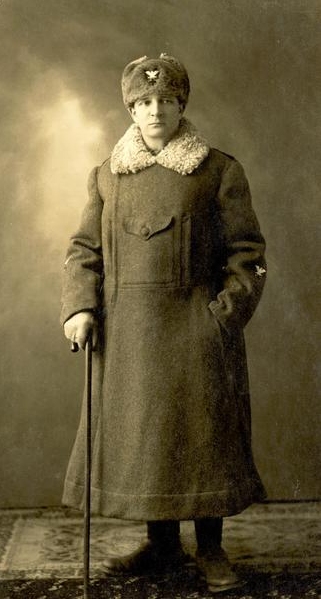
Photo 1. Raymond Robins in the uniform of the Red Cross
Raymond Robins’ biography[2]
Raymond Robins (September 17, 1873 – September 26, 1954), son of Charles Ephraim Robins (1832–1893) and Hannah Maria Crowe (1836–1901), was born on Staten Island on September 17, 1873. His mother, an opera singer, was committed to a mental institution when he was a child.
As a young man, Robins was a rebel, working as a miner in Tennessee and Colorado. He returned to his studies and graduated from George Washington University in 1896. In 1897, Robins took part in the Klondike Gold Rush. The following year, he converted to Christianity and became pastor of a Congregational church in Nome, Alaska.
In 1905, Margaret Dreyer overheard Raymond Robins giving a lecture on social evangelism at a church in Brooklyn. Soon after, the couple got married. They had no children. From 1906 to 1909, Robins was a member of the Chicago Board of Education. He also worked as an expert on social issues for Men and Religion. In 1915, he was the leader of the National Christian Campaign for Social Evangelism.
Robins became a leading figure in the Progressive Party and served as chairman of the state’s Central Committee. Theodore Roosevelt and Hiram Johnson became the party’s candidates in the 1912 presidential election. The proposed program included women’s suffrage, direct election of senators, antitrust legislation, and a ban on child labor. With 4,126,020 votes, Roosevelt defeated William H. Taft, the official Republican nominee. However, he received fewer votes than Democratic candidate Woodrow Wilson. In 1914, Robins was a candidate for U.S. Senator from Illinois.
During World War I, Robins worked for the Y.M.C.A. and the Red Cross in France. Through Roosevelt’s influence, Raymond was appointed emissary to the Red Cross Relief Mission to Russia in 1917. There he met various revolutionary leaders and became a recognized expert in Russian-American relations, an examination that later bore fruit when the United States attempted to restore diplomatic relations with the Soviet Union in 1933.
In Petrograd, Robins met the British journalist Arthur Ransom, whom he first met in 1918. According to Roland Chambers, author of The Last Englishman: The Double Life of Arthur Ransom (2009): “The day after the interview with Trotsky, Rans dined with Colonel Raymond Robins, head of the American Red Cross, and Edgar Sisson, former editor of the Chicago Tribune. Robins, he concluded, was by far the best example. As an evangelical Christian, an Alaska gold digger, and a straightforward Chicago progressive, he pursued policies that were no more compatible with Bolshevism than those of Woodrow Wilson, whom he considered a personal friend.”
After returning from Russia, Raymond became a political consultant to various politicians in both the Republican and Democratic parties, especially on issues relating to world peace, disarmament, and normalization of relations with the Soviet Union. In the spring of 1933, shortly after Franklin Roosevelt took office, Raymond visited Moscow to renew the acquaintances he had made during his Red Cross mission in 1917, met with Stalin, and actively lobbied for U.S. recognition of the USSR. His discussions and the reports he prepared for Roosevelt’s staff are considered the basis for the exchange of ambassadors and the renewal of relations. In September 1935, Raymond fell down the stairs and broke several vertebrae in his back. As a result of the accident, he was left paralyzed from the waist down for the rest of his life. Raymond died in Chinsegut on September 26, 1954. He and his wife are buried together under the “Altar Oak” in their estate.[3]
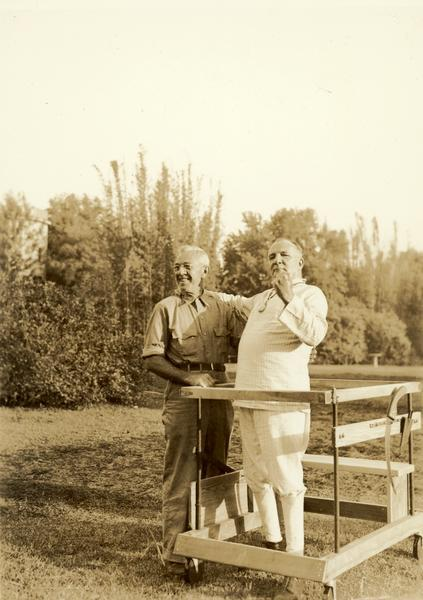
Photo 2. Raymond Robins in the last years of his life
Raymond Robins’ personality
William Hard characterizes Robins as follows: “He is the most anti-Bolshevik man I have ever known, in the sense of thinking; And I’ve known him for seventeen years. When he says now that, in his opinion, the economic system of Bolshevism is morally unsound and industrially unworkable, he is saying only what I have heard from him every year of our acquaintance since 1902.[4]
“Today, because he opposes American and allied military intervention in Russia, some hasty or ill-intentioned people are trying to stigmatize him as Bolshevism. I ask then: How many of these people have ever said a single word against Bolshevism where it was dangerous? Robins opposed Bolshevism in Petrograd itself. He fought against Bolshevism, and it is well known that he fought against it during the entire period when Russia was making a choice between Kerensky and Lenin. Robins consistently and continuously opposed the Bolsheviks both in America and in Russia; but he saw the failure of our diplomacy in Russia; and he had the opportunity to comprehend the reason, the instructive reason……”[5]
Robins and Lenin
Lea Gavrilova tells in detail about Robins’ meetings with Trotsky, their disputes, even about the destruction of anarchist centers because of the stolen car of the Red Cross mission. But I would like to cover in detail the meeting between Robins and Lenin.
“There now sits Lenin, of short build and strong build, gray-eyed, bald and calm. He wears a woollen shirt and a suit that he had bought seemingly years ago and had his last ironing shortly thereafter. Silence reigns in his room. Just as he denounces the “intoxication of revolutionary phrases,” he seems to reject the intoxication of revolutionary excitement.
He deals with the reports and accounts of the departments on his desk and receives visitors for a certain period of time —- ten minutes, five minutes, one minute. Most likely, he will take them standing. He speaks to them in the quiet voice of a person who does not need to raise his voice.
In his manner of easy authority, one can perhaps see his father, a state councillor of the Simbirsk government, a hereditary nobleman. From his point of view, one can definitely see his brother executed by the Tsarist police as a political criminal when Lenin was seventeen years old.
Robins could never have visited Lenin in the Tsar’s Supreme Court without thinking about this execution and how — and all similar executions— had been given by the Russian State Church. Behind the gallows, generation after generation, in all parts of Russia, stood the priests with their golden vessels and vestments of fine fabrics, with their icons, preaching obedience to the autocracy and giving the word of God to support the word of the Tsar, and blessing the executioner.
From this context follows Lenin’s speech. He proceeded only from the assumption that religion had disappeared from public life and from the state policy of Russia together with the tsar. He spoke only of worldly efforts, only of material organization.
He told Robins, “We may be overthrown in Russia by Russia’s backwardness or by a foreign power, but the idea of the Russian Revolution will break down and destroy all the political social systems of control in the world. Our method of social control dominates in the future. Political social control will die. The Russian Revolution will kill him —everywhere.”
“But,” Robins said, “my government is democratic. Are you really saying that the idea of the Russian Revolution will destroy the democratic idea in the government of the United States?
“The American government,” said Lenin, “is corrupt.”
“It’s just not like that,” Robins said. “Our national government and our local governments are elected by the people, and most elections are honest and fair, and the elected people are the true choice of the voters. You can’t call the American government a bought government.”
“Oh, Colonel Robins,” said Lenin, “you don’t understand. It’s my fault. I shouldn’t have said “corrupt.” I don’t mean that your government is corrupt in money. I mean, it’s corrupted and decayed in thought. It lives in the political thinking of a bygone political era. She lives in the era of Thomas Jefferson. This is not life in the current economic age. So it lacks intellectual integrity. How can I explain this to you? Well, think about this:
“Think about your states of New York and Pennsylvania. New York is the center of your banking system. Pennsylvania is the center of your steel industry. These are two of your most important things— banking and steel. They are the foundation of your life. They make you who you are. Now, if you really believe in and respect your banking system, why don’t you send Mr. Morgan to the United States Senate? And if you really believe in your steel industry, in its present organization, why don’t you send Herr Schwab to the Senate? Why do you send people who know less about banking and less about steel, who protect bankers and steelmakers and pretend to be independent of them? This is ineffective. This is insincere. It refuses to acknowledge the fact that real control is no longer political. That’s why I say your system lacks integrity. That’s why our system is better. That’s why it’s going to destroy yours.”
“To tell you the truth, Mr. Commissar,” said Robins, “I don’t believe it will happen.
“So it will be,” said Lenin. “Do you know what ours is?”
“Not very well yet,” Robins said. “You’ve just begun.”
“I’ll tell you,” said Lenin. “Our system will destroy yours because it will consist of social control that recognizes a basic fact of modern life. It recognizes the fact that real power at the present time is economic and that social control at present must also be economic. So what should we do? Who will be our representative in our national legislature, in our national Soviet, for example, from the Baku district?
“The Baku region is oil. Oil is made by Baku. Oil rules Baku. Our representatives from Baku will be elected by the oil industry. They will be elected by oil industry workers. You say: “Who are the workers? I say: the people who manage and the people who obey the orders of the managers — foremen, engineers, artisans, laborers, — all people who really participate in the actual work of production, either intellectually or manually, — they are workers. Persons who are not employed in this way, — who are not employed in the oil industry, but who try to live off it without labor, speculation, royalties, investments, without any management work or with —any daily labor, are not workers. They may or may not know something about oil. As a rule, they do not do this. In any case, they are not actually engaged in oil production. Our republic is a republic of producers.
“You will say that your republic is a republic of citizens. Very good. I say that a person as a producer is more important than a person as a citizen. The most important citizens in your oil regions — who are they? Aren’t they oil workers? We will represent Baku as oil.
“In the same way, we will present the Donetsk coal basin as coal. Representatives of the Donetsk basin will be representatives of the coal industry. Again, from the countryside, our representatives will be representatives chosen by the farmers who grow the crops. What is the real interest in rural areas? This is not a warehouse. This is not usury. This is agriculture. From our villages, our Peasants’ Soviets will send representatives elected for agriculture to speak in the name of agriculture.
“This system is stronger than yours because it recognizes reality. It seeks the sources of the daily value of human labor and from these sources directly creates the social control of the state. Our government will be the economic social control of the economic age. It will triumph because it speaks of the spirit and releases and uses the spirit of the age that we now have.
“Therefore, Colonel Robins, we look to the future with confidence. You can destroy us in Russia. You can destroy the Russian Revolution in Russia. You can overthrow me. It won’t make any difference. A hundred years ago, the monarchies of England, Prussia, Austria, and Russia overthrew the government of revolutionary France. They restored a monarch to power in Paris, whom they called the legitimate monarch. But they could not and did not stop the political revolution of the bourgeoisie, the revolution of bourgeois democracy, begun in Paris by the men of the French Revolution of 1789. They could not save feudalism.
Any system of feudal aristocratic social control in Europe was doomed to collapse as a result of the political democratic social control developed by the French Revolution. Any system of political democratic social control in the modern world is doomed to be destroyed by the social control of economic producers developed by the Russian Revolution.
“Colonel Robins, you don’t believe that. I need to wait for events that convince you. You can see foreign bayonets marching across Russia. You can see how the Soviets and all the leaders of the Soviets are killed. You can see Russia as dark again as it was before. But lightning from this darkness destroyed political democracy everywhere. She destroyed it not with a physical blow, but simply with one flash of revelation about the future.”
This absolute assumption of the inevitability of things naturally terrified Robins. It was a denial of the essence of Americanism. The essence of Americanism lies in the complete assumption of human free will — human free will, which determines the fate of man by his own ideas about his moral preferences. It follows from total Americanism that we must listen to the conscience of every citizen, regardless of economic or other status, and that we must act in the light of the accumulated conscience of the nation, which is manifested in the majority.
Lenin’s philosophy could not convince any American like Robins. Robins returned from Russia even more anti-socialist than when he left. But he also came back knowing that Lenin’s philosophy was indeed a philosophy and that it could not be countered by pretending that it was nothing more than blood and wind. It challenges Americanism with a genuine challenge. It does not simply reject the foundations of Americanism. It puts forward its own strong competitive base.
Lenin, of course, frankly speaking, did not speak about conscience or the majority. But he didn’t talk about anything either. He spoke about vitality, economic viability. He said:
The working class is now the vital economic class in Russia. Through this class we shall make the Russian government better than the Tsarist or Kerensky government, because it will be more viable and better than any political government anywhere, because it will be economic. And this system, by its example, will penetrate and saturate the world.”[6]
A pragmatic businessman defeated Robins, a progressive pastor in his soul. And he became an intermediary between American monopoly capital and the government of the Soviets.
The well-known historian Anthony Sutton writes: “There is strong evidence, including Robins’s own claims, that his reformist appeals to the social good were no more than a cover for the acquisition of further power and wealth, reminiscent of Frederick Howe’s assertions in Confessions of a Monopolist. For example, in February 1918, Arthur Bullard, while in Petrograd with the U.S. Committee on Public Information, wrote a lengthy memorandum for Colonel Edward House. Before sending House to Washington, Bullard passed the memorandum to Robins for comment and criticism. Robins made very non-socialist and imperialist comments that the manuscript was “extraordinarily accurate, prescient and well executed,” but he made one or two reservations, in particular that recognition of the Bolsheviks was too late and should be carried out immediately, because if the United States recognized the Bolsheviks, “I believe we will have control over Russia’s surplus resources and will put control officers at all border points.” This desire to gain “control over Russia’s surplus resources” was obvious to the Russians as well. Did it sound like the voice of a social reformer from the American Red Cross, or like a Wall Street miner engaged in the practical implementation of imperialism?
In any case, Robins had no qualms about his support for the Bolsheviks. Only three weeks after the beginning of the Bolshevik phase of the revolution, Robins cabled Henry Davison at Red Cross headquarters: “I ask you to insist on the need for our uninterrupted relations with the Bolshevik government.” Interestingly, this telegram was in response to a telegram instructing Robins that “the President wants to cut off direct communication between U.S. representatives and the Bolshevik government.” Several State Department reports complain about the partisan nature of Robins’ activities. For example, on March 27, 1919, Harris, the American consul in Vladivostok, commented on a long conversation he had with Robins, protesting against serious inaccuracies in the latter’s reports. Harris wrote: “Robins told me that German and Austrian prisoners of war did not join the Bolshevik army until May 1918. Robins knew that this statement was completely false.” Harris went on to give obvious details that Robins knew about.
Harris concluded: “Robins deliberately distorted the facts concerning the situation in Russia at that time and has continued to do so ever since.”
After returning to the United States in 1918, Robins continued his activities in favor of the Bolsheviks. When the Laska Committee seized the documents of the Soviet Bureau, it was discovered that Robinet was in “extensive correspondence” with Ludwig Martens and other members of the Bureau.[7]
Despite serious accusations and congressional hearings upon his return to the United States from Russia in 1919, Raymond Robins continued to lobby for the interests of major American corporations, repeatedly visiting the USSR. He even met with Joseph Stalin in 1933. On May 13, 1933, Stalin expressed an original explanation of the famine that struck a number of republics and regions of the USSR in a conversation with American Colonel Raymond Robbins, who had been the head of the American Red Cross in Russia in 1918, the starving collective farmers themselves, who, they say, joined the collective farms at the wrong time and therefore could not earn their bread.[8]
The American journalist Louise Strong interviewed American Colonel R. Robbins on June 8, 1933, after his trip to the USSR (the conversation with Stalin preceded it). The recording of this interview was sent to Stalin, and he kept it in his personal archive. In an interview with L. Strong, Robbins pronounced a word of praise for Lenin, flatteringly characterized his successor and then recounted his conversation with him. Their conversation took place in the presence of the People’s Commissar for Foreign Trade of the USSR, A.P. Rosengoltz (1889-1938), who was later shot in March 1938 as a result of the Bukharin trial, an interpreter (Neumann) and a stenographer.
The famine of 1932-1933 was delicately called “food difficulties” in the translation of this interview. It was said that Stalin agreed with the guest that the famine was caused “not by the limitation of last year’s harvest, which was sufficient, but by losses during its harvesting.” The General Secretary explained this by the admission to the collective farms in 1932 of “the slowest and other elements”, some of whom were hostile. That is, Strong’s record reflects the same Stalinist blame for the famine on the collective farmers themselves.
Robbins went on to talk about his impressions of a trip to Soviet Russia. The guest admired everything he saw – factories, transport, cities he visited, and people he met. He did not see corpses lying on the roads, and he did not notice starving peasants anywhere.
But poetic descriptions were present, for example:
“Arriving in Samara, he saw the first lilac there and heard the singing of a nightingale in the city park,” etc.
“The serious flaw that Robbins has found in the economy of the country is cattle and pigs, and he has never seen any signs that this is well supplied, even on a small scale.”
As a result of the trip, Robbins advocated the establishment of diplomatic relations between the USSR and the United States.
Thus, we can conclude that Robbins fulfilled the role of a “useful idiot” assigned to him by Stalin to the end…..
Some attached documents testify that the leader continued to remember his guest. On May 9, 1937, Deputy People’s Commissar for Foreign Affairs Potemkin telegraphed to the Russian Embassy in Washington: “You are allowed to convey to Robins on behalf of Stalin the wish for a speedy recovery.” (Ibid., p. 49). This was a response to the cipher telegram of the USSR Ambassador to the United States, A.Y. Troyanovsky, dated May 4, 1937.”[9]
And whether Robbins accidentally broke his spine in 1935 or whether he was “helped” by agents of the NKVD or the FBI will remain a mystery. The facts remain clear that it was Reynold Robins who acted as an “icebreaker” in trade relations between the United States and Soviet Russia, it was Reynold Robins who used all his influence and connections for the diplomatic recognition of the USSR by the United States, it was thanks to him that American corporations supplied the USSR with untested tractors and American pseudo-agronomists, who led to terrible famine and millions of victims. The Court of History will judge everyone, giving each participant a worthy grade and place. And the Judgment of God will determine their sins and the retribution for them.
List of Sources / References
Gabriela Gavrilov (2025), US-Russian Commercial Relations: 1763-1933, Origins of Russophobia, New Delhi, Atlantic;
Gavrilova Liya Gabriela. The October Revolution of 1917 in International Trade and Industrial Relations. Scientific Platform XXI Century, Issue 1, April 2025, www.episs.ru;
Gavrilova Liya Gabriela. The Great Experiment in Industrial Agriculture: Soviet Collectivization and Agricultural Advisers from the USA. Scientific Platform XXI Century, Issue 2, May 2025, www.episs.ru;
Gavrilova Liya Gabriela. Lenin is the greatest servant of monopoly capitalism in history (part I-Parvus). Scientific platform XXI century, issue 3, June 2025, www.episs.ru;
Willian Hard. Raymond Robins’ Own Story. Harper & Brothers Publishers, New York and London, Published February, 1920. Electronic resource: //http_www.gwpda.org/?url=http%3A%2F%2Fwww.gwpda.org%2Fmemoir%2FRobins%2FRobins1.htm%23TC
Anthony Sutton. Wall Street and the Bolshevik Revolution. Part 2. Electronic resource: https://rus-sky.com/history/library/sutton/sutton2.htm
Stalin on the famine of 1932-33 in a conversation with Colonel Robbins on May 13, 1933 (RGASPI). Electronic resource: https://igorkurl.livejournal.com/330373.html
Afterword to Stalin’s conversation with Robbins on May 13, 1933 Interview with Robbins Louise Strong RGASPI. F. 558. Op.11. D.799. L. 36-48. Electronic resource: https://igorkurl.livejournal.com/330634.html
