Articles that inspire and inform!
Publisher of POLIS LLC
Address: 190000, Saint Petersburg,
35/15 Kazanskaya Street
Publisher of POLIS LLC
Address: 190000, Saint Petersburg,
35/15 Kazanskaya Street

УДК: 001.92:94(470):929
IN MEMORY OF PROFESSOR YURI KIRILLOVICH TOLSTOY
Korablin Andrey Vladimirovich
St. Petersburg State University
Law Faculty (1992)
Abstract: The article is dedicated to the memory of the outstanding Russian civil lawyer, Academician of the Russian Academy of Sciences Yuri Kirillovich Tolstoy (1927–2025), who had a significant impact on the development of Russian civil law in the second half of the 20th and early 21st centuries. The essay examines the main stages of his biography, scientific formation and teaching, as well as his contribution to the formation of modern civil doctrine. Particular attention is paid to his works on property rights, the theory of legal entities, housing and inheritance law, participation in the preparation of the fundamental textbook “Civil Law” and his influence on several generations of lawyers. The material is based on the autobiographical texts of Y.K. Tolstoy and analyzes the significance of his scientific heritage in the context of the evolution of the Russian legal school.
Keywords: Y.K. Tolstoy; civil law; Russian civil law; property rights; legal entities; housing law; inheritance law; law school; St. Petersburg State University; academic tradition.
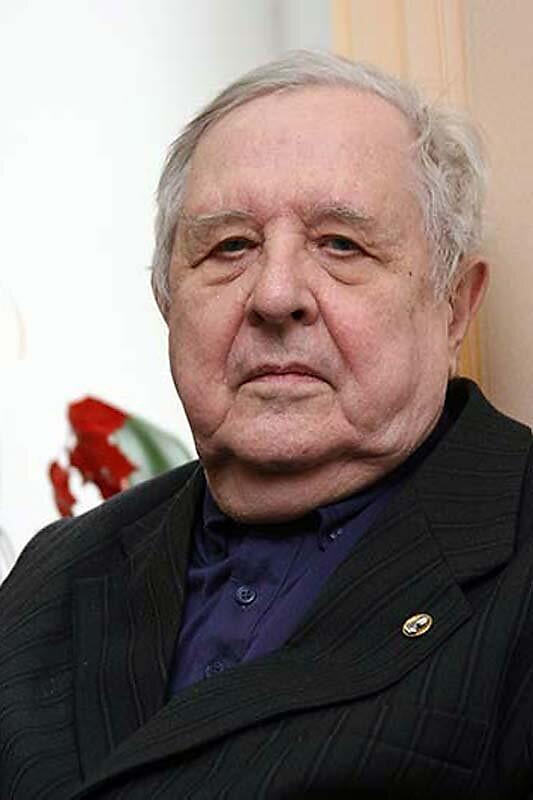
Y.K. Tolstoy
(24.09.1927 — 10.11.2025)
On November 10, 2025, at the age of 99, Yuri (Georgy) Kirillovich Tolstoy, an outstanding Russian civil lawyer, academician of the Russian Academy of Sciences, professor of the Department of Civil Law of the Faculty of Law of St. Petersburg State University, one of the most authoritative representatives of Russian civil law of the second half of the twentieth and early twenty-first centuries, died.[1] Doctor of Law, Honorary Professor of St. Petersburg University, Honored Scientist of the Russian Federation, Full Cavalier of the Order of Merit for the Fatherland, Honorary Worker of Justice of Russia, awarded the Anatoly Koni Medal.
Biography and academic path
In his autobiographical book “From the Experience”, Y.K. Tolstoy wrote about himself: “The author of these “minds of cold observations and hearts of sorrowful notes” is Tolstoy Georgy (Yuri) Kirillovich, born in 1927, a native of Leningrad, Doctor of Law, Professor of St. Petersburg State University. Russian, non-partisan, married, I have a son Svyatoslav, who was born in 1976, and three granddaughters – Anastasia, Alexandra and Elizaveta. I am considered a specialist in the field of civil and entrepreneurial (economic) law, as well as the theory of law. In addition to working at the Department of Civil Law, for more than 20 years he was Deputy Editor-in-Chief of the journal “Jurisprudence”. I have over 200 scientific works (monographs, textbooks, manuals, articles, brochures, etc.). His main research interests are focused on the improvement of civil legislation, property rights, housing legislation, and the theory of law. For more than 10 years he was a member of the Expert Council of the Higher Attestation Commission for Philosophical and Legal Sciences, a member of the Committee of Constitutional Supervision of the USSR (from the date of its foundation to its self-dissolution).
I am a member of the Council for the Codification and Improvement of Civil Legislation under the President of the Russian Federation.
A descendant of the Tolstoy dynasty. It is believed that our branch comes from Alexei Konstantinovich Tolstoy, although he himself was childless. In our family there were Catherine’s naval commander, the winner of the Battle of Chesme, Admiral Spiridov, and the actor of the Alexandrinsky Theater Yuriev. In addition to Russian, I have Ukrainian blood in my veins (my maternal grandfather Glushkov is Ukrainian), German (my paternal great-grandmother is German), French (my maternal great-grandmother is a Russified Frenchwoman from the Benois family – Elizaveta Alexandrovna Baranova) and Armenian (my great-grandfather on my mother’s side is Armenian Sanjanov, artillery general of the Russian army, one of the participants in the Russian-Turkish war). As in almost all noble families, I also have Tatar blood, as evidenced by the photos of my father and his sisters (my aunts). I am proud of my international origin. That is why I consider the interethnic strife that arose after the collapse of the Soviet Union, which is often accompanied by bloodshed, to be especially savage. I perceive them as a tragedy.
He was born in the family of an engineer, his mother taught foreign languages. In general, in my family, in addition to statesmen and military men, there were engineers (great-grandfather on my father’s side, grandfather on my mother’s side), a lawyer (grandfather on my father’s side).
My paternal grandmother graduated from the University of Lausanne (Switzerland), knew five foreign languages, taught them and was a translator.
I was baptized as George, but I am published as Yuri, so my colleagues know me more as Yuri.
He lost his parents at an early age. My mother died of tuberculosis at the age of 26, when I was one and a half years old, and my father passed away in 1933 at the age of 30, when I was not yet six years old. He was brought up by relatives, first on his father’s side, and then on his mother’s side. He graduated from high school with a gold medal in 1945. In the same year, he entered the Faculty of Law of the University, graduated with honors in 1950, and entered graduate school. In 1953 he defended his Ph.D. thesis, and in 1970 – his doctoral dissertation. Since 1956 – Associate Professor, since 1972 – Professor. My teacher was our greatest lawyer, Academician A. V. Venediktov.
In 2000, he was elected a corresponding member, and in 2003 – an academician of the Russian Academy of Sciences.
He married late, in 1975. Wife: Victoria Petrovna Tolstaya, born in 1939, a survivor of the siege, a music teacher at a pedagogical school, and later a teacher of the history of St. Petersburg in a secondary school. Now he is retired.
He has never been a member of the party (CPSU or any other). He refused to join the party, since each such offer was accompanied by promises of promotion. And it was disgusting. In general, I have felt and still do not trust those who have joined and are joining this or that party, not counting on the meager resources of their intellect.”[2]
Scientific contribution
The works of Yuri Kirillovich Tolstoy occupy a special place in the development of modern Russian civil law. In his studies of the 1950s and 1970s, he paid special attention to the systematics of property rights, the nature of legal entities, the grounds for the emergence and termination of civil law obligations.
Main works:
Property rights in the USSR. Leningrad, 1955. On the Theory of Legal Relations. Leningrad, 1959. Fundamentals of Civil Legislation. Leningrad, 1962. New Civil Code of the RSFSR.Leningrad, 1974. (co-author). Soviet Housing Law. Leningrad, 1967. Soviet housing legislation. Leningrad, 1974. Housing Law: Textbook. Allowance. Moscow, 1996, 2007, Civil Law: Textbook: in 3 ch. Moscow, 1997-2003 (co-author and co-editor). Inheritance Law: Textbook. allowance. Moscow, 1999. From the experience. St. Petersburg, 1999. Pages of memoirs: S.M. Korneev. V.A. Dozortsev, M.I. Piskotin. Moscow, 2004. Pages of memoirs: B.B. Cherepakhin, O.S. Ioffe. Moscow, 2007.
2. Textbook “Civil Law”
Tolstoy was one of the editors and authors of the three-volume textbook “Civil Law” (1997-2003), a key educational complex that withstood many reprints and had a significant impact on several generations of students and young professionals.
He wrote chapters on:
property rights and property rights (Chapters 16–22),
housing law (Chapter 34),
obligations for causing harm (Chapter 50),
obligations from unjust enrichment (Chapter 51),
inheritance law (Chapters 62-65).
These materials were distinguished by consistency, attention to sources and a desire for the internal logic of legal constructions.
2. Research of legal entities
In the polemics of the 1950s about the essence of state legal entities, Tolstoy formulated one of the most well-known concepts in Russian science – the “director’s theory”, within the framework of which the director was considered as the main bearer of the legal personality of the organization. This theory played an important role in shaping the doctrinal discussion that followed.
3. Training
Over the decades of teaching, Tolstoy became the scientific supervisor of major legal scholars, including well-known civil lawyers, teachers and authors of modern textbooks. His students were V.V. Putin, D.A. Medvedev, A.A. Ivanov, A.I. Bastrykin and many other prominent lawyers. His lectures were distinguished by clarity of structure and attention to the details of dogmatics. Close comradely relations connected Y.K. Tolstoy with professors O.S. Ioffe, A.A. Sobchak, A.P. Sergeev.
4. Public and expert activities
In 1990–1991, G. K. Tolstoy was a member of the Committee for Constitutional Supervision of the USSR, a body that preceded modern constitutional justice. He participated in the discussion of the problems of codification of civil legislation, was a member of the Presidential Council for Legal Reform. In 2001, he became a laureate of the Prize of the Government of the Russian Federation in the field of education for his participation in the creation of a fundamental training course in civil law.
Memory
Professor Yuri (Georgy) Kirillovich Tolstoy left a significant scientific legacy, which is of great value for researchers of civil law, teachers and practicing lawyers. His works continue to be used in the academic process, and the influence on the development of Russian civil law remains significant.
I would like to conclude this essay with the poems of Y.K. Tolstoy himself:
When weakened hands can scarcely cling
To once-familiar, trusted quill,
Do not lament your suffering —
Prepare to meet the hour still.
Set all your papers into place,
Remove what must not longer stay;
Let faithful books, in silent grace,
Console your soul in their own way.
As Pushkin did, survey once more
Your steadfast friends of many years,
Who gaze with sadness as before:
“Forsake us not — incline thine ears!”
Though not the loudest voice in choir,
You walked your path through storm and spite;
And when life’s flame burned ever drier,
You still pressed on toward the light.
No lofty sage you claimed to be,
But open-hearted, kind to all;
You bent not to life’s tempests free —
Now here, now there, at fate’s soft call.
So into whose devoted hand
Shall all you treasured be conveyed,
When parting comes, as Heaven planned,
As long ago by Him was said?
— Yu. K. Tolstoy[3]
References
Electronic resource: https://www.kommersant.ru/doc/8193197
Electronic resource: https://www.litres.ru/book/uriy-kirillovich-tolstoy/iz-perezhitogo-69442840/chitat-onlayn
Electronic resource: https://dzen.ru/a/WsJIul9JZ_9JYBSt; https://science.mail.ru/news/39396-umer-professor-spbgu-yurij-tolstoj/
