Articles that inspire and inform!
Publisher of POLIS LLC
Address: 190000, Saint Petersburg,
35/15 Kazanskaya Street
Publisher of POLIS LLC
Address: 190000, Saint Petersburg,
35/15 Kazanskaya Street

UDC: 001.92:94(470):929
IN MEMORY OF PROFESSOR GALINA NIKIFOROVNA GALENSKAYA
Korablin Andrey Vladimirovich
St. Petersburg State University
Law Faculty (1992)
Abstract: The essay is dedicated to the memory of Professor Lyudmila Nikiforovna Galenskaya (1932–2025), an outstanding scholar of international relations, Honorary Professor of St. Petersburg State University. The main stages of her scientific activity, her contribution to the development of private and transnational international law, the formation of the Russian school of international law and her role in the education of the generation of international lawyers are briefly stated.
Keywords: Lyudmila Nikiforovna Galenskaya, international law, private international law, transnational law, legal science, St. Petersburg State University.
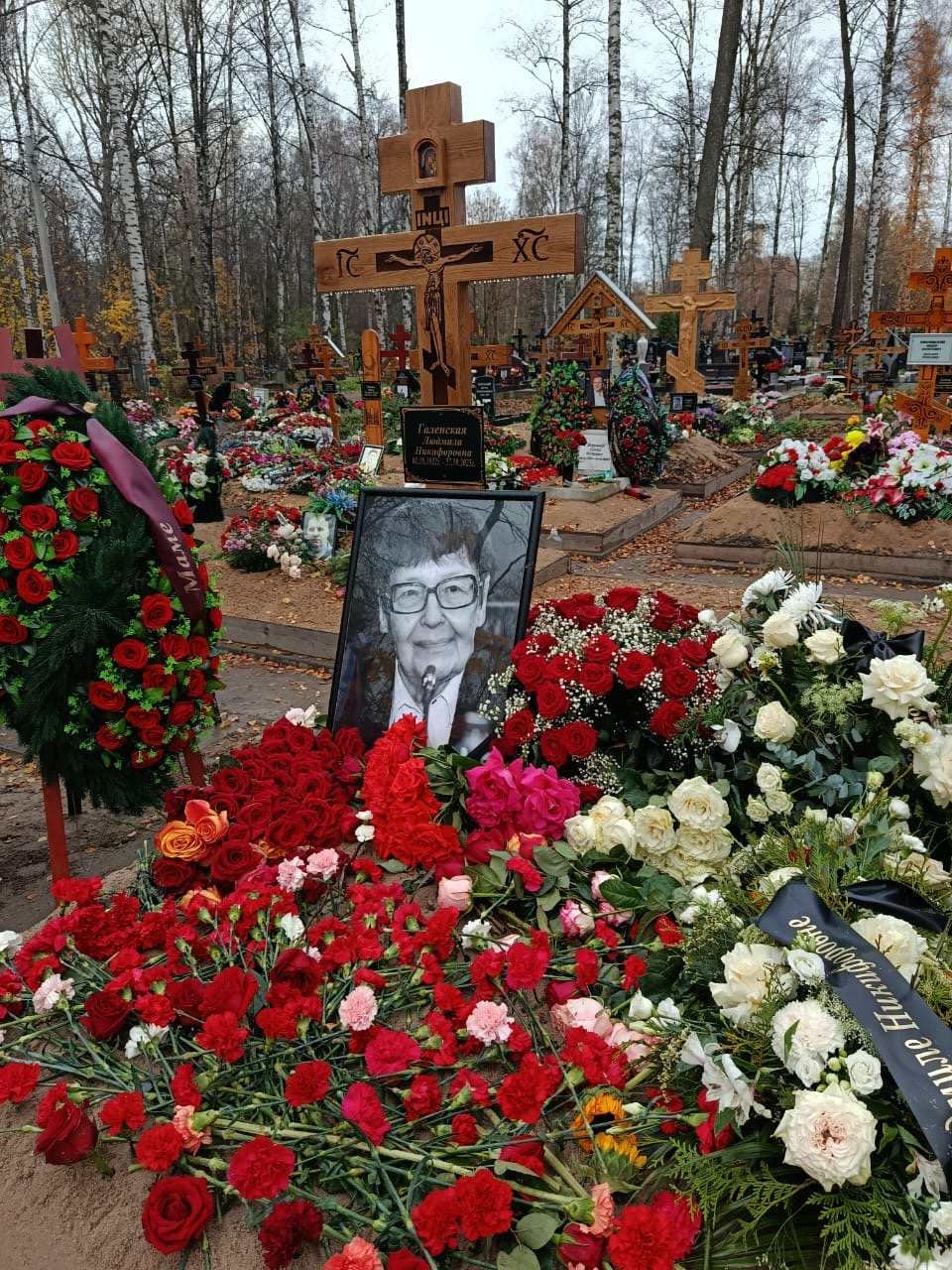
Sad news came from St. Petersburg. At the age of 93, Lyudmila Nikiforovna Galenskaya, an outstanding international scholar, Honorary Professor of St. Petersburg State University, Professor, Doctor of Law, Honored Scientist of the Russian Federation, author of numerous scientific works, founder of a whole field of research in the field of public and private international law, passed away.[1]
Lyudmila Nikiforovna was one of the first to systematically study private international law in the USSR. She introduced the course “Private International Law” into the curriculum of St Petersburg University, created a school within which she brought up several generations of researchers, diplomats and lawyers. Her writings cover international cooperation in the field of culture, state responsibility, transnational law and human rights.
She knew how to combine scientific rigor with rare inner dignity. For those who had the honor to know her personally, Lyudmila Nikiforovna embodied the university tradition – calm, demanding, but friendly. She was a talented teacher, a real Teacher.
I was lucky to be a student of Professor Galenskaya, so I want to dedicate this essay to her scientific activities.
Biography
Lyudmila Nikiforovna Galenskaya (October 1, 1932 – October 27, 2025) was born in Vitebsk (Byelorussian SSR) on October 1, 1932. After graduating from high school, she studied in 1949-1954 at the Faculty of Law of Leningrad State University. In 1954-1962 she worked as an arbitrator of the Arbitration Court, an investigator of the prosecutor’s office, and a legal adviser. In 1962-1965 she was a postgraduate student at the Faculty of Law of Leningrad State University.
In 1965, she received the degree of Candidate of Legal Sciences and began to work as an assistant of the department, then as an associate professor of the Faculty of Law of Leningrad State University. In 1975, she was the scientific supervisor of V.V. Putin’s thesis on the topic “The Most Favored Nation Principle in International Law”. In 1980, she was awarded the degree of Doctor of Law and the academic title of Professor. He was the author of over 120 scientific papers, including six monographs. Under her leadership, 21 candidate’s, four doctoral dissertations and numerous graduation theses were defended. Lyudmila Nikiforovna led a large scientific publishing activity: from 1992 to 2023 she was the editor-in-chief of the Russian Yearbook of International Law, in 1993 she created and for a long time published the first bilingual (in Russian and English) Journal of Private International Law in Russia. being not only the editor-in-chief, but also the translator, editor and author of publications. In 2021, Lyudmila Nikiforovna became the winner of the highest legal award in Russia – “Lawyer of the Year”. On March 31, 2025, Lyudmila Nikiforovna was awarded the title of Honorary Professor of St. Petersburg State University.[2]
The Scientific Heritage of Professor Galenskaya
The entire scientific life of Lyudmila Nikiforovna is associated with international law. The topic of her Ph.D. thesis is “The Right of Asylum in Contemporary International Law (1965). On the basis of her dissertation, Professor Galenskaya published the monograph “The Right of Asylum: (International Legal Issues) in 1968.[3]
For many years, Professor Galenskaya dealt with the problems of international crime. In 1972, she published the book “International Fight against Crime”.[4] In 1978, she published another work on the same topic, Legal Problems of Cooperation between States in the Fight against Crime.[5]
In 1979, Lyudmila Nikiforovna defended her doctoral dissertation on the topic “The main directions of cooperation between states in the fight against crime: legal problems”.[6] It can be considered a pioneer of a new direction in international law, its legal concepts were later implemented in international conventions and treaties.
Lyudmila Nikiforovna is the author of the textbook Private International Law, published in 1983, I myself studied from this monograph.[7] One of the main postulates of L.N. Galenskaya: “The existence of a single method of legal regulation for different subjects of regulation does not allow reducing private international law to a simple sum of conflict of laws rules.”[8]
“Her approach to the legal nature of PIL was fundamental. The so-called civil approach to the interpretation of the legal essence of PIL, when it was perceived as a kind of “appendage” to civil law, was dominant in the scientific world at that time (and, unfortunately, even now, both in our country and abroad). L. N. Galenskaya proposed a broader view of PIL, according to which cross-border private law relations cannot be reduced exclusively to civil law relations. Such relations can arise in a wide range of interrelations: production, financial, investment, labor, marriage and family, etc. L. N. Galenskaya substantiated a wide range of participants in non-governmental relations of a cross-border nature: international non-governmental organizations, transnational corporations (TNCs), subjects of the Federation, administrative units of unitary states, etc.; it was shown how closely public and private principles are intertwined in PIL. “This is clearly seen,” she wrote, “on the example of any international treaty, the subject of which is traditional private law issues: the contract is concluded by states and therefore is an international public law contract, but it regulates private law relations, and, accordingly, it is referred to the sources of private international law (for example, bill of exchange conventions of 1930)” (Galenskaya 2003, 7–8)”.[9]
In 1987. L. N. Galenskaya publishes the book “Muses and Law: Legal Issues of International Cooperation in the Field of Culture”.[10] It studies the legal regulation of interaction between states in the field of culture (cooperation between museums and libraries, holding international exhibitions, joint production of films, etc.).
In 1999, Lyudmila Galenskaya became one of the initiators of the creation of the Commission for the International Legal Assessment of the Events around the Federal Republic of Yugoslavia. The Commission was formed by the State Duma of the Russian Federation, its purpose was to legally qualify NATO’s actions on the territory of Yugoslavia during the conflict.
In 2011, Lyudmila Galenskaya was invited to give a lecture for the UN Audiovisual Library. As the topic of the lecture, Lyudmila Galenskaya chose one of the most complex issues in international law – legal principles. Professor Galenskaya asserted: “The category of principles acts as an independent legal regulator of international relations, and not only an interpretative guideline.”[11]
Finally, L. N. Galenskaya created her own original theory of transnational law. In her fundamental work “Legal Regulation of Transnational Relations”,[12] she managed to find a solution to the issue that has long been a stumbling block in legal science. According to L. N. Galenskaya, the characteristic features of transnational law are the objectivity of its existence, its coordination nature, the presence of sovereign, non-sovereign power and non-sovereign non-governmental subjects, and the limitation of the objects of regulation. Cross-border law should be divided into public and private. At the same time, within the framework of transnational law, separate branches can be distinguished: economic, family, banking, transport, administrative, tax, sports, financial, cultural, procedural law, etc. At the same time, L. N. Galenskaya points out that, occupying a special position in the system of legal regulation, transnational law is closely related to international public and domestic law. Such a connection, and the author emphasizes this repeatedly, is predetermined by the fact that all international relations are regulated by the basic principles of international law, the establishment of
which are binding on both states and other participants in these relations. Within the framework of the basic principles of international law and general principles of law, the development of transnational law will be carried out in the future (Galenskaya 2022, p. 25).
L. N. Galenskaya attaches decisive importance to such a specific legal category as principles, which is reflected in the structure of the monograph under consideration: the issues of the subjects of transnational law, its sources and methods of coercion are preceded by the consideration of the issue of the principles of transnational law.
We believe that this approach is not accidental. Firstly, the category of principles has long been the subject of detailed study by the author, which is described in detail in a number of previous well-known publications by L. N. Galenskaya and in her above-mentioned lecture posted on the website of the UN Library. Secondly, L. N. Galenskaya is inclined to believe that principles should be considered not as a key idea in law or a rule of law, but as an independent legal category (Galenskaya 2022, p. 40). Thirdly, she emphasizes that transnational law is at the stage of formation, therefore such generalized regulators as principles are of great importance both for the practical legal regulation of the relevant relations, and as a vector for the further formation of transnational law.
The chapter on the principles of transnational law, one of the most interesting sections of the book, consists of two paragraphs. The first of them is devoted to the consideration of principles as specific legal regulators. It analyzes the basic principles of international law and their effect in the sphere of transnational relations. The innovation is the second paragraph devoted to the special principles of legal regulation of transnational relations.
L. N. Galenskaya identifies eight such principles: the principle of sovereign equality of national law; the principle of equality of subjects; the principle that participation in transnational relations is possible only with the general or special permission of the state; the principle of freedom of subjects to participate in transnational relations; the principle of non-discrimination; the principle of limited self-regulation; the principle of permanent communication with the state of nationality of the subject; the principle of legal protection (Galenskaya 2022, pp. 55–74).[13]
The scientific heritage of Professor L.N. Galenskaya continues to live on – in university courses, in the works of her students and in the very structure of modern international law. The memory of Lyudmila Nikiforovna Galenskaya is the memory of an entire era, a time when university science was a true service.
References
1. Electronic resource: https://rg.ru/2025/10/29/ushla-iz-zhizni-pochetnyj-professor-spbgu-liudmila-galenskaia.html
2. Electronic resource: https://spbu.ru/news-events/novosti/pamyati-pochetnogo-professora-spbgu-lyudmily-nikiforovny-galenskoy
3. Electronic resource: https://ru.ruwiki.ru/wiki/%D0%93%D0%B0%D0%BB%D0%B5%D0%BD%D1%81%D0%BA%D0%B0%D1%8F,_%D0%9B%D1%8E%D0%B4%D0%BC%D0%B8%D0%BB%D0%B0_%D0%9D%D0%B8%D0%BA%D0%B8%D1%84%D0%BE%D1%80%D0%BE%D0%B2%D0%BD%D0%B0
4. Electronic resource: https://law.spbu.ru/aboutfaculty/teachers/galenskaya/
5. Galenskaya L.N. Mezhdunarodnaya bor’ba s prestupnosti, Moscow: Mezhdunar. otnosheniya, 1972. Electronic resource: https://search.rsl.ru/ru/record/01007242143
6. Galenskaya L.N. Mezhdunarodnaya bor’ba s prestupnosti, Moscow: Mezhdunar. otnosheniya, 1972. Electronic resource: https://search.rsl.ru/ru/record/01007242143
7. Galenskaya L.N. “The Right of Asylum: (International Legal Issues).Moscow. Int. relations. 1968
8. Galenskaya L. N. Pravovyye problemy sotrudnichestva gosudarstva v borbe s prestupnosti [Legal problems of cooperation of states in the fight against crime: monograph]. Leningrad, LGU Publ., 1978.
9. Electronic resource: https://search.rsl.ru/ru/record/01009370650
10. Galenskaya L. N. Mezhdunarodnoye chastnoye pravo: ucheb. allowance. Leningrad, LGU Publ., 1983.
11. Bakhin S. V. Transnational Law: Scientific Breakthrough of Professor Lyudmila Nikiforovna Galenskaya. 2022 VESTNIK ST. PETERSBURG UNIVERSITY, VOL. 13. Iss. 4. Law.
12. Galenskaya L. N. Muses and Law: Legal Issues of International Cooperation in the Field of Culture: Monograph. Leningrad, LGU Publ., 1987.
13. Galenskaya L. N. Kategoriya printsipy kak pravovogo regulirov mezhdunarodnykh otnoshenii [The category of principles as legal regulators of international relations]. St. Petersburg, 2011.
14. Galenskaya L. N. Pravovoye regulirovaniye transnatsional’nykh otnosheniya: monografiya [Legal regulation of transnational relations: monograph]. St. Petersburg: St. Petersburg State University Publ., 2022.
15. Rossiyskiy ezhegodnik mezhdunarodnogo prava [Russian Yearbook of International Law]. St. Petersburg, RAMP Publ., 1992–2023.
16. Zhurnal mezhdunarodnogo chastnogo prava [Journal of International Private Law]. – St. Petersburg: “Russia-Neva”, since 1993.
17. Galenskaya L. N. Kommentarii k Pravilam ICC po ispol’zovaniya torgovykh terminov (Incoterms, 2020) [Commentary on the ICC Rules on the Use of Trade Terms (Incoterms, 2020)]. Moscow: Garant System, 2020.
https://spbu.ru/news-events/novosti/pamyati-pochetnogo-professora-spbgu-lyudmily-nikiforovny-galenskoy
https://ru.ruwiki.ru/wiki/%D0%93%D0%B0%D0%BB%D0%B5%D0%BD%D1%81%D0%BA%D0%B0%D1%8F,_%D0%9B%D1%8E%D0%B4%D0%BC%D0%B8%D0%BB%D0%B0_%D0%9D%D0%B8%D0%BA%D0%B8%D1%84%D0%BE%D1%80%D0%BE%D0%B2%D0%BD%D0%B0
https://law.spbu.ru/aboutfaculty/teachers/galenskaya/ ↑
