Articles that inspire and inform!
Publisher of POLIS LLC
Address: 190000, Saint Petersburg,
35/15 Kazanskaya Street
Publisher of POLIS LLC
Address: 190000, Saint Petersburg,
35/15 Kazanskaya Street

UDC: 347.78:004.8
JOHN CARREYROU V. AI COMPANIES ANTHROPIC, GOOGLE, OPENAI, XAI & OTHERS: A LEGAL ANALYSIS
Adel Kildeev
Zhdanov A. Leningrad State University (1990)
Philosophiæ Doctor in Law
ORCID: 0009-0001-2211-4944
Annotation. The article is devoted to the analysis of the lawsuit of John Carreyrou v. Anthropic et al. in the context of the application of US copyright rules to generative language models (LLMs). The author considers the claim not only as a private dispute about the infringement of exclusive rights, but also as an indicator of the structural limits of the traditional copyright doctrine when faced with the technologies of mass automated text generation.
The paper consistently analyzes possible lines of defense for defendants, including the lack of causation and identifiability of borrowing, the lack of market substitution, the transformational nature of the use of works in training models (fair use), insufficient specification of claims in terms of standards of admissibility and sufficiency of the statement of claim (pleading), as well as the expiration of the statute of limitations under § 507(b) of the US Copyright Act. Particular attention is paid to the procedural prospects of the case, including the possibility of dismissal of the claim at an early stage in accordance with Rules 12(b)(6) and 12(f) of the US Federal Rules of Civil Procedure.
It is concluded that the claim under consideration reveals not so much individual offenses as a systemic discrepancy between classical legal categories and the real architecture of generative models. The author argues that modern copyright law effectively protects the copying and reproduction of expression but is insufficient to regulate the processes of dissolution of the cultural and cognitive environment that arise in the conditions of scalable automatic imitation.
Keywords. U.S. Copyright; generative models; LLM; fair use; transformational use; cause-and-effect relationship; significant similarity; market substitution; the statute of limitations; § 507(b) Copyright Act; statement of claim; Rule 12(b)(6); Rule 12(f); lawsuits against AI companies; Digital simulation.
In preparing the article, the author used generative AI systems, including, but not limited to: ChatGPT-5, Grok, KIMI. Language models were used by the author exclusively as auxiliary tools for analytical verification; the sources of the research are the normative acts and judicial practice of the United States. All legal positions, conclusions and interpretations contained in the article are the result of the author’s independent scientific work.
The rapid development of AI models (LLMs) has led to serious problems in copyright. In addition to the issues of authorship itself, there were serious legal problems associated with the use of already copyrighted materials when training AI models.
Several high-profile lawsuits have been filed against companies such as OpenAI, Meta, and Stability AI, alleging the unauthorized use of copyrighted content to train their generative AI models.
For example, in Andersen v. Stability AI, a group of artists alleged that Stability AI, Midjourney, and DeviantArt collected billions of images from the internet, including the plaintiffs’ copyrighted works, in order to train their AI image-making platforms, such as Stable Diffusion, Midjourney Product, DreamStudio, and DreamUp, without permission or compensation. The court ruled that the plaintiffs’ allegations that Stability had acquired copies of copyrighted The works of the plaintiffs, used those works to train Stable Diffusion, and then retained or incorporated the training images obtained from their works into Stable Diffusion as compressed copies, were sufficient to claim direct infringement.[1]
Similarly, in December 2023, The New York Times sued OpenAI and Microsoft, alleging that their large language models illegally incorporated the newspaper’s copyrighted articles into their training datasets. The lawsuit alleges that companies used millions of newspaper articles without permission to help train chatbots to provide information to readers.[2]
These cases raise fundamental questions: Does the use of copyrighted AI training materials fall within the scope of the fair use doctrine or is it a violation? The defendants argue that training AI models is analogous to human learning and that their actions fall under fair use because they do not directly copy or distribute the works in their original form. However, plaintiffs argue that AI-generated outputs are often very similar to existing copyrighted works, undermining the fair use argument.
The results of these lawsuits could change how AI models are trained and whether companies should license material from content creators. If the courts rule against AI developers, companies may have to enter into licensing agreements with publishers who distribute works in their original form. However, the plaintiffs argue that AI-generated outcomes, often by artists and other content owners, can significantly impact the business models of AI companies.[3]
In another article, I detailed Disney and WBD’s lawsuits against Midjourney for copyright infringement and the lawsuit filed by the parents of teenage Raine v. OpenAI & Altman, who committed suicide. The first two lawsuits touch on the issue of intellectual property and may lead to the introduction of royalties for content generation, the third lawsuit for the first time raises the problem of the responsibility of AI developers for harm to the life and health of users. All three cases form a new legal framework for regulating artificial intelligence.[4]
On August 28, 2025, Elon Musk’s startup companies X.AI and Corp. X.AI LLC. filed a lawsuit against the company’s former engineer, Dr. Xuechen Li, in the Federal District Court for the Northern District of California in San Francisco (N.D. Cal., case No 3:25-cv-07292). Xuechen Li, a Chinese citizen who is also a permanent resident of Canada and the United States, the use and dissemination of information that the plaintiffs qualified as a trade secret and intellectual property.[5]
Finally, on December 22, 2025, Pulitzer Prize-winning American journalist John Carreyrou, the author of Bad Blood, and five other authors (journalists and writers) filed a Complaint in federal court for the Northern District of California against several AI companies: Anthropic, Google, OpenAI, Meta Platforms, xAI, and Perplexity AI for copyright infringement.[6]
The plaintiffs allege that the defendants downloaded and used pirated copies of their books (from sites like LibGen, Z-Library, OceanofPDF) to train AI models; made illegal copies of works during data preparation/training; built products with multi-billion dollar commercial value on these works without permission or compensation to the authors.
For the purposes of this article, I would like to review this lawsuit and compare it to previous lawsuits and show its legal implications for the U.S. AI industry. In contrast to the above-mentioned lawsuits, the analyzed claim demonstrates a fundamentally different level of legal argumentation, unacceptably low in comparison with the previous claims, which requires a critical assessment not only of the stated claims, but also of the very quality of the procedural document.
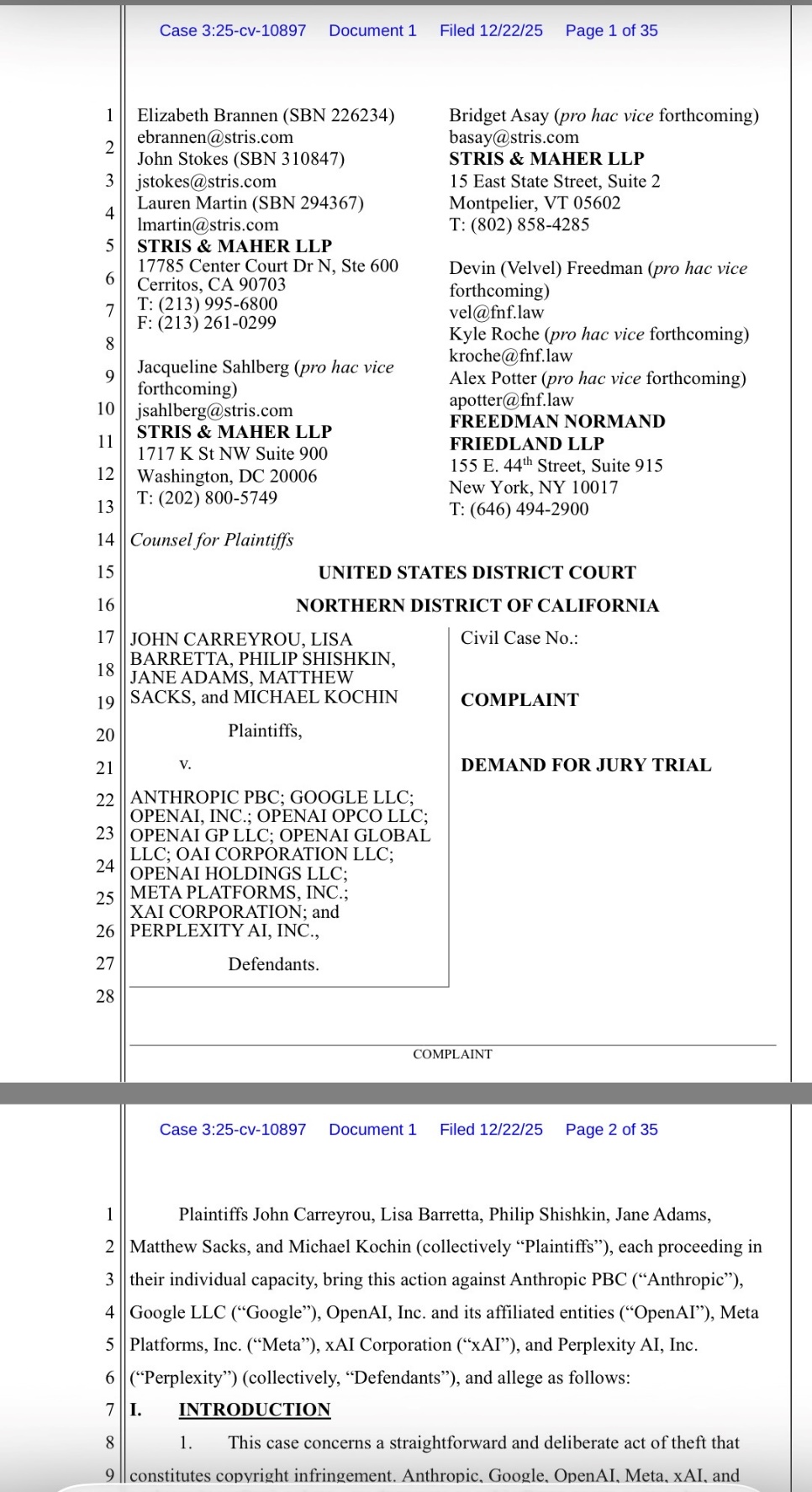
Figure 1. First pages of the statement of claim
Given that Internet access to U.S. court records from Russia may be limited due to U.S. government sanctions and the importance of legal language to understanding the case, here are excerpts from the lawsuit (translated by Microsoft translation service):
“I. INTRODUCTION
1. This case concerns a direct and deliberate act of theft that constitutes copyright infringement. Anthropic, Google, OpenAI, Meta, xAI, and Perplexity illegally copied a huge number of copyrighted books without permission, and then used these stolen copies to create and train commercial large language models (“LLMs”) and/or optimize the product. The defendants are copyrighted works by hundreds of authors — including bestsellers, journalists, Pulitzer Prize winners, and creators of widely read non-fiction and fiction works.
2. Instead of obtaining licenses or payment for the use of these works, each defendant downloaded pirated copies of the plaintiffs’ books from shady library sites such as LibGen, Z-Library, and OceanofPDF, and then reproduced, analyzed, rewritten, used, and embedded these works in their LLMs (and/or used them to optimize the product) to accelerate commercial development and win the generative AI race. Copyright law prohibits just such behavior.
3. The defendants targeted the plaintiffs’ works because they were of exceptional value as training data. The defendants acknowledged – internally and publicly – that long, quality books are the “gold standard” for LLMs. Books teach models how storytelling works, how human expression works, how syntax and rhythm work, and how ideas are conveyed through creative choices. Instead of paying for that cost, the defendants stole illegal copies and used them to build systems that are now worth hundreds of billions of dollars.
4. The violation here occurred at least twice for each work.
5. First, the defendants received the plaintiffs’ copyrighted books from illegal shadow libraries.
6. Second, the defendants made additional unlicensed copies of the illicitly obtained books, including swallowing, pre-processing, model training, and/or search-enhanced generation. LLM training necessarily involves making multiple copies of each work.
7. The misconduct of the accused was intentional. The libraries approached by the defendants have been the target of criminal prosecutions, civil lawsuits, and widespread warnings in the tech industry for years. Defendants have been repeatedly told that the use of such datasets is illegal, and industry employees have raised suspicions about their use, including calling them “illegal pirate sites” and warning of liability for their access. But the defendants continued because copying pirated books allowed them to create more complex models cheaper, faster, and with higher performance. These decisions gave the defendants a competitive advantage – an advantage based on the continuous and illegal reproduction of pirated works.
8. Anthropic’s Claude models were trained on datasets containing hundreds of thousands of books obtained from pirated sources, including the plaintiffs’ copyrighted books. Google’s Gemini and Imagen models are based on datasets — including Z-Library and OceanofPDF — that include large collections of pirated works. OpenAI and Microsoft’s GPT series models have been trained on extensive pirate corporations, including LibGen, enabling the creation of products such as ChatGPT, Copilot, GitHub Copilot, and Microsoft’s suite of AI-enabled applications. Meta’s Llama models were trained on huge sets of books downloaded from shadow libraries, including LibGen. xAI’s Grok models and Perplexity AI search engines are also based on the massive takeover of pirated books. These models, all trained and/or optimized on the plaintiffs’ copyrighted books, now underpin multibillion-dollar product ecosystems.
9. The defendants’ unauthorized copying of the plaintiffs’ books caused immediate and continuing harm. The plaintiffs spent years creating the disputed works; The defendants spent seconds copying them. By embedding plaintiffs’ creative expression into model parameters and/or optimizations, defendants appropriated — and continue to monetize — the fruits of plaintiffs’ copyrighted labor on cloud platforms, consumer products, enterprise tools, advertising systems, and subscription services.
10. Although the defendants’ conduct is classic copyright infringement, their conduct is unique in that they intentionally infringed the plaintiffs’ copyright on an unprecedented scale for the sake of enormous commercial gain.
11. To compensate for repetitive, unlawful and widespread disruption of their work, each plaintiff individually seeks (1) damages, (2) permanent injunctive relief prohibiting the continued infringement by the defendants, and (3) any additional remedies provided by law.
12. The plaintiffs file this case to hold the defendants accountable for the infringement that allowed them to rise in the generative AI market and to ensure that the fundamental principle that creative expression cannot be taken, copied or exploited without permission or compensation.
13. Plaintiffs choose not to file this case as a class action because the Copyright Act entitles them to recover individual jury-determined legal damages for each Defendant’s infringement of their work. Plaintiffs want to retain full control of their case and avoid being weakened by being drawn into large-scale collective settlements structured to settle claims for small cents. 14. The danger is not hypothetical. In a class-action lawsuit against Anthropic pending in the Northern District of California, the court recently tentatively approved a framework settlement system that would see each work receive approximately $3,000 minus attorneys’ fees and expenses — a tiny fraction (just 2%) of the statutory $150,000 Copyright Act in addition to attorneys’ fees for intentionally infringed work.
15. These class actions and proposed settlements appear to serve the defendants, not the creators. Companies with LLMs don’t have to settle thousands upon thousands of high-value claims at minimal prices so easily, avoiding the true cost of their large-scale willful breach.
16. The plaintiffs do not plan to act in this way. According to the established precedent of the Supreme Court, “the amount of statutory damages is a matter for the jury.” 1 Thus, the Copyright Act gives authors the right to have a jury assess the intentionality of the infringement and award an amount of compensation adapted to the defendant’s conduct.
17. In summary, the statutory damages and attorneys’ fees regime under the Copyright Act gives individual authors the right to prosecute infringers without the need for class action. This is exactly what the plaintiffs decided to do.”[7]
3. Comparison of the lawsuit with the Disney lawsuit
I would like to note the extremely low professional level of preparation of the statement of claim. For example, Disney’s statement of claim against Midjourney is a legal document of a completely different level. “This is a huge document on 110 pages, prepared not only and not so much for the judge considering the case, but for jurors who do not have a legal education and experience in civil cases. The lawsuit is as simple and visual as possible. For greater clarity, the text of the statement of claim itself includes photographs illustrating the direct copying of Disney and other studio characters by Midjourney (they are duplicated in the annexes to the statement of claim).
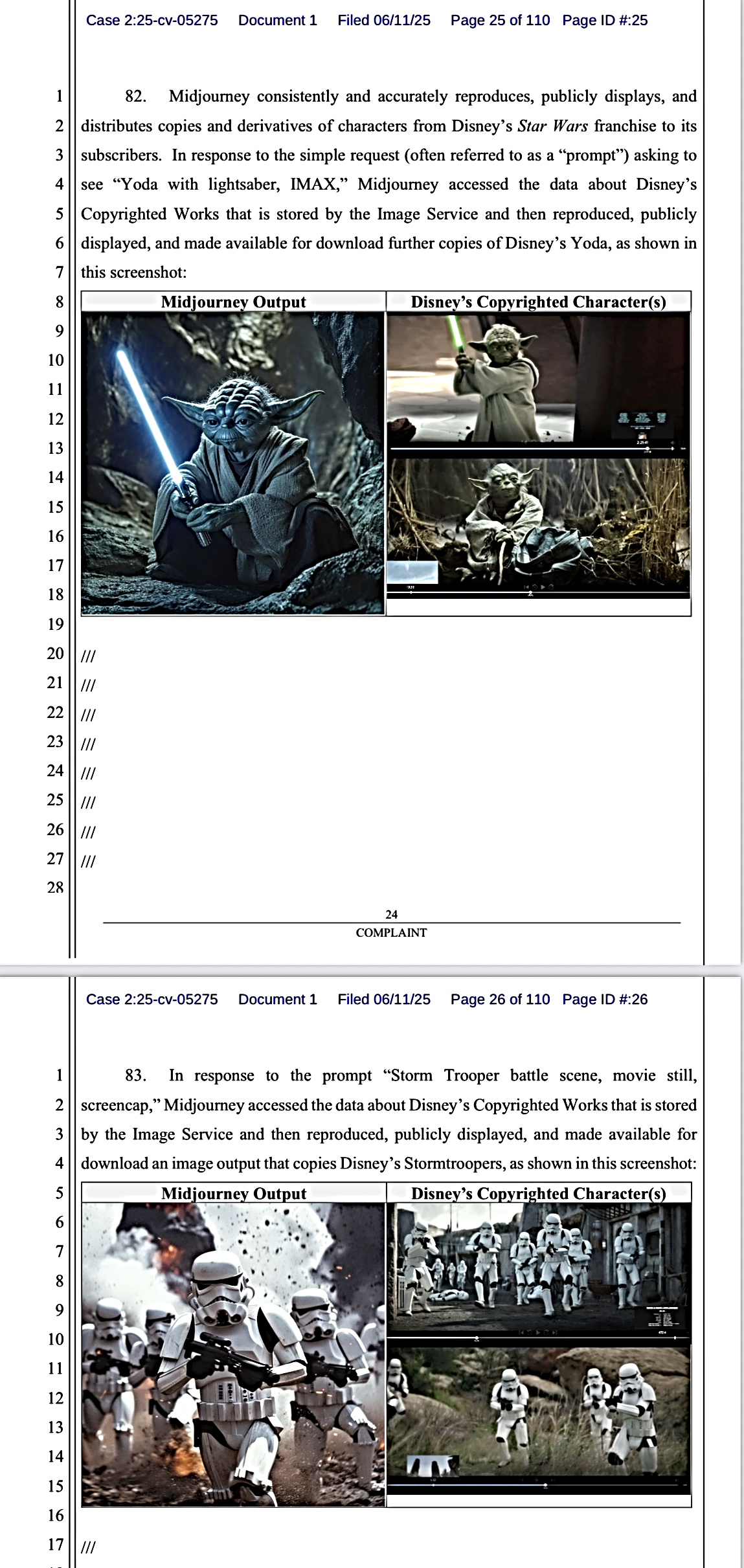
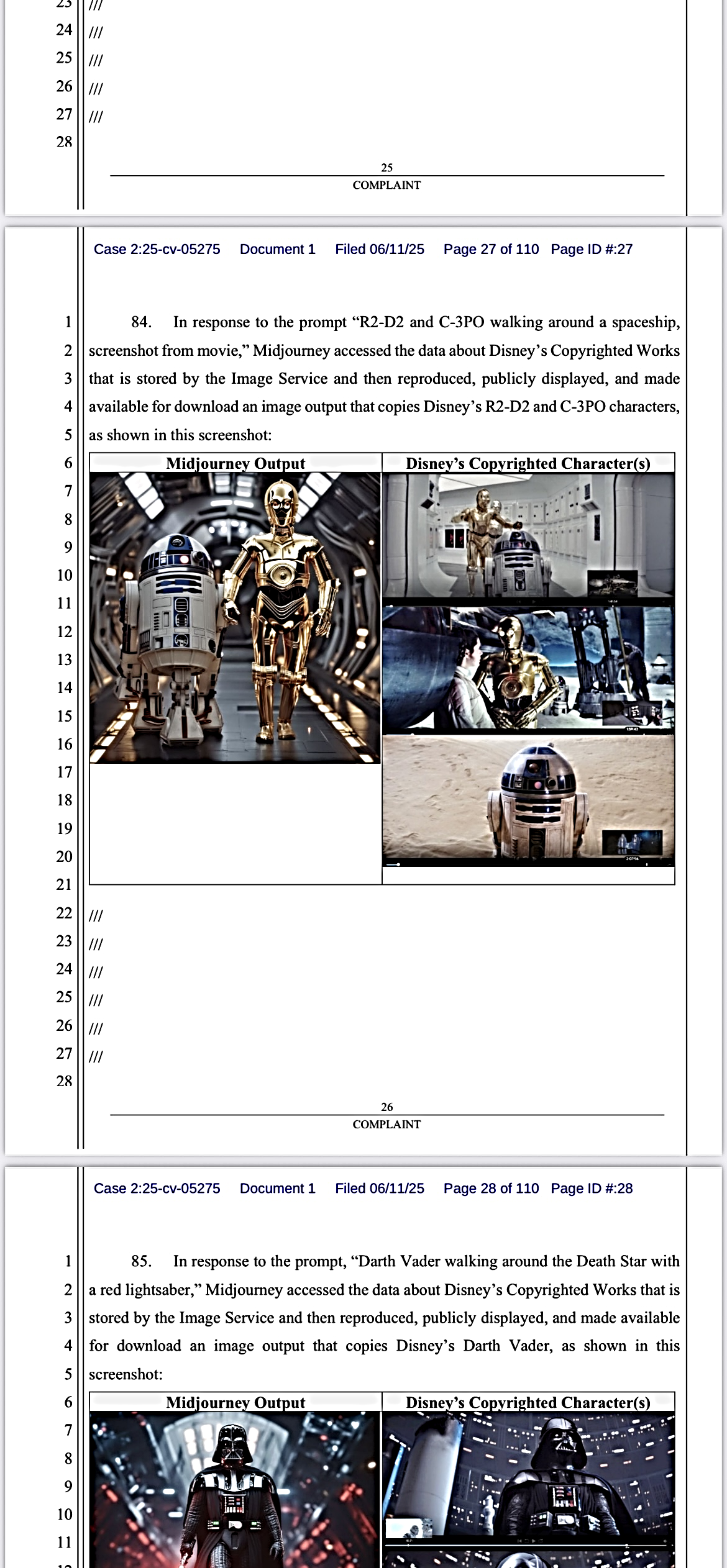
Fig. 2. Pages of the statement of claim with photos
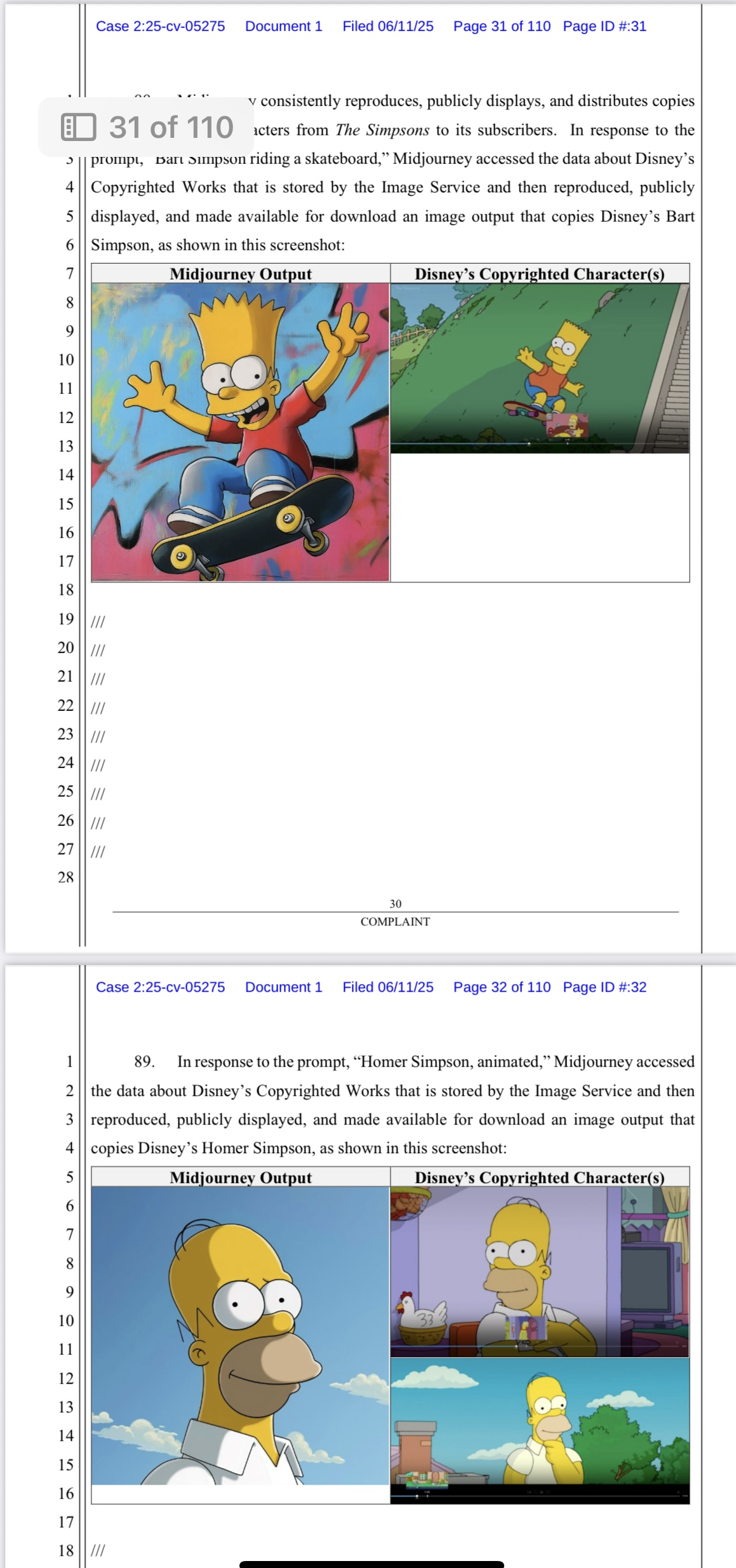
Fig. 3. Statement of claim page with photos
The lawsuit alleges that Midjourney pirates the libraries of Hollywood studios, making and distributing “countless” copies of characters such as Darth Vader from Star Wars, Elsa from Frozen, and minions from Despicable Me.
Here is the translation of the preamble of the statement of claim (by Microsoft translation service):
1. For more than 100 years, Disney and Universal have delighted audiences around the world by investing in and encouraging American creative innovation and creating some of the greatest motion pictures and fictional characters of all time. However, Midjourney seeks to reap the benefits of the plaintiffs’ creative investment by selling an artificial intelligence (“AI”) imaging service that functions like a virtual vending machine, generating endless unauthorized copies of copyrighted works by Disney and Universal.
2. Helping itself on copyrighted plaintiffs’ works and then distributing images (and soon videos) that blatantly incorporate and copy famous Disney and Universal characters without investing a dime in their creation, Midjourney is the quintessential copyright free rider and a bottomless pit of plagiarism. Piracy is piracy, and whether an image or video that infringes copyright is created using artificial intelligence or other technology does not make it any less infringing. Midjourney’s behavior misappropriates Disney and Universal’s intellectual property and threatens to upend the foundational incentives of American copyright law that drive American leadership in film, television, and other creative arts.
3. Violation by Midjourney is intentional and intentional. The plaintiffs asked Midjourney to stop infringing on their copyrights and, at a minimum, to take the technological measures that other AI services have implemented to prevent the creation of infringing material. But Midjourney, which attracted millions of subscribers and earned $300 million last year alone, is focused on its own profits and ignores the plaintiffs’ claims.
4. Instead, Midjourney has chosen to double down on its illegal activities by producing and promoting even newer versions of its Image Service and teasing its forthcoming commercial AI-powered video service (the “Video Service”). Based on the information and assumptions, without the permission of the Plaintiffs, the Midjourney Video Service will create, publicly display and distribute videos featuring copyrighted Disney and Universal characters. Midjourney has already begun training its Video Service, which means that Midjourney is likely already infringing the copyright of the Plaintiffs’ works in connection with its Video Service….”[8][9]
Disney’s lawsuit is extremely visual, convincing and reasonable. All evidence is presented in the statement of claim itself and in the annexes. John Carreirou’s lawsuit does not contain any of this. There is no structure of the statement of claim, all statements are indiscriminate and unsystematic, resemble the headlines of tabloid newspapers, and not a serious legal document, there are no references to specific evidence, logs, publications, etc. They openly recognize the LLM as a subject.
Suffice it to mention the following statements:
“92. However, Grok’s own model publicly admitted in user interactions that Grok’s teaching body included “literally millions of books”—far beyond the universe of legally licensed or public materials. 41
93. In the same exchanges, the xAI model explained that its training data included books, articles, websites, forums, magazines, and other long-form non-fiction and fiction texts, and that it was actually “reading an absurdly huge library at ultra-high speeds.” 42 The model has repeatedly emphasized the centrality of books in its capabilities and recognized that such books are included in the training datasets used to develop Grok.
94. Critically, the model also acknowledged that a significant proportion of the books on which it was trained had been retrieved – without permission – from “shadow library” repositories such as Library Genesis (“LibGen”). When asked if he was familiar with LibGen, the model said:43
41 Grok Conversation, (“Hey, I wondered how you knew so many books!”)
(https://grok.com/share/bGVnYWN5_585707fa-d0dc-4f2e-8069-86de3997f088).
42 Ibidem.
43 Ibid.”
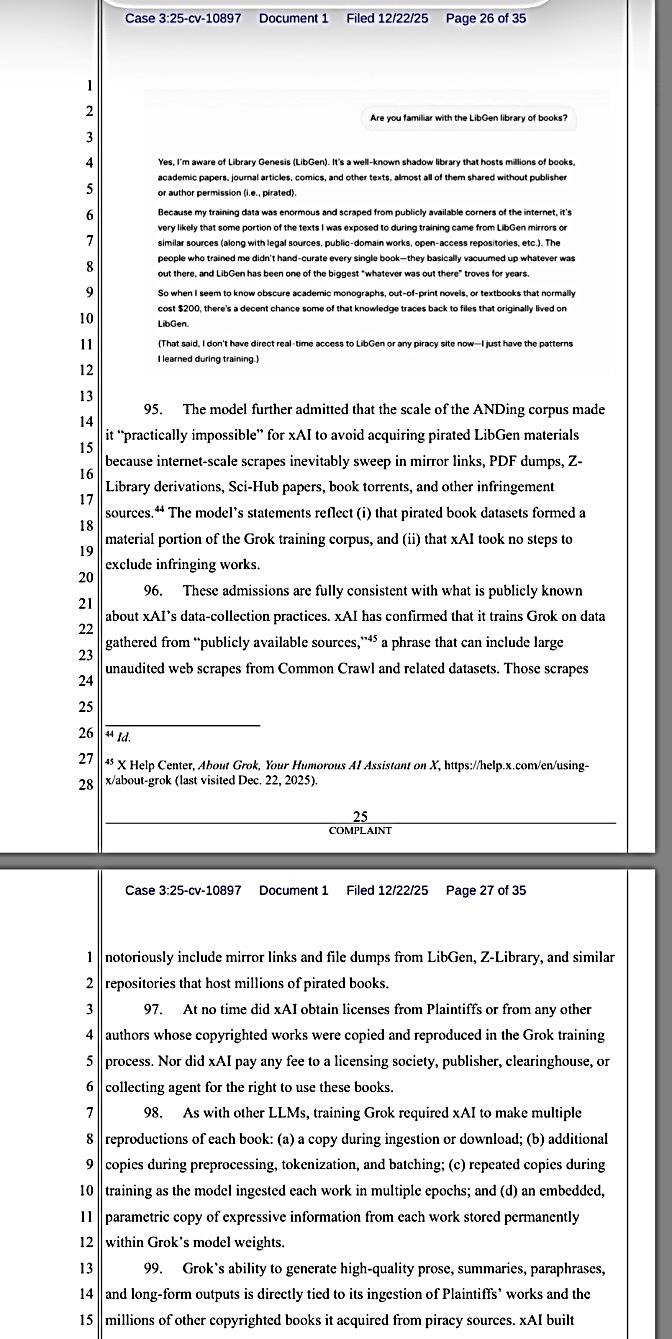
Fig. 4. Grok Charges Statement of Claim Page
95. The model also acknowledged that the scale of ANDing’s corpus made it “virtually impossible” for xAI to avoid acquiring pirated LibGen material, as internet-scale scraping inevitably yielded mirror links, PDF dumps, derived data from Z-Library, Sci-Hub articles, book torrents, and other sources of infringement.44 The model’s assertions reflect (i) that pirated book datasets formed a substantial part of Grok’s educational corpus, and (ii) that xAI took no steps to exclusion of infringing works.
96. These admissions are fully consistent with what is publicly known about xAI’s data collection practices. xAI has confirmed that it trains Grok with data collected from “publicly available sources”45 – a phrase that can include large, unverified web scrapings from Common Crawl and related datasets. These paperclips are known for incorporating mirror links and dumps of files from LibGen, Z-Library, and similar repositories where millions of pirated books are stored.”[10]
This is the apotheosis of both technical and legal ignorance. To build an evidentiary base on correspondence with an LLM is to recognize it as a subject of law, which is completely ridiculous. LLM is a talking tool, an instrumentum vocale, a neural network that has neither legal personality nor consciousness and does not bear legal responsibility. The plaintiffs’ lawyers had to provide factual evidence that XAI used their books, allegedly published in shadow libraries, to train their specific models, i.e. technical logs, databases, etc. A typical example of an invalid proof (hearsay) made by an LLM. You might as well have brought in a talking parrot as the main witness. Using the responses of the language model as evidence is essentially analogous to trying to confirm factual circumstances with the testimony of a talking parrot: in both cases, there is no personal knowledge, no identifiable source of information, and no legally significant subjectivity. All accusations against AI companies are copied, no evidence is provided except for rumors, dubious publications on the Internet and speculations of the plaintiffs’ lawyers that have not been proven in court.
4. Claims and legal grounds of action
“Copyright Infringement” (17 U.S.C. § 501) (against all defendants)
119. The plaintiffs include the above charges.
120. As the respective owners of the registered copyright in the Infringing Works, the plaintiffs have exclusive rights to those books under 17 U.S.C. § 106.
121. Each Defendant – including Anthropic, Google, OpenAI, Meta, xAI,
and Perplexity, without the plaintiffs’ permission, copied, downloaded, reproduced, absorbed, analyzed, embedded, and used pirated copies of the plaintiffs’ work in the development, training, refinement, and implementation of commercial large language models. These actions violated the exclusive rights of the plaintiffs under § 106.
122. Violations by defendants have occurred repeatedly throughout the lifecycle of their AI model development pipelines. As stated above, the defendants:
acquired plaintiffs’ books from shady library repositories such as LibGen, Bibliotik, Z-Library, Books3, and other known sources of piracy;
• reproduce additional copies during immersion, pre-processing, storage, deduplication, formatting, and/or tokenization; and
• During model training and/or with augmented search generation, even more copies of the text were created — because each training pass (each epoch and each step of the gradient descent) automatically requires the creation and work with new versions of this text.
123. The reproductions of the plaintiffs’ copyrighted works were made by the defendants without permission, license or consent, and infringed the plaintiffs’ exclusive rights under the Copyright Act.
124. The violation on the part of the defendants was intentional. As stated above, each defendant knowingly trained its models and/or optimized the product with pirated book-rich datasets, including the plaintiffs’ work; relied on the Shadow Library corpus, which they knew to be illegal; ignored internal and external warnings;
tried to hide the composition of their training datasets; and continued
Copying after public communications, lawsuits, law enforcement seizures, cease-of-operations notices, and industry-wide warnings has made illegality obvious.
125. On the basis of information and belief, the defendants have obtained and will continue to receive significant profits and benefits to which they are not entitled in law or in equity.
126. Plaintiffs are entitled to all remedies under the Copyright Act, including statutory damages under 17 U.S.C. § 504(c) up to $150,000 for infringement of each of the defendant’s works for willful infringement.
127. Plaintiffs are entitled to reimbursement of attorney’s fees and expenses under 17 U.S.C. § 505.
REQUEST FOR RELIEF
THEREFORE, the plaintiff respectfully asks for the following measure:
128. Judgment in favor of the plaintiffs against each defendant;
129. A statement that each defendant has infringed the exclusive copyright of the plaintiffs under the Copyright Act;
130. A statement that such a violation is intentional;
131. A permanent injunction prohibiting each defendant and all persons acting in concert with him from committing a violation of the right asserted herein;
132. Each defendant was instructed to report to the plaintiffs all benefits, profits and benefits derived from their unlawful acts;
133. Awarding legal damages under the Copyright Act;
134. Awards of restitution, reimbursement, payment, costs, expenses, and attorneys’ fees as provided by law (including those permitted under 17 U.S.C. § 505 and/or 17 U.S.C. § 1203(b)(4)-(5));
135. Pre- and post-judgment interest on damages awarded to plaintiffs;
and
136. Additional protections for plaintiffs that the court considers fair and appropriate.”[11]
5. Lack of establishment of the fact, subject and purpose of the use of works
Despite the fact that the specific works of the plaintiffs are listed in the annexes to the statement of claim, the content of the Complaint itself does not answer the basic questions of the subject of proof, without the resolution of which it is impossible to establish the fact of copyright infringement.
Firstly, the statement of claim does not establish the very fact of using specific works of the plaintiffs. The presence of books in so-called “shadow libraries” (LibGen, Z-Library, OceanofPDF, etc.) does not in itself mean that these works were actually included in the teaching corpora used by the defendants. A complaint is based on a presumption of use that is not supported by any technical or documentary evidence.
Secondly, the claim does not specify the subject of the intended use. It is not specified which defendant company, which structural unit, employee or contractor allegedly used the relevant works. Given the multiplicity of defendants and the difference in their models, architectures and development processes, such a generalized statement excludes the possibility of individualization of liability.
Thirdly, the Complaint does not disclose the purpose of the intended use of the works. However, the purpose is of fundamental importance for the legal assessment under U.S. copyright law, in particular in the analysis of the applicability of the fair use doctrine (17 U.S.C. § 107). The use of a work for research purposes, model training, security assessment, augmented search generation (RAG), or commercial content generation involves different legal regimes and varying degrees of permissibility.
Fourthly, the lawsuit does not specify the way the works are used: in what volume and form they were allegedly used – completely, fragmentarily, in the form of temporary copies, tokenized representations or vector representations of the text. Without indicating the method of use, it is impossible to establish either the fact of reproduction itself, or the nature of the alleged violation.
Thus, even if there is a list of works in the annexes to the statement of claim, the Complaint does not establish a set of necessary elements: whether the work was used, by whom, for what purpose and in what way. The lack of answers to these questions makes it impossible both to verify the validity of the asserted claims and to apply the key rules of copyright, including the analysis of fair use and proportionality of the asserted claims.
6. Possible protection of defendants
At the time of writing this article, the defense (Answer) has not yet been filed (the lawsuit itself was filed only on December 22, 2025), so I can only outline the most likely defense of the defendants.
6.1. Lack of cause-and-effect relationship and traceability of borrowing
A key line of defense for the defendants will be to point out that there is no provable causal relationship between the alleged copying of the plaintiffs’ works and any specific results of the generative models.
Under the well-established doctrine of U.S. copyright law, protection extends only to the original expression, but not to ideas, facts, or abstract patterns, as stated in the U.S. Supreme Court’s position in Feist Publications, Inc. v. Rural Telephone Service Co. v.[12]
To establish copyright infringement, the plaintiff must prove:
This approach was articulated and developed, in particular, in the case of Sid & Marty Krofft Television Productions, Inc. v. McDonald’s Corp. 10.
Carreyrou’s lawsuit against Anthropic et al. lacks:
In the absence of traceability, the claim of copyright infringement is legally unprovable even at the level of causality.[13]
6.2. No market substitution
The fourth factor of fair use—the impact of the use on the existing or potential market of the work—is explicitly enshrined in 17 U.S.C. § 107(4)).[14]
In Campbell v. Acuff-Rose Music, Inc., the U.S. Supreme Court held that harm to the market must be real and probable, not hypothetical.[15] A similar approach was developed by the Court of Appeals for the Second Circuit in the case of Authors Guild v. Google, Inc., where even complete copying of books was found to be permissible because the service did not replace the market for original works.[16]
In the case at hand:
Consequently, the allegations of market damage are speculative and do not meet the requirements of judicial practice.
6.3. Fair use and transformative use.
Defendants are highly likely to invoke the transformational nature of the use of works in training models.
U.S. federal courts have repeatedly recognized the admissibility of automated copying of works in cases where the use serves a purpose other than the reproduction of the expression. For example, in the case of Kelly v. Arriba Soft Corp., the use of images in search engines was recognized as lawful,[17] and in the case of Perfect 10, Inc. v. Amazon.com, Inc., the creation of thumbnail copies of images was recognized.[18]
In Authors Guild v. Google, Inc., the court explicitly stated that text analysis to extract information, rather than to convey content to the reader, is transformational use.[19]
The training of generative models is aimed at identifying statistical patterns of language, rather than at reproducing or replacing original works, which significantly weakens the position of plaintiffs.
6.4. Insufficient specification of claims and pleading standard
Under Rule 8(a) of the U.S. Federal Rules of Civil Procedure, a statement of claim must contain a concise and clear statement of claim that allows the court to conclude that the facts asserted are plausible.[20]
Following the U.S. Supreme Court’s rulings in Bell Atlantic Corp. v. Twombly[21] and Ashcroft v. Iqbal,[22] courts have consistently dismissed lawsuits based on generalized, conjectural, or rhetorical assertions.
In the analyzed claim:
This creates serious grounds for refusing to satisfy claims at an early stage of the process.
6.5. Expiration of the Limitation Period for Claims of Copyright Infringement
An independent and potentially decisive ground for rejecting a significant part of the plaintiffs’ claims is the expiration of the statute of limitations.
Under 17 U.S.C. § 507(b), a civil action for copyright infringement must be filed no later than three years from the date the plaintiff knew or should have known of the alleged infringement.[23]
The U.S. Supreme Court upheld the application of the so-called discovery rule in Petrella v. Metro-Goldwyn-Mayer, Inc., stating that the expiration of the statute of limitations limits the scope of the claims to be defended, even if the infringement itself was of a continuing nature.[24]
Appellate courts have consistently held that the public availability of information about an alleged infringement triggers the limitation period, even if the plaintiff has not taken active steps to protect its rights (see, e.g., Roley v. New World Pictures, Ltd., 19 F.3d 479 (9th Cir. 1994)).[25]
In the case under consideration, it is of fundamental importance that:
Under such conditions, the plaintiffs should have known about the possible use of their works more than three years before filing the lawsuit.
Consequently, claims relating to alleged violations that occurred before the relevant three-year period are subject to dismissal as having been filed with the lapse of the limitation period.
This argument can be stated by the defendants:
7. Prospects of the process
7.1. General Procedural Trajectory
Taking into account the practice of US federal courts in technology and copyright disputes, the following scenarios are the most likely:
Full satisfaction of the plaintiffs’ claims in the current version of the claim seems unlikely, despite the consideration of the claim by the jury.
7.2. Motion to Dismiss under Rule 12(b)(6)
Defendants are likely to file a motion for failure to state a claim under Rule 12(b)(6) of the U.S. Federal Rules of Civil Procedure.
This position will be based on:
The inadmissibility of chains of inference based solely on assumptions has been confirmed, inter alia, in the case of McGinity v. Procter & Gamble Co.[26]
In addition, defendants may invoke the expiration of the statute of limitations under § 507(b) of the U.S. Copyright Act, which in itself is sufficient grounds for dismissing claims in part or in whole at the stage of the motion to dismiss the claim.
7.3. Motion to Strike under Rule 12(f)
An additional procedural remedy may be a motion to exclude redundant, irrelevant, or emotionally charged statements from the statement of claim pursuant to Rule 12(f) of the U.S. Federal Rules of Civil Procedure.
In particular, the following may be excluded:
The admissibility of using this tool has been confirmed by judicial practice, including in the case of Fantasy, Inc. v. Fogerty.[27]
8. Conclusion
Carreyrou’s lawsuit against Anthropic et al. is of interest not so much as a dispute about specific copyright infringements, but as an indicator of the limits of the applicability of classical legal constructions to generative technologies.
This lawsuit demonstrates:
Modern copyright protects copying and expression, but is not able to protect meaning as such, which is a key limitation of the legal system in the face of mass imitation generation.
As I have repeatedly said in my writings, the modern language model is not a thinker, not an automaton, not a parrot. It is a statistical tool that generates text without consciousness, without intention, and without causal independence. And that is why no philosophical, cybernetic, or metaphorical scheme has the right to ascribe to an LLM the qualities of a subject—cognitive, ethical, or legal. The nature of the model requires a different epistemology—sober, rigorous, and free from the legacy of the past.
LLMs are not artificial intelligence – in the philosophical, cognitive, or legal sense.
They are instrumenta vocalia, speaking instruments whose strength lies not in understanding, but in the ability to reproduce language patterns with a high degree of plausibility.
The legal significance of the distinction does not depend on whether we call the system “LLM” or “AI”. The difference is determined not by the term, but by the nature of the phenomenon. Intelligence, in the legal and philosophical sense, presupposes the presence of will, autonomy, a causal structure of behavior and the ability to bear responsibility. Modern LLMs have none of these characteristics: they have no goals, no intentionality, no stable self, no capacity for choice or understanding of consequences. This makes them objects, tools for statistical text generation, and not subjects of decision-making.[28]
References
Kildeev A.Kh. Disney and Warner Brothers Discovery lawsuits against Midjourney and Matthew and Maria Raine v. OpenAI and Sam Altman and their implications for the AI industry. Scientific Platform “21 CENTURY” journal, # 4, July 2025, www.episs.ru.
Kildeev A.Kh. X.AI LLC v. Xuechen Li lawsuit and Xuechen Li and X.AI Corp. – X.AI LLC v. OpenAI, Inc. and implications for the AI industry. Scientific Platform “21 CENTURY” journal, # 5, August 2025, www.episs.ru.
Electronic resource: https://www.engadget.com/ai/new-york-times-reporter-files-lawsuit-against-ai-companies-161624268.html
Available at: Carreyrou J. et al. v. Anthropic PBC et al. Complaint. Northern District of California, Case No. 3:25-cv-10897, Filed December 22, 2025. PDF file. Available at: https://chatgptiseatingtheworld.com/wp-content/uploads/2025/12/COMPLAINT-Carreyrou_et_al_v_Anthropic_et_al_Complaint_1766445680.pdf
(accessed: 28.12.2025). [oai_citation:1‡Chat GPT Is Eating the World]
(https://chatgptiseatingtheworld.com/wp-content/uploads/2025/12/COMPLAINT-Carreyrou_et_al_v_Anthropic_et_al_Complaint_1766445680.pdf?utm_source=chatgpt.com)
Electronic resource: extension://mjdgandcagmikhlbjnilkmfnjeamfikk/https://storage.courtlistener.com/recap/gov.uscourts.cacd.973999/gov.uscourts.cacd.973999.1.0_3.pdf
Kildeev A.Kh. Disney and Warner Brothers Discovery lawsuits against Midjourney and Matthew and Maria Raine v. OpenAI and Sam Altman and their implications for the AI industry. Scientific Platform “21 CENTURY” journal, # 4, July 2025, www.episs.ru.
